
This extraordinary book contains a full translation of the Tao Te Ching from Chinese, along with an extensive Sufi mystical commentary on each verse by the renowned scholar, Professor Seyyed Hossein Nasr, who includes along with his own commentary, passages from the Diwan of Hafiz, Rumi’s Mathnawi, Sa’adi, Nizami, Farid Al-Din Attar, Shabastari, and Bayazid Bastami.

The Prophet, upon him be peace, said, “Seek knowledge, even unto China.”
In 1974, the oldest extant copy of Lao Tzu’s Tao Te Ching (6-4th century BCE) was unearthed at Xi’an along with the ceramic warriors guarding the tomb of the first Chinese Emperor Qin Shi Huang. In the 1970s, Professor Toshihiko Izutsu—the Japanese Islamicist, philosopher and linguist—collaborated in Tehran with Dr. Seyyed Hossein Nasr to translate this treasure into English. Dr. Nasr went on to put it into Persian adding a Sufi commentary which was recently published in Iran. This has now been translated into English with annotations by Mohammad H. Faghfoory.
The scholar recognized as the “Father of World Religions”, Huston Smith, refers to the Tao Te Ching as a “Testament to humanity’s at-home-ness in the universe, [which] can be read in half an hour or a lifetime….”
Imagine having a foundational world scripture like the Tao Te Ching explained by such a renowned Sufi scholar and internationally recognized spiritual authority as Dr. Seyyed Hossein Nasr. Passages whose subtleties are normally inaccessible to the Western mind become clear. Through Dr. Nasr’s insightful use of verses from such Persian luminaries as Rumi, Hafiz, and Attar, the reader is introduced to the “world” behind this world.
This book contains the first Sufi commentary, by Dr. Seyyed Hossein Nasr, on a key non-Abrahamic sacred text (the foundational scripture of Taoism) that will be highly relevant to anyone interested in the spiritual universality shared by the world’s religions.
Dr. Nasr’s ability to present complex religious and spiritual concepts and terms in a simple and readable language makes this book an ideal textbook for any course on religions of the world, comparative religious studies, Sufism, or Taoism. In the recent years leading up to this publication, Dr. Nasr has been teaching this work at George Washington University in Washington, DC.
Scholars in the fields of Islamic and Chinese studies, comparative religions, and Sufism will find that this volume expands their horizons. Lay readers will see it as enlightening; seekers of the truth will find it spiritually uplifting.
Excerpt:
Chapter One
The way of which one can speak as “way” is not the eternal Way (Tao)
The Name that can be named is not the eternal Name.
The Nameless is the beginning of Heaven and Earth;
While the named is the mother of the Ten Thousand Things.
In the state of eternal Non-Being we see the invisible depth of the Tao;
While in the state of Being, we see the determinations of the Tao.
These two are originally the same;
But they are called differently as they reveal themselves.
In that particular dimension in which the two are the same, they are called mystery, the mystery of all mysteries, the gateway of all subtle things.
In the first verse of this discourse, the transcendence of the Tao is emphasized, and it is established that anything that can be spoken of is not the eternal Tao. This is because by speaking of the Tao one has placed a delimitation (qayd) on that which is transcendent, infinite and beyond definition and description. Therefore, any name that we assign to It is not the eternal Name, because by giving a name to that Absolute Reality we in fact delimit It. In its supreme meaning, the Tao is the Divine Reality, which has no name nor description.
About the contributors:
Lao Tzu
Lao Tzu was a semi-legendary Chinese philosopher and author of the Tao Te Ching, one of the foundational texts of Taoism, on which this new translation/commentary is based. Traditional accounts say he was born in the 6th-century BC state of Chu during China’s Spring and Autumn period (c. 770 – c. 481 BC). The Chinese text used for this translation was unearthed in Xi’an along with the famed ceramic warrior in 1974.
Seyyed Hossein Nasr
Dr. Seyyed Hossein Nasr, University Professor of Islamic Studies at the George Washington University, is an international authority on Islamic philosophy, mysticism, art, and science as well as comparative religion and religion and ecology. He is the author of dozens of books and hundreds of articles and the subject of a number of books, edited collections, and articles. A small sample of his recent publications include The Garden of Truth: The vision and Promise of Sufism (2007), Islam’s Mystical Tradition (2007), Islam in the Modern World (2010), In Search of the Sacred (2010), and Metaphysical Penetrations (a translation of Mulla Sadra’s Kitab al-Masha’ir. (2014).
“The greatest honor the academic world grants to a living philosopher is the dedication of a volume of The Library of Living Philosophers to his work and thought; and the most prestigious recognition a thinker can receive in the field of natural theology is an invitation to deliver the annual Gifford Lectures at the University of Edinburgh. In the years 2000, the twenty-eighth volume of The Library of Living Philosophers was devoted to the philosophy of Dr. Seyyed Hossein Nasr, placing him in the company of Einstein, Sartre, Russell, Whitehead, and other luminaries of twentieth-century intellectual life. Fourteen years previously, Dr. Nasr had delivered the Gifford Lectures, and the text of these lectures became his magnum opus, “Knowledge and the Sacred.”
Toshihiko Izutsu (Translator from the Chinese to English)
Toshihiko Izutsu (1914 –1993) was a Japanese scholar who specialized in Islamic studies and comparative religion. He took an interest in linguistics at a young age, and came to know more than thirty languages, including Arabic, Hebrew, Turkish, Persian, Sanskrit, Pali, Hindustani, Russian, Greek, and Chinese. He is widely known for his translation of the Qurʾān into Japanese.
Mohammad H. Faghfoory (Translator from Persian to English)
Mohammad H. Faghfoory is professor of Islamic Studies at the George Washington University and the director of the MA Program in Islamic Studies. In addition to advising graduate students’ research and theses, he teaches courses on Qur’an and Hadith, Islamic Political Thought, Sufism, Islamic Philosophy and Theology, Shi‘ite Islam, Islamic Art and Spirituality, Islam, and other related courses.
He received his Master’s degrees in history and Middle East studies from the University of Illinois, and a Master’s degree and a PhD in political science and Middle East studies from the University of Wisconsin-Madison. He has taught at the University of Tehran and has been a visiting scholar at the University of California-Los Angeles, Islamic Manuscripts Specialist at Princeton University, and at the Library of Congress, and adjunct professor of Middle East History at Mary-Washington University in Fredericksburg, Virginia. Dr. Faghfoory has written, translated, and edited twelve books, numerous book chapters, articles, and book reviews (see Publications section for details). He has lectured extensively in the United States, Europe, and the Middle East, and participated in interfaith dialogue organized by American media.

As Dr. Nasr beautifully demonstrates, the meeting of these two great wisdom traditions reveals that the mystic’s path is universal, transcending cultural and religious boundaries while honouring the unique beauty of each tradition. In our troubled times, this synthesis offers profound healing, reminding us that all authentic spiritual paths ultimately lead to the One Reality that is both the source and destination of our seeking.
“The Tao that can be spoken is not the eternal Tao” echoes the Islamic teaching that Allah is beyond all human comprehension, yet paradoxically, both traditions affirm that this Ultimate Reality can be known through direct spiritual experience and the purification of the heart.
Dr. Nasr illuminates the profound depth of this central concept:
“The title of this book, which is the most foundational source of the Taoist tradition and one of the best-known sacred texts of the religions of the world, has several meanings. Even though its title is usually translated as The Book of the Way and Its Virtues, it includes the word ‘Tao,’ which has no synonym in any other language. The Tao is not just the way to reach the Truth, it is also the Absolute Truth Itself, termed al-Ḥaqq in the Islamic tradition, meaning ‘the Real’ or ‘the Divine Truth.’ At the same time, It is also the Way to attain perfection and to reach the Absolute Truth. Moreover, the Tao is the Principle of all things in the hierarchy of being, and that which determines the nature of all beings and the principles of their existence. The Tao is also the source of virtue and salvation. It has both ontological and ethical dimensions, and is both individual and social, human and cosmic, practical, theoretical and existential. For these reasons the term ‘Tao’ is used in the Persian text and is not translated. The Tao is the guide that leads human beings to the highest plane of the Truth, which is nothing but the Tao Itself. Thus, the Tao is the fundamental key for understanding reality in all degrees of Its manifestation.”
This profound understanding reveals why our exploration of these parallel wisdom streams offers such rich nourishment for the soul’s journey toward Ultimate Reality.

1.
Tao Te Ching is a Spiritual Classic. Tao or Dao means Way, Ineffable Reality, Te or De means Virtue and Ching means Great Book or Classic. Thus ‘Tao Te Ching’ can be called: The Great Book of Reality and Virtue, or The Book of Ineffable Reality and True Virtue. Here simply translating ‘Te’ as virtue will not do justice, its healing virtue which brings man back to his original nature.
It is believed that the classic was inspired to be written down around 4th or 6th Century BC, so we are talking about a very old Spiritual Classic and something that ancient to have successfully been transmitted to us without being lost is not a light matter. This itself can be viewed as a proof of authenticity and energy of this timeless classic.
It is written by a Sage by the name Li Er Boiang, also known as Li Dan. Because he was Pir of his time, his honorary title was Lao Tsu which means ‘Old Master,’ the same meaning is conveyed in the word Pir in Sufism.
Tao Te Ching has 81 chapters, all brief, yet they carry profound message about the Reality. The Book introduce concepts about the Ultimate Reality in a language suitable for his time as well as statements concerning practical spirituality and wisdom for traveling the Spiritual Path which enable one to live in harmony and in a state of tranquility
Metaphysically Tao refers to Reality as It is. Psychologically it refers the way how human nature is constitute, the original nature of man, a deep dynamic structure of our being. Ethically its means the way human being must conduct with others to be at peace and harmony. Spiritually it refers tot the guidance that is offered to us, the method of searching for the truth that is handed down by the great sages, seers, divinely inspired communicators of the path, the way of inner work. All of these meanings of Dao / Tao is ultimately united and one.
Tao Te Ching’s appeal is broad and its meaning is deep. It speaks to each at our own level of understanding while inviting for search for level of insight and experience that are not yet within our comprehension.
It is a sacred text. To read it is not only to see ourselves as we are, but to glimpse a greatness extending far beyond our knowledge of ourselves and and the universe we live in. The Tao Te Ching deals with what is permanent in us, it speaks of a possible inner greatness and an equally possible inner failture which are both indelibly written into our very structure as human being.
Under its gaze we are not American or Chinese or European. We are that being, Man, uniquely called to occupy a precise place in the cosmic order, no matter where or in what era we live. It is a work of metaphysical psychology. (credit)

2.
Timeless spiritual classics such as Tao Te Ching transmits its message continuously and depending on who is reading and receiving it and with what level of understanding, it continues to open itself up to help us see beyond into the deeper mysteries. This is a characteristic of authentic and inspired spiritual transmission.
In order to find suitable translation of Tao Te Ching in English, I have used several sources to have a more holistic appreciation of its mystical nature. The citation of the Quranic verses are indicated in the number within parentheses.
CHAPTER-1 OF TAO TE CHING
This chapter speaks about Tao as an Ineffable Reality, the Ultimate Reality about which anything expressed falls short, any comparison out of the construct of the limited mind is an injustice to its ineffableness. Some translation speaks of it as Path, as Existence Itself. Here is a composite translation:
The Ineffable (Tao), about which is spoken, is not the eternal Ineffable.
A name for the Unnameable, is but a name.
The Unnameable is what makes everything what it is,
By naming things you divide the Indivisible.Only one who gives up all his desires can experience the Indivisible Essence,
One who still cherishes desires, will experience the Manifestations.
Both will see the same reality, but experience it differently.The unity of Essence and Manifestations is said to be the mystery.
Mystery of mysteries, the door to all wonders.
Here are some reflection of the above passage and parallel phrases from the Quran to provide hint that both are speaking about the Ultimate Reality with reverence to It’s mystical nature.
La ilaha – Negate all false names. Only that Ultimate Reality now bear witness that the Unnameable alone Is. Shahida-Llahu ‘AnnaHu La ilaha illa Hu. (3:18) Who is more wrong than one who invent a lie, a conjecture about the Ultimate Reality? (6:93) Thus whatever one speak about the Ultimate Reality never can do justice. Subhanahu wata’ala ‘ammayasifoon – Limitless is Hu in glory, and sublimely exalted beyond anything that men may devise by way of definition (6:100). Subhanahu wataAAala AAamma yaqooloona AAuluwwan kabeera – Exalted and Greater beyond what they say is Hu! (17:43) Huwa as-Samad, the Ultimate Reality is Eternal. al-Qayyum – the Peerless. Huwa Allahu Ahad – That One is Indivisible (112:1).
That Reality is both al-Zahir and al-Batin, The Manifest and the Essence. It is both the First and the Last, al-Awwal wa al-Akhir. (57:3) Whatever in the Heaven and Earth are in a constant state of awe from the great wonder of the Great Mystery (57:1).
CHAPTER 4 OF TAO TE CHING
Chapter 4 describe the metaphysical reality and reminds of its nature of Emptiness, the Great Void It is sometime called.
The Tao is like an empty vessel:
Never emptied and never be filled.
It is like the eternal void:
filled with infinite possibilities.It is hidden but always present.
Not given birth by any.
It is more ancient than the concept of God.
The Great Emptiness, The Ultimate Void is al-La. The Eternal Void. Hidden, al-Batin and yet az-Zahir, always Present. Lam yalid walam yoolad – The Ultimate Reality neither begets nor is born. (112:3). It is al-Qadim, the Most Ancient, more ancient that even revelations, conceptions about or of God. Al-Qadim is one of the Divine Names and Attributes of Allah which means the infinite-most antecedent to all else!
CHAPTER 6 OF TAO TE CHING
Chapter 6 again continues to shed light on the Supreme Reality.
The Supreme Spirit of the perennial spring is said to Ever-Living, the Mysterious One. The Mysterious One is typical of the source of heaven and earth. It is continually and endlessly issuing and without effort.
an alternative translation is this:
The Tao is called the Great Mother:
empty yet inexhaustible,
it gives birth to infinite worlds.Subtle, barely seen but always Present.
Endless flow of inexhaustible energy.
An appreciation of the Divine Feminine embedded deeply within Islamic Tradition is required here. The two most invoked Divine Name ar-Rahman and ar-Rahim both goes back to the root word R-H-M, meaning Womb. Both the Divine Qualities, ar-Rahman and ar-Rahim are Mercy, Compassionate, Universal Loving Kindness are generally manifested in the world as natural qualities of a mother. The frequently used invocation Bismillahir Rahmanir Rahim, it is invocation of the Divine Feminine Principles of the Ultimate Reality. That Reality is also al-Hayy, the Ever-Living; ar-Rauf – the Motherly Loving and Tender; as-Samad – the Inexhaustible, al-Latif, Most Subtle, al-Baqi – the Ever Present, the Ever Lasting, al-Halim – the One Who is Motherly Forbearing.
CHAPTER 12 OF TAO TE CHING
Apart from speaking of the Highest Reality, in Tao Te Ching Lao Tsu also disseminate teachings on practical spirituality, on how to live to return back to the original nature from which arises tranquility of the heart, clarity of mind, deep peace of soul. 12th Chapter speaks of the dangers from the manifestation of the apparent and transitional world and how a true human being who wish to master himself and world should conduct his, her life. Finally it also speaks of the quality of the Heart that a true human being should attain.
This is a translation by Stephen Mitchell (1988):
Colors blind the eye.
Sounds deafen the ear.
Flavors numb the taste.
Thoughts weaken the mind.
Desires wither the heart.The Master observes the world
but trusts his inner vision.
He allows things to come and go.
His heart is open as the sky.
Made beautiful are material and worldly things of desire, these are the pleasures of the present world’s life; but the Source of all has the excellent return with It. (3:14) True vision is not derived from ocular vision alone, but from the inner vision of the heart. Indeed it is not the eyes that grow blind, but it is the hearts, which are within the bosoms, that grow blind. (22:46) Only that person will be successful who has a sound Heart (qalbin salim). (26:89)
CHAPTER 14 OF TAO TE CHING
This again takes us back to the Highest Reality, Lao Tsu continue to help us see different facets of this Reality and dispenses his priceless wisdom.
Stephen Mitchell’s translation again:
Look, and it can’t be seen.
Listen, and it can’t be heard.
Reach, and it can’t be grasped.Above, it isn’t bright.
Below, it isn’t dark.
Seamless, unnamable,
it returns to the realm of nothing.
Form that includes all forms,
Image without an image,
subtle, beyond all conception.Approach it and there is no beginning;
follow it and there is no end.
You can’t know it, but you can be it,
at ease in your own life.Just realize where you come from:
this is the essence of wisdom.
That Highest Reality about which Quran conveys the following, almost matching each phrase:
No vision can grasp Him, but Its grape is over all vision (6:103) The Highest Reality’s voice is not heard directly except through veil, revelation or human messenger as medium. (42:51) Most Subtle is It, wa huwa al-Latif (6:103). Beyond all conception – subhanahu ‘aamma yushrikoon. Only Allah knows Allah, It can not be known by other than it. Yet when one is consumed by It, It becomes the very eyes, the very hand, the very ear of the servant, of the human being. So one can be It, or rather said in more truthful way, one is granted the permission to become a more perfect Image of It, a more perfect representative (khalifa) of Hu. Then and only then it is said, you didn’t throw but Allah threw. (8:17) It is al-Badi, the Wonderful Originator, al-Mubdi, the Beginner of us and all that exists.

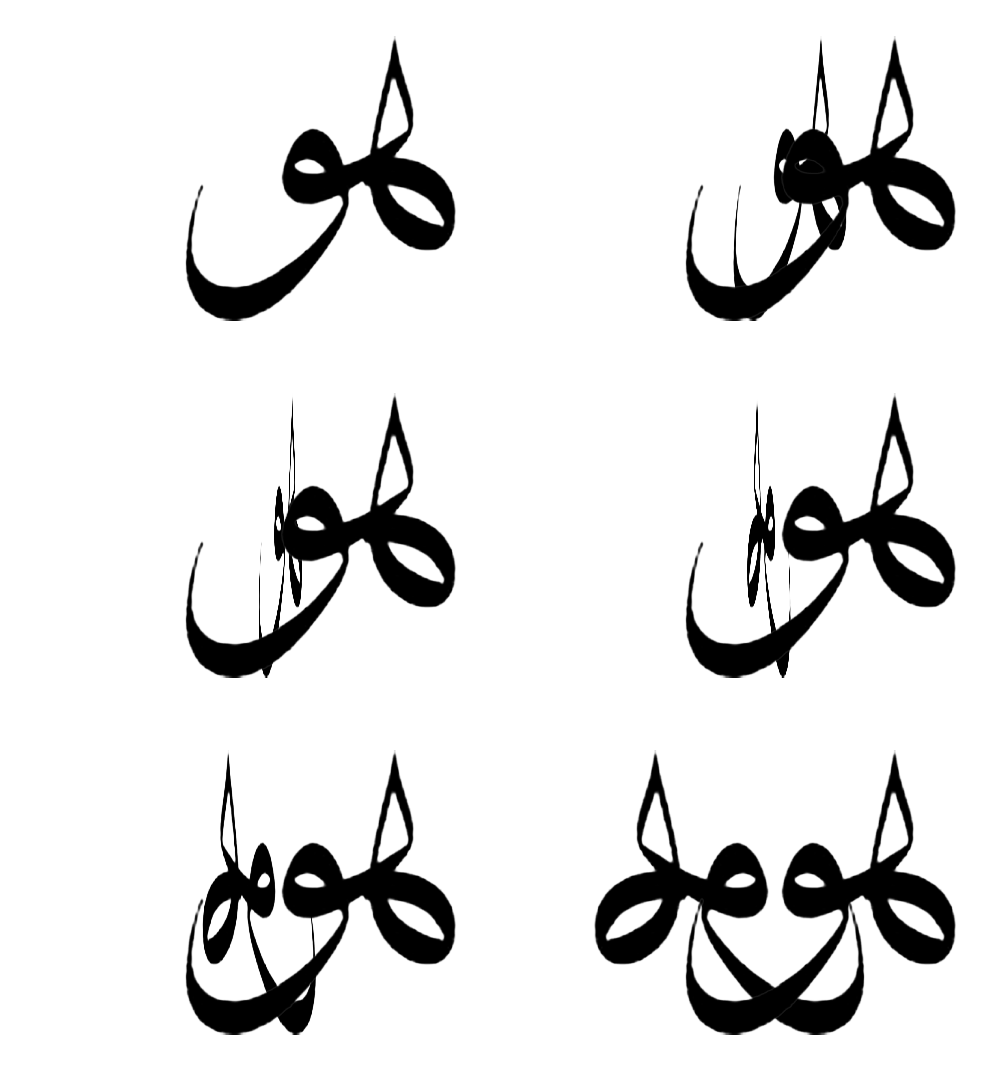
Hu Allahu Akbar – Ever Greater, Ever Transcendent beyond any conception and construct is Hu.
May the Ineffable keep us on the tao (as-sirat al-mustaqim) that leads to the Tao
May we realise and become what is possible
May we be granted a heart open as the vast sky.
// Sadiq M. Alam / Dhaka, Bangladesh
# Further:
* Tao Te Ching Introduction – Read By Jacob Needleman
* Side by Side Comparison of Tao Te Ching Translations
* Alan Watts – Lao Tzu’s Tao Te Ching
* Dr Wayned Dyer – Tao Te Ching
* Full Audio Book of Tao Te Ching
* Do the Dao by Wayne Dyer
* Tao Te Ching: An All-New Translation by Lao Tzu, Laozi
* The Perfect Man According to Taoism and Its Relevance with Sufism: A Brief Survey
* Pondering Chinese Taoist and Arab/Persian Sufi ideas of individuality and immortality
* The Way of Life by Lao Tsu (PDF)
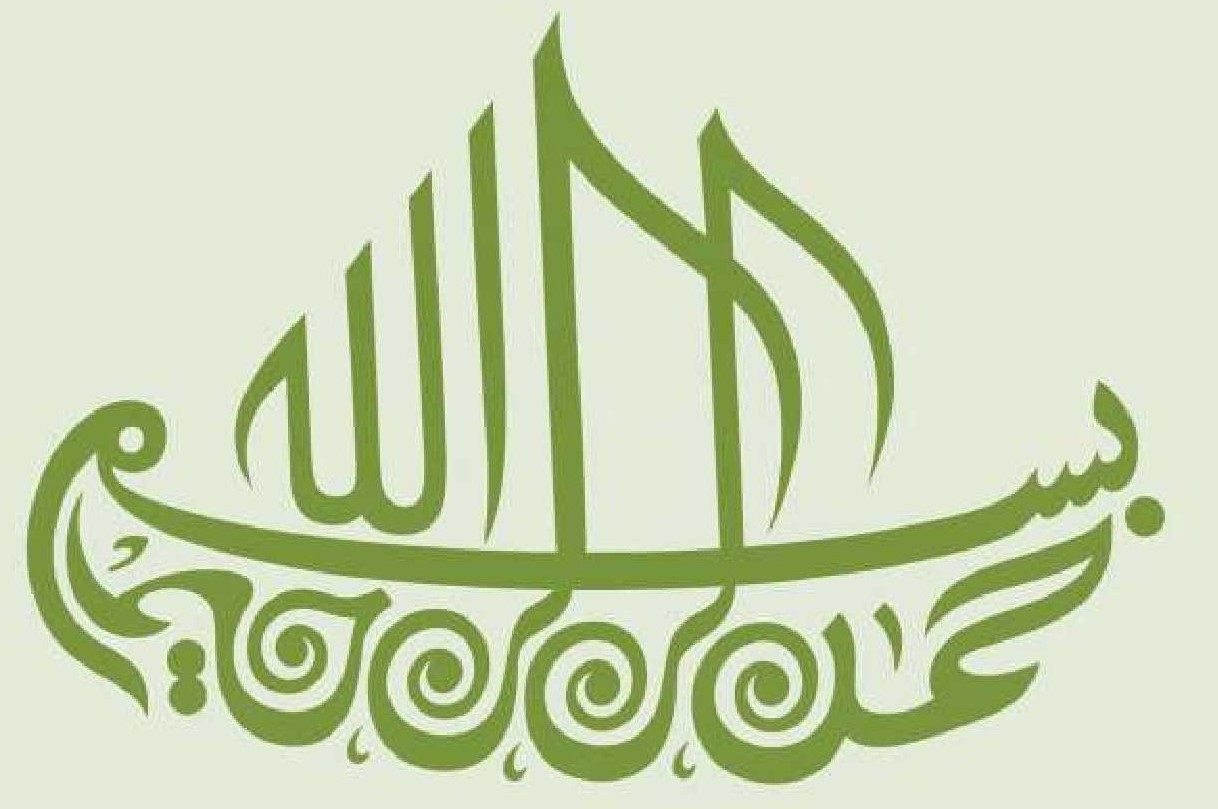
The Ark above the Waves – By M. Ali Lakhani
The waters are rising,
The flood will not subside.
We strive to stem the tide
To prevent capsizing,
Cumbered with freight of pride,
Rejecting faith as guide.
In self’s craft we place hope
As we steer to a shore
Receding and unreal.
Impudently we grope,
Paddling a feeble oar,
‘Til Heaven makes us kneel.
Then, faith grants us to see
The new moon in the night,
To hear the Word that saves,
The rosary’s mercy,
The lowered rope of light,
The Ark above the waves.
Thus the Fisher of souls
Casts His net to save us,
To draw us up above —
His, the rarest of hauls,
Hearts that He once gave us,
He harvests with His love.

Peace and blessings to all 💚 *THE PROGRAM* 💚
*You are most warmly welcome to join us for a Sufi Tour with Sheikh Hassan Dyck in Helsinki Finland 11.-14.9.*
*Please register for the events (except Fridays Mawlid event)* . This helps us to keep you updated and to prepare for the right amount of participants.
https://forms.gle/jVn7Ejw4WGciGitS6

*Sheikh Hassan Dyck* an European representative for an over 1400-year old Islamic Naqshbandi Sufi tradition tells humorous stories that change lives and offers ancient advice that guides us in the Modern Times. He lends his wisdom from the Islamic Naqshbandi Sufi tradition but speaks to everyone regardless of origin, philosophy or religion. With his humble presence he takes us deep into spirituality and at the same time he gives simple advice on how to life a good day to day life. Sheikh Hassan is the European representative for the distinghuished spiritual master Mawlana Skeikh Muhammad Adil ar-Rabbani al-Haqqani of Istanbul.

Joining Sheikh Hassan on the tour are his son Sheikh Abdulmalik Dyck and Qur’an reciter, teacher and singer Ustad Ali Keeler. We will inshallah have the chance to enjoy their wisdom, singing and recitation as well.
*Thursday 11.9. Khatm, Dhikr and Sohbet 18:00-21:00*
Join to recharge your spiritual batteries with Sheikh Hassan Dyck in the traditional Naqshbandi ritual of Khatm Khwajagan, Dhikr and Sohbet that is inspired teaching. Khatm Khwajagan is a silent remembrance of Allah in the heart through recitation of Qur’an and blessings on the Holy Prophet (saws). It is a weekly practice for protection, spiritual recharge and great blessings.
We will have some tea, sweets and snacks afterwards.
@A private apartment name Torpo, Otakallio 4D 51, Espoo
*Friday 12.9.*
Jumu’ah Prayer location to be announced
*United in Love Mawlid Gathering 17:00-22:00*
The Mawlid Gathering that unites all lovers of the Holy Prophet Muhammad (peace and blessings be upon him) and all sufi tariqas in Finland. We celebrate the 1500th birthday of the Holy Prophet with Qur’an recitation, four distinguished speakers, qasida and Somali food. We have speakers in English, Finnish, Somali and Arabic from different sufi traditions. In addition we will have the joy to enjoy beautiful Qur’an recitation and singing from ustad Ali Keeler from England among others.
No registration needed. There is a separate space for women in the mosque. Children are welcome.
@ Masjid Ahlussunna wal Jamaa’t, Vuorenpeikontie 5, Roihuvuori, Helsinki
*Saturday 13.9. Sufi Seminar with Sheikh Hassan Dyck – Ancient Advice for Modern Times 11:00-18:00*
A seminar for all people, all faiths, all seekers, no need to know anything about sufism or Islam. Everyone is welcome to receive ancient advice and spiritual rejuvenation from an over 1400 years old Islamic Naqshbandi Sufi tradition. Sheikh Hassan Dyck shares humorous stories and heartfelt wisdom through divinely inspired speech guiding us in our daily life and spiritual growth in the Modern Times. Sheikh Hassan also leads us in dhikr that is remembrance of God through recitation and singing together.
We will have a potluck lunch together. Bring some food (preferably home cooked) to share
We have limited space for around 40-50 people.
@Hautomo Dance School, Merimiehenkatu 29, Punavuori, Helsinki
*Sunday 14.9. Brunch with the Sheikh 11:00-14:00*
Come have a relaxed Sunday brunch with Sheikh Hassan Dyck and good brothers and sisters. This is a chance for free chatting and questions. Invite your friends and family to greet the Sheikh and enjoy some nice food.
@A private apartment, Otakallio 4D 51, Espoo
All the events are free and open to everyone. Donations are happily accepted. All events are organized with donations and voluntary work. We are now collecting donations to organize a larger concert with Sheikh Hassan Dyck in Helsinki in the Spring of 2026 in sha’allah.
If you are a traveler and need help with accommodation or anything else send me Shamsuddin a message.
Or generally if you have any questions.
+ 358 50 4674121
pekka.freese@gmail.com
Please register here: https://forms.gle/jVn7Ejw4WGciGitS6

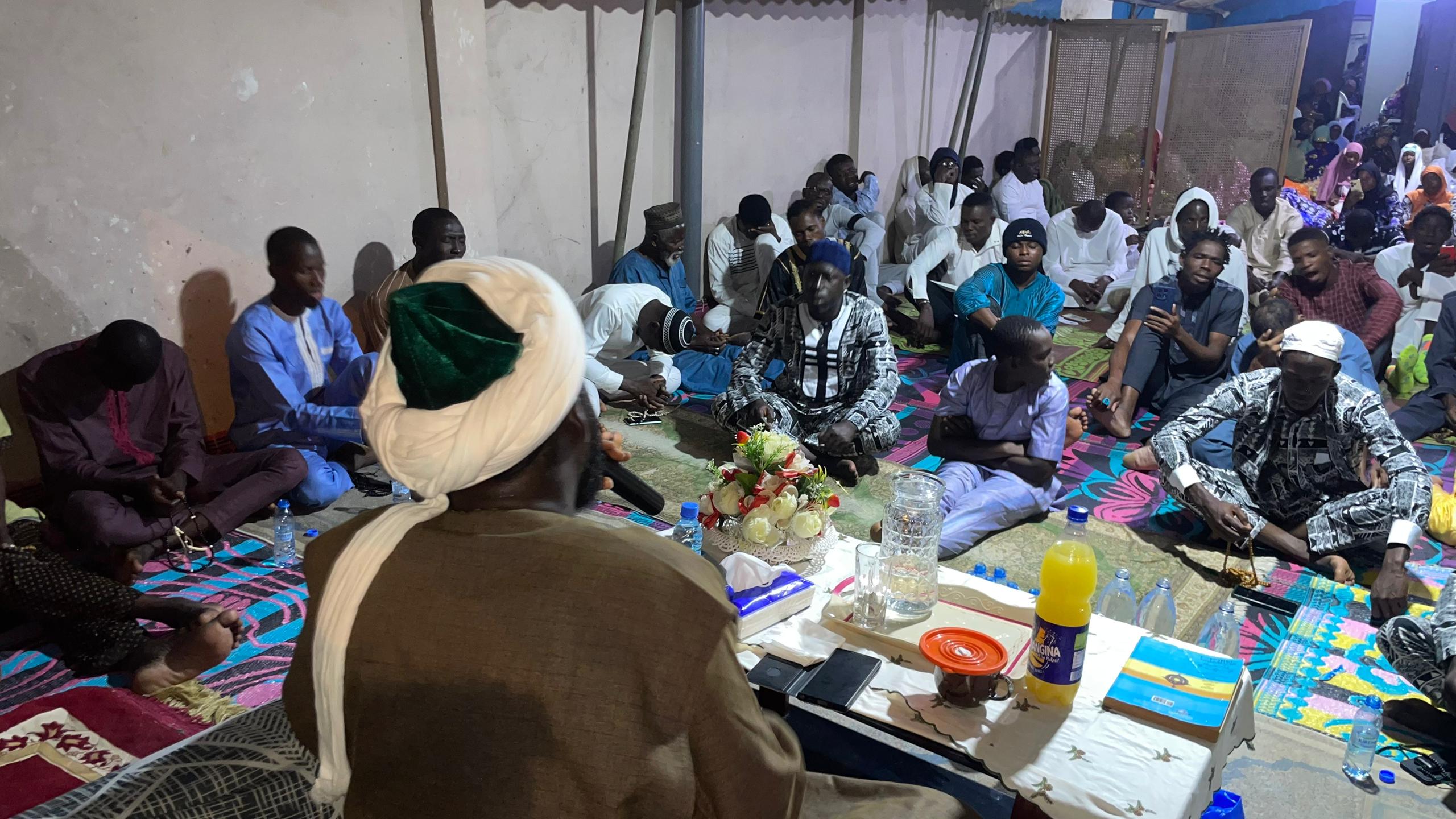
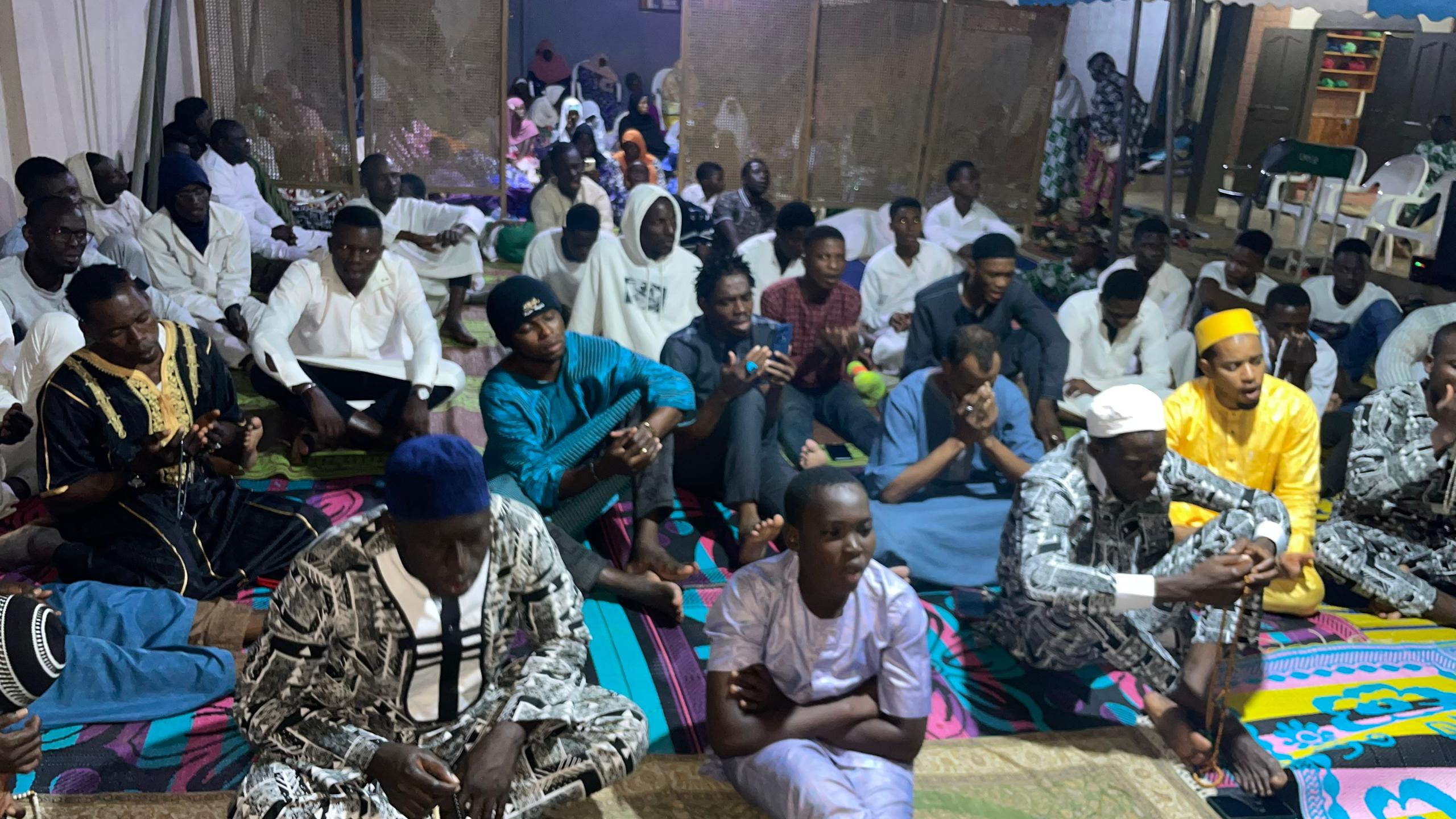

Assalamu alaikum wr wb
Bismillahir Rahmanir Raheem
There will be a full moon eclipse on Sunday (7th September),see time :

Mawlanaق says, eclipses are a sign of an impending calamity, and it is an important Sunnah for us to perform the eclipse prayer during the period when the eclipse is happening. Those who perform this prayer, will have their burdens lifted, and their Spiritual light restored and strengthened. It is advised that we stay indoors or in a mosque during an eclipse, and that we do not go out to look at it. Do not look at the sky to watch the actual eclipse live, as there is much negative energy generated during an eclipse, which affects our Spirituality. Please restrain your children from this. You can always watch a YouTube recording of the event, once it is over.
The eclipse prayer is best done in congregation/jemaah, and both men and women should pray it. Full Guide to the Eclipse Prayer and sohbah by Mawlana Shaykh Nazimق here

To pray Salaat al-Kusuf, the Eclipse Prayer, is Sunnah; in fact, from the beginning of the eclipse until it clears, this prayer is made. It is a long prayer, but due to my condition, while the youngsters pray standing I will pray sitting, and we will fulfill this Sunnah, inshaa-Allah.
Our Prophet (s) was the imam of the honorable Sahaabah and he (s) made them pray and gave this prayer to the Ummah as a Sunnah, saying, “In the End Times, my Ummah will be corrupted. Everyone will do what they like and corruption will increase. In those times, anyone following one Sunnah will receive the reward of a hundred martyrs.”
من احيا سنتي عند فساد أمتي فله أجر مائة شهيد
There are people who continue to revive my Sunnah. For each Sunnah they revive, Allah will give them the reward of seventy martyrs (“one-hundred martyrs,” in different riwaya).
This holy prayer is rarely practiced (as eclipses are rare). May Allah grant us health, taste, happiness and to perform this Eclipse Prayer with our own power and capacity. It can be two or four raka`ats, both are permitted. We will pray two raka`ats, and in each raka`at we must pray a long time as it is important to pray from the start of the eclipse to the end. Due to our weakness we will pray two raka`ats, may Allah forgive us. Strong ones pray standing and the weak ones pray sitting, because this prayer is quite long, perhaps thirty minutes, one hour or more, but due to our condition we will pray a ‘symbolic’ prayer following the Sunnah of Prophet (s).
May this sign of power be a lesson to us and bring us power; when it is shaded that power is taken, when it starts to clear it is given. When giving, Allah Almighty gives more power than before to those who are praying. From Allah’s Light which reinforces the Moon, we also receive Light with physical and spiritual power, and are dressed with honor and taste. It removes distress on Believers and renews them, and when the light returns it comes on us also, then illnesses and troubles leave and majesty is dressed (on us).
[…] We hope Allah Almighty grants us reason and dresses us with Noor from the Light that descends. May He give us prosperity, the power of imaan, and the ability to walk and not be imprisoned in bed. May we live healthy and without troubles.
O Mu’mins, beware! In order to take the burden from you, Allah Almighty creates such opportunities, so see this as a treasure and at least pray two raka`ats. We hope He will end the period of tyrants with this sign in the sky. As this opens, after temporary oppression, although reality is light, darkness came. Islam came with light to extinguish the tyrants, dictators, and ignorants whose darkness covered the world, but darkness doesn’t last forever. There comes a Sign that oppression will end the time of tyrants, then comes Noor. Imam Mahdi (a) comes with Light containing such signs and good tidings. We are informed this much, which is enough for you; beyond this we can’t comprehend, it is beyond our understanding.
SALAT AL-KUSUF
Due to our weak condition, while we fully intend to follow this Sunnah, this is our current capacity.
Until the eclipse begins, perhaps you can read one or two juz of Holy Qur’an.
In the first raka`at, qiyaam starts with tasbeeh, then recite Surat al-Fatihah, then Tabaraka Shareef (Surat al-Mulk). If you are not tired, recite Surah Yaseen. In ruku, instead of three tasbeeh recite three, nine, twelve, fifteen times as ruku will be long. In Qiyaam recite, “Sami Allahu liman hamidah, Rabbana laka ‘l-hamd, yaa Rabbana wa laka ‘l-hamd”. Then go to sajda, “Allahu Akbar,” and make tasbeeh three, six, nine, twelve, fifteen times. In the second sajda make tasbeeh ten, twelve, fifteen times more, and between the two sajdas we say, “Subhaana Rabbi al-Azheem [or] Subhaana Rabbi al-Aala. Sami Allahu liman hamidah, Rabbana laka ‘l-hamd, yaa Rabbana wa laka ‘l-hamd.”
Pray ruku and qiyaam with this formula.
Who prays this will have no troubles this year: even if there are troubles they won’t face them. You will see this. If they make this prayer their troubles are lifted: patients receive health; the mindless receive reason, their intellect is increased; faith is strengthened; fresh physical power is given to weak ones. It’s benefits are endless.
Wa min Allahi ‘t-tawfeeq, bi hurmati ‘l-habeeb, bi hurmati ‘l-Fatihah.
Live from the Maqām of Mawlānā Shaykh Nāẓim al-Ḥaqqānī
 Sufi Path of Love