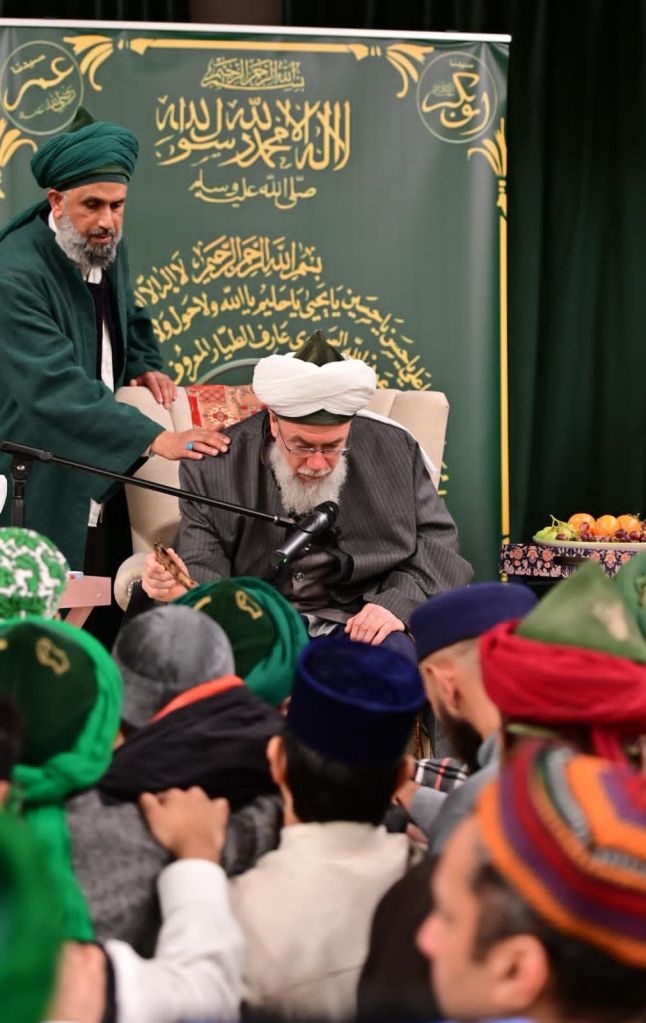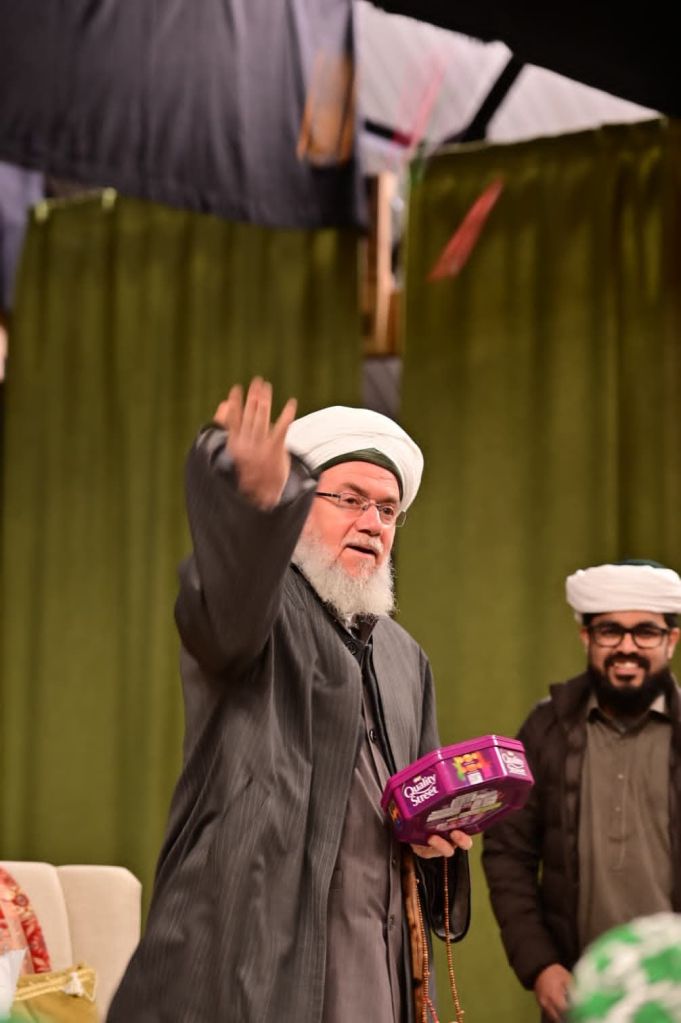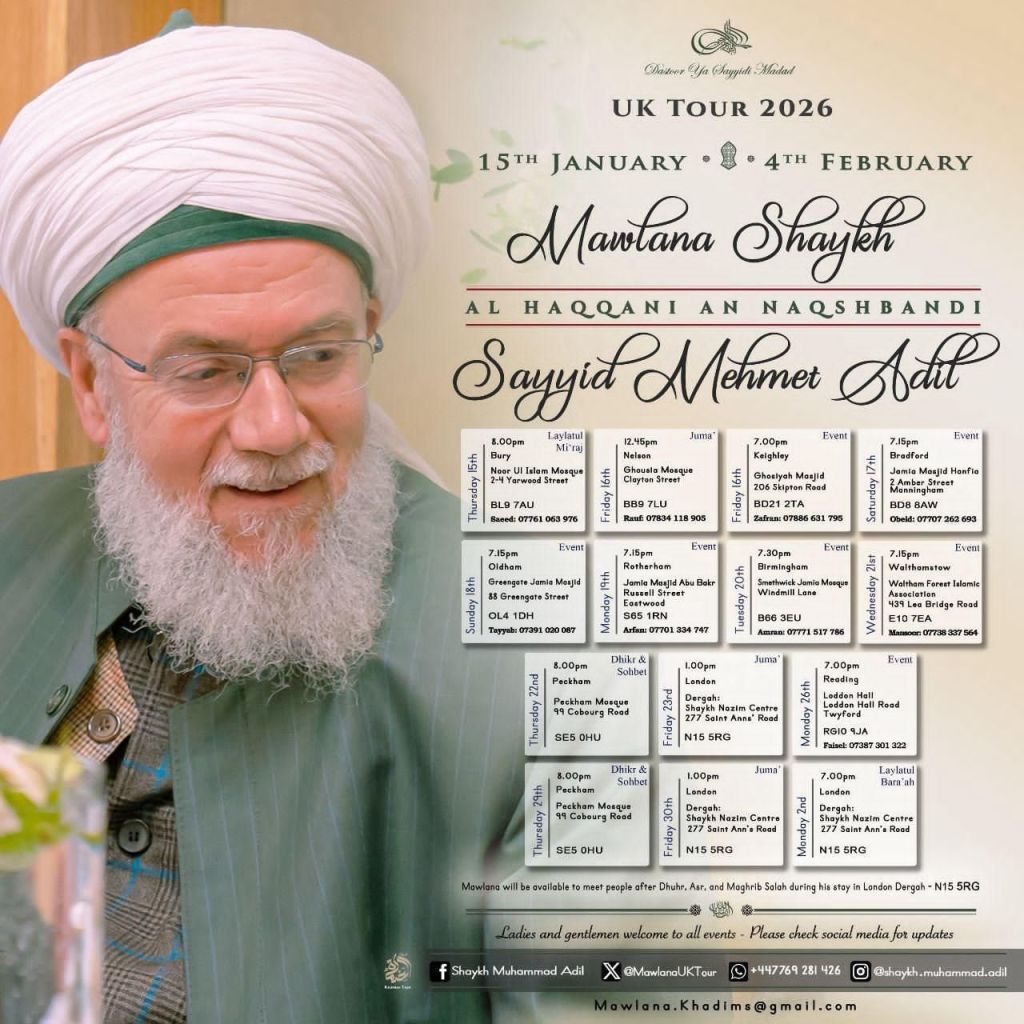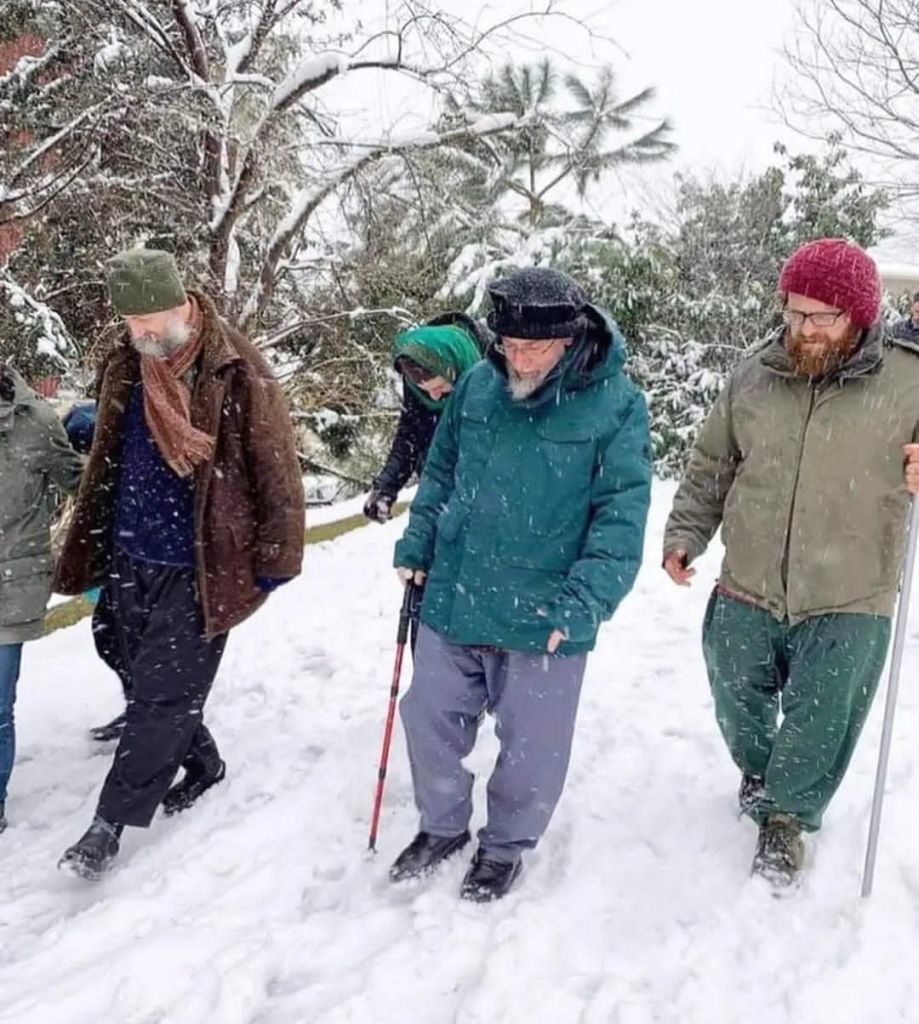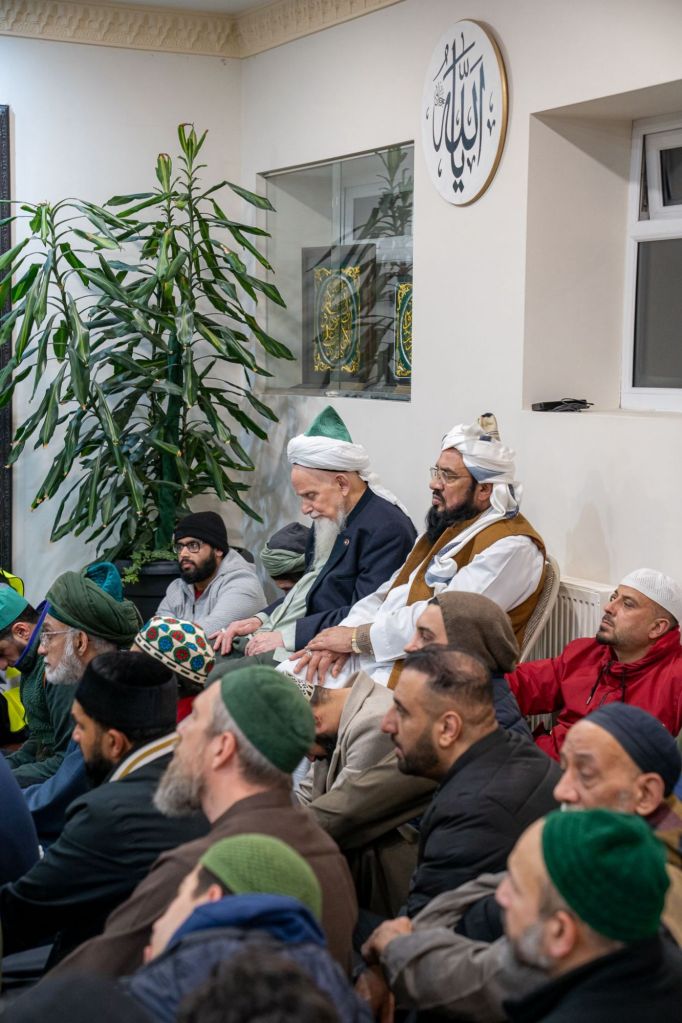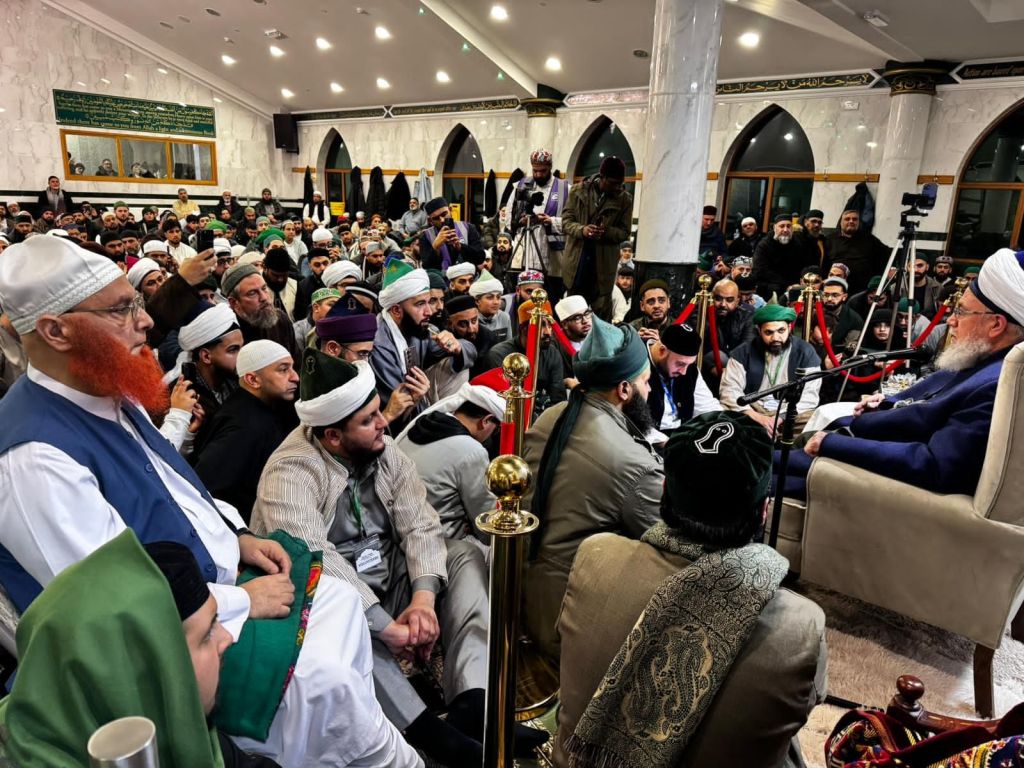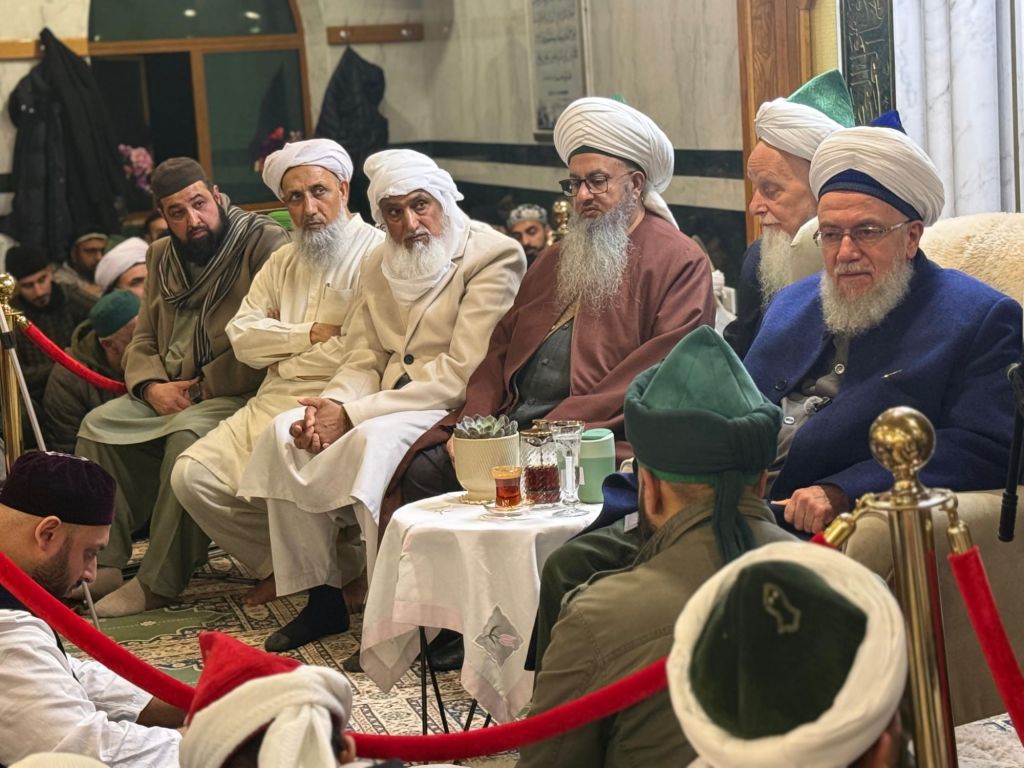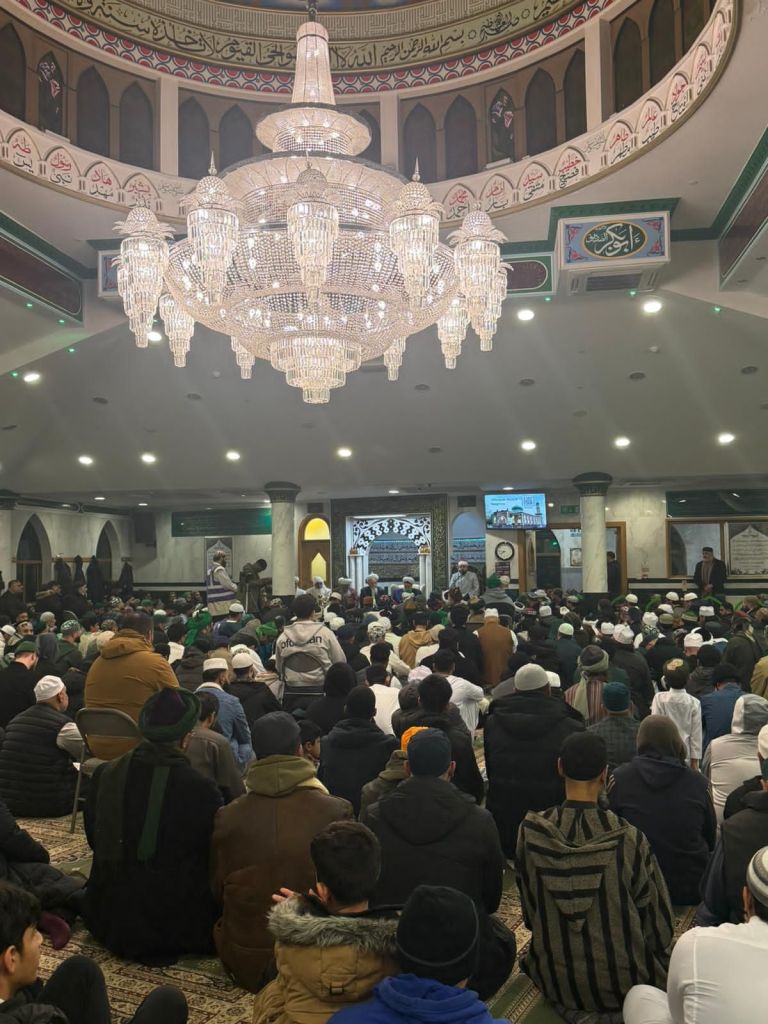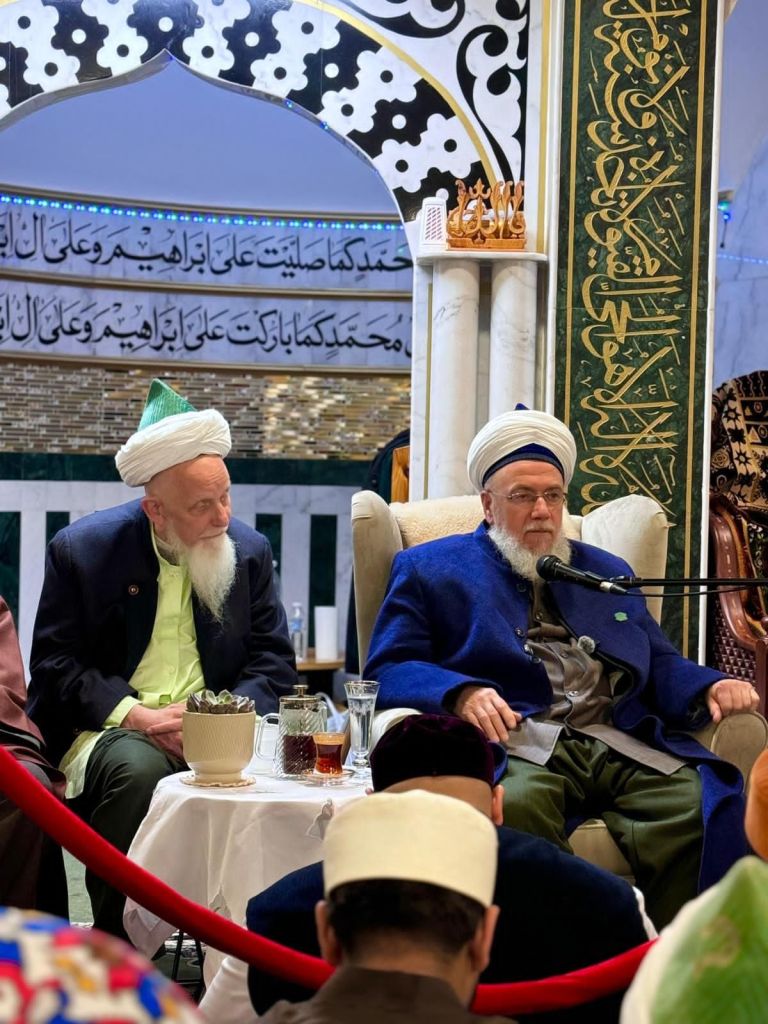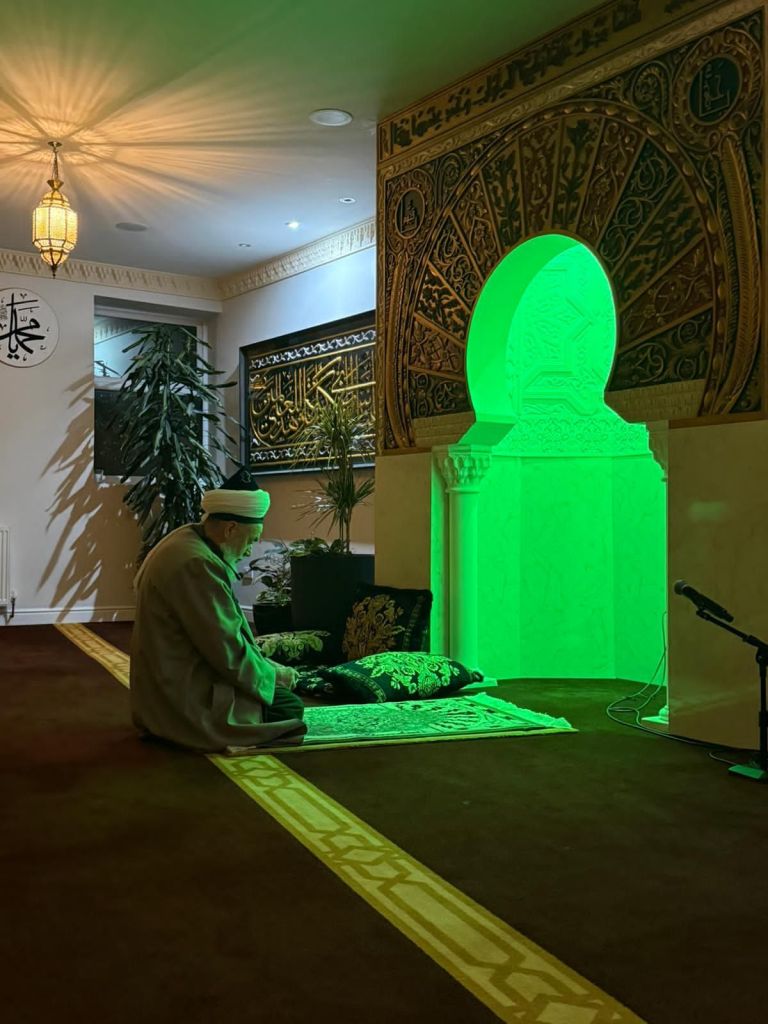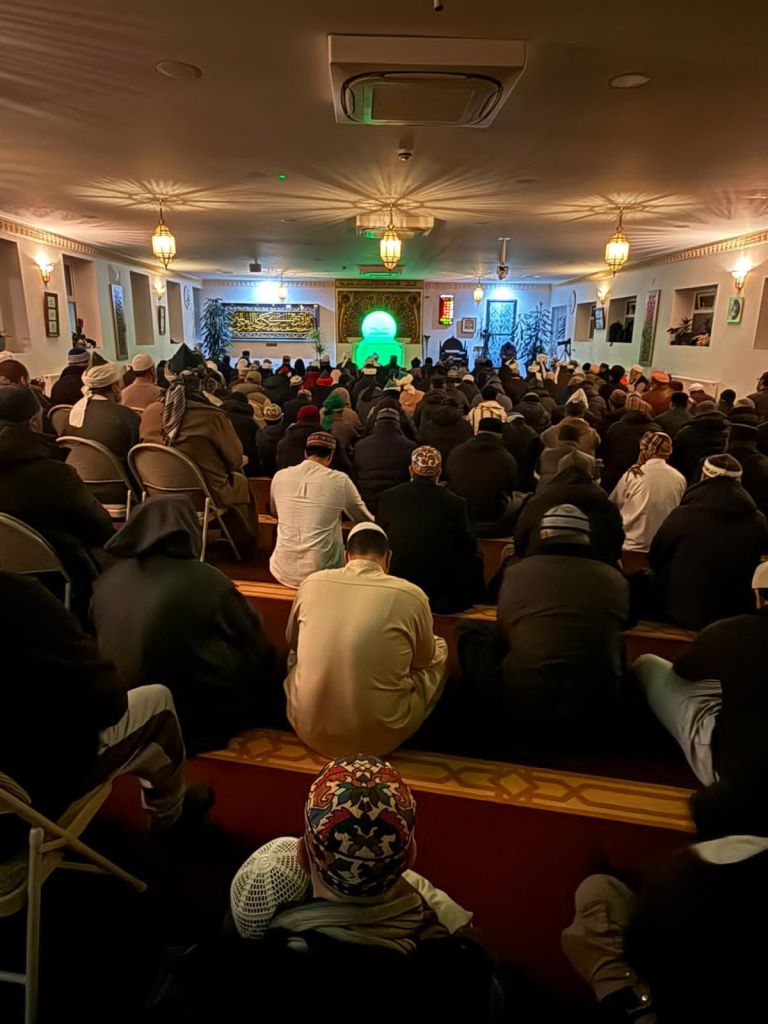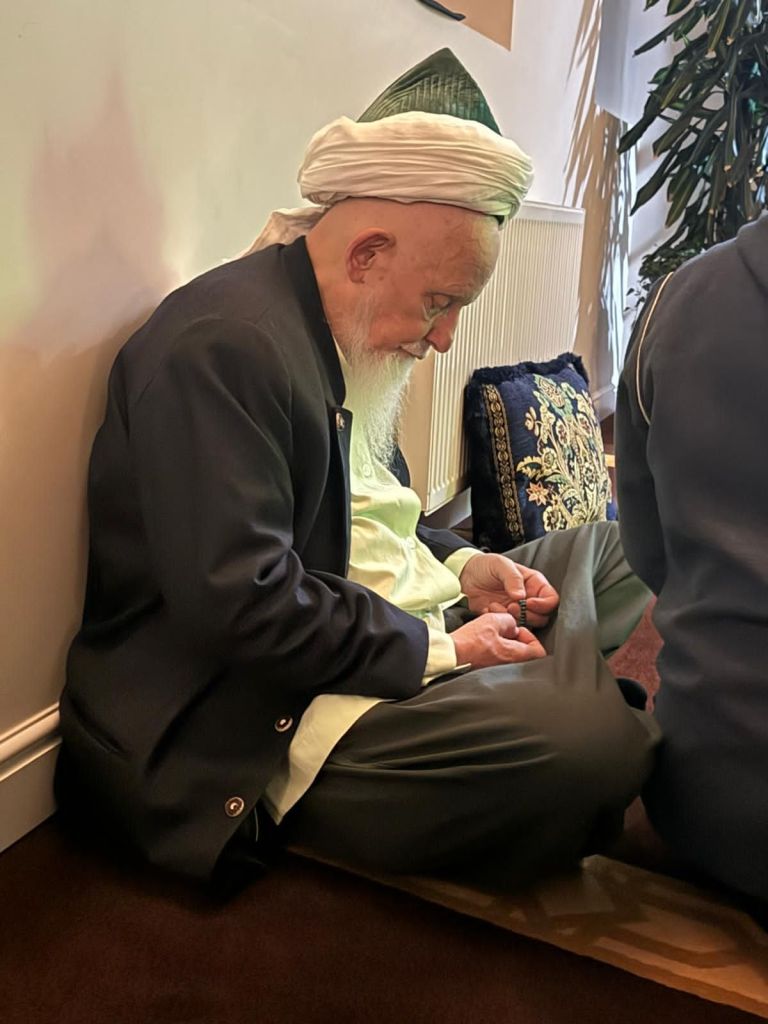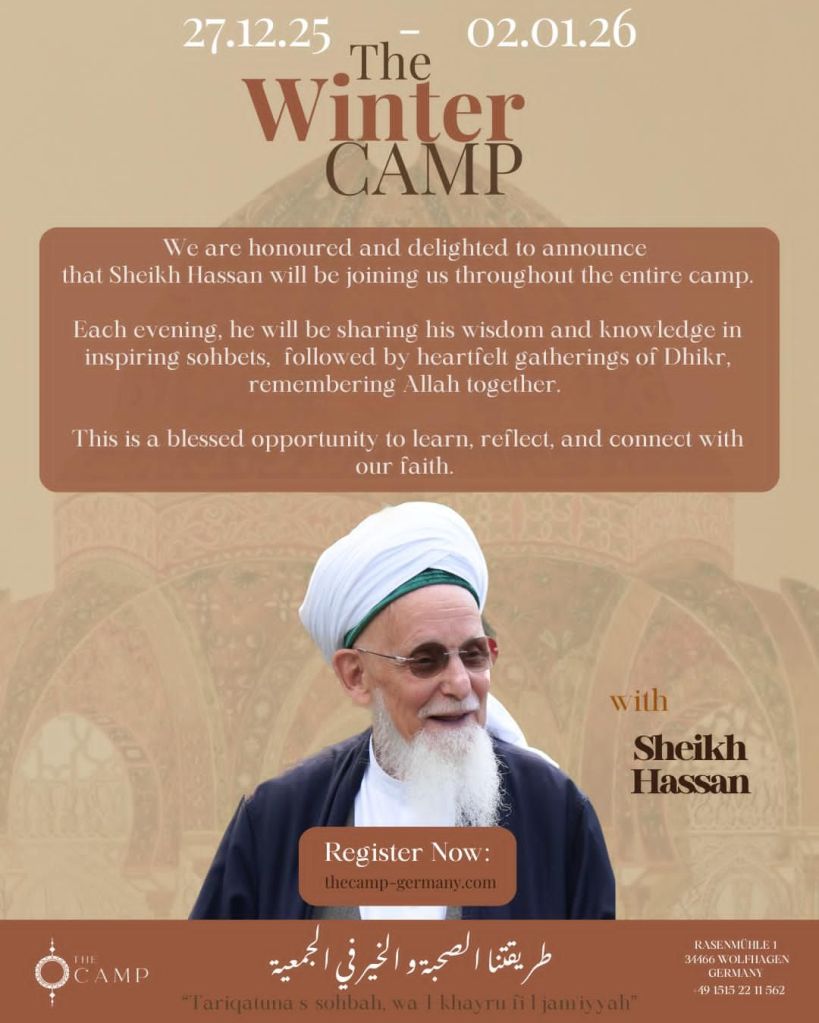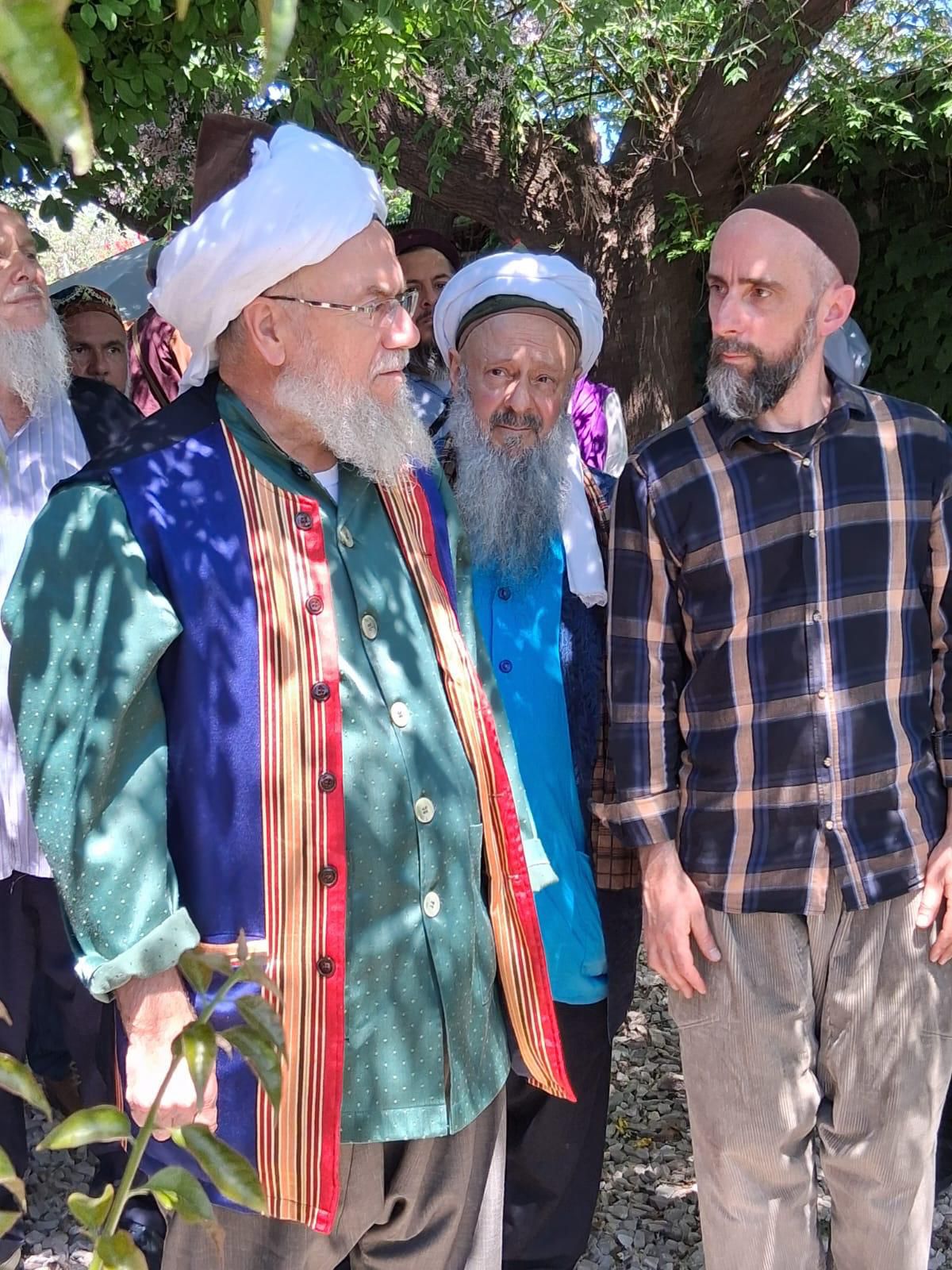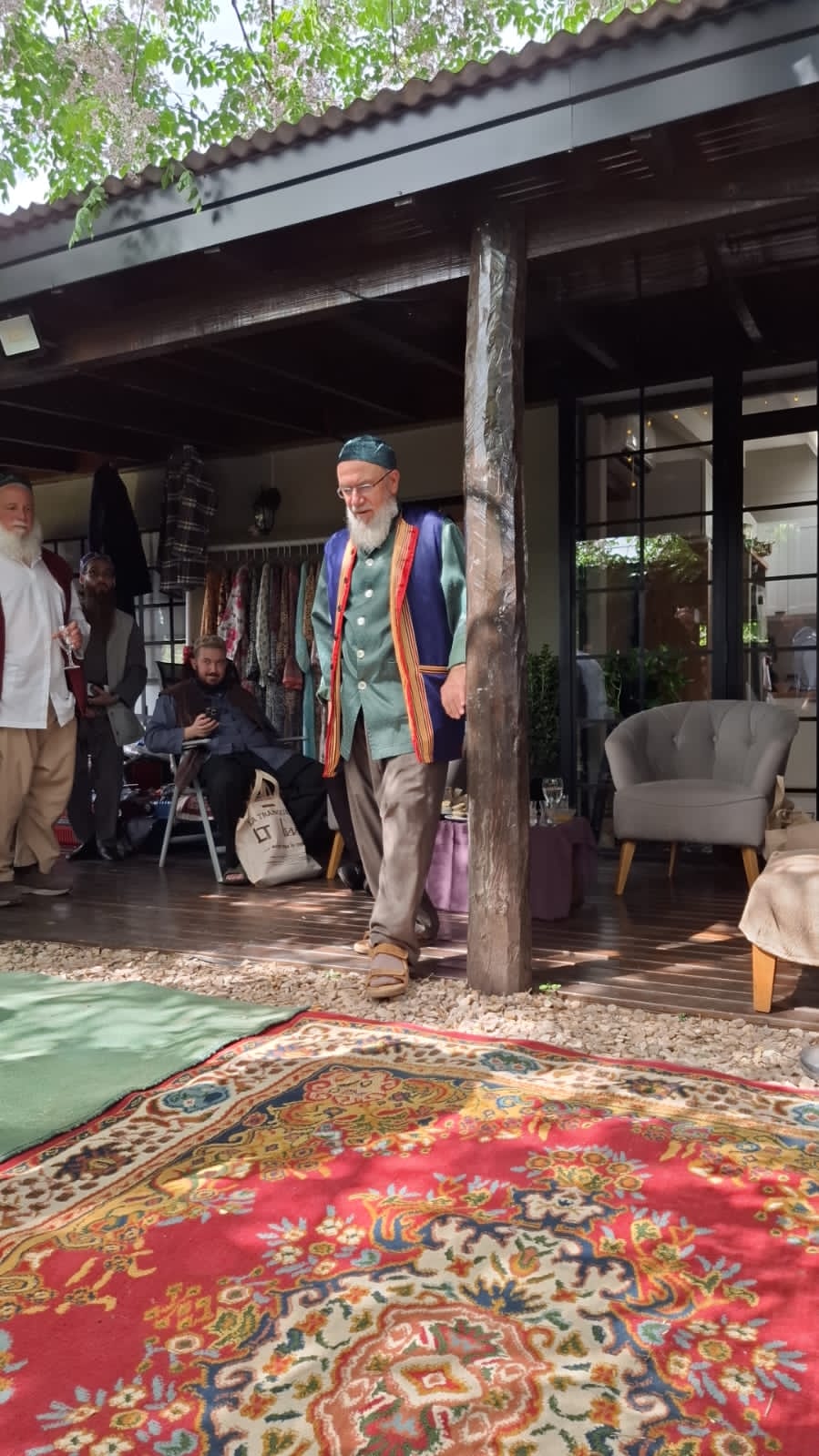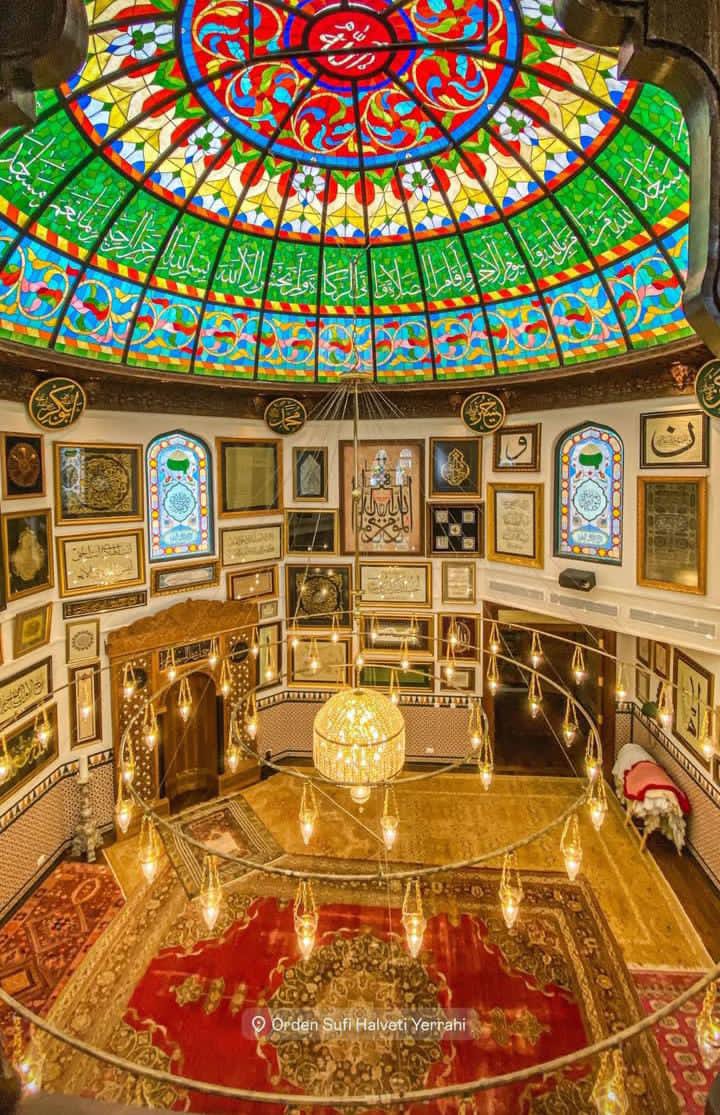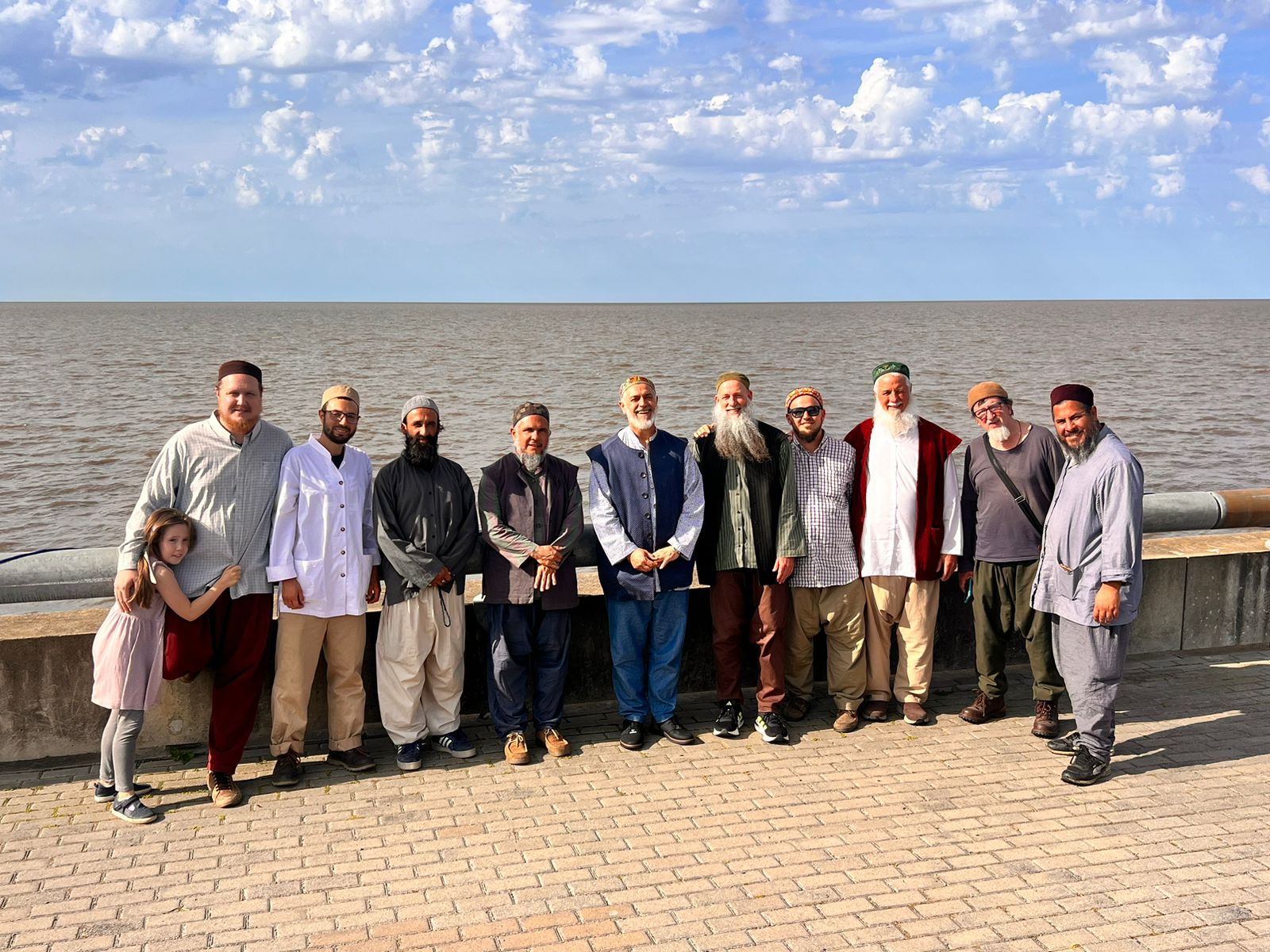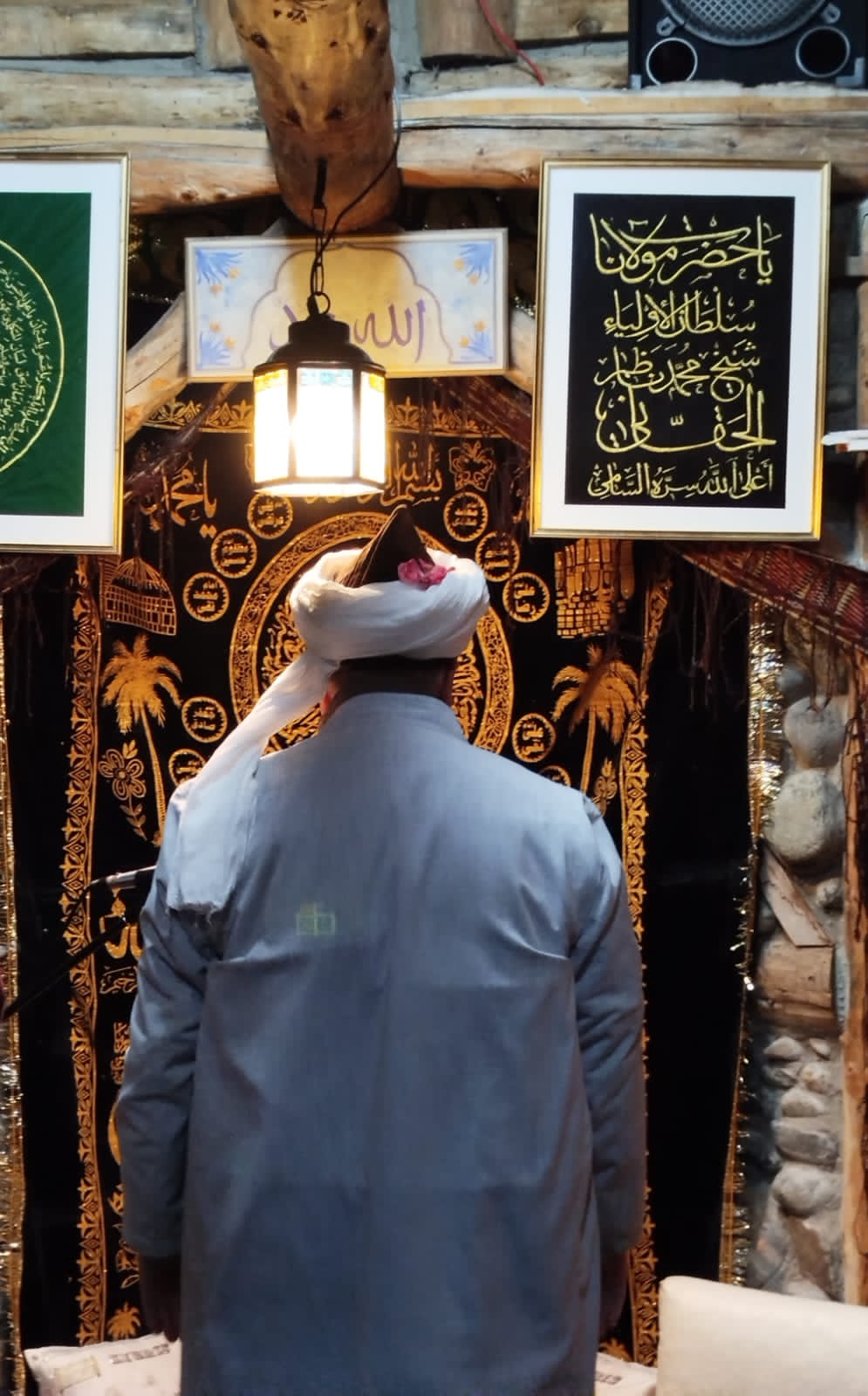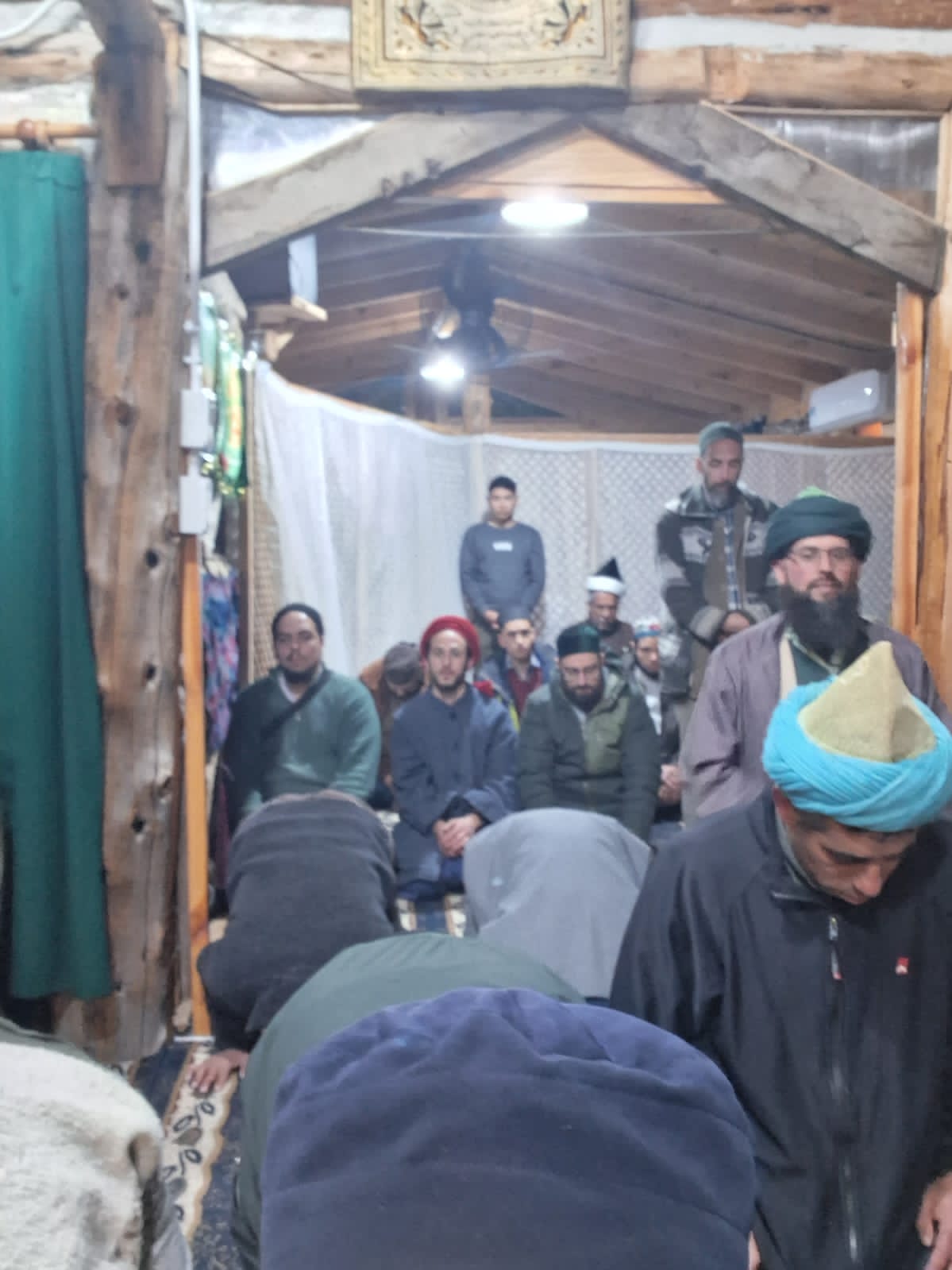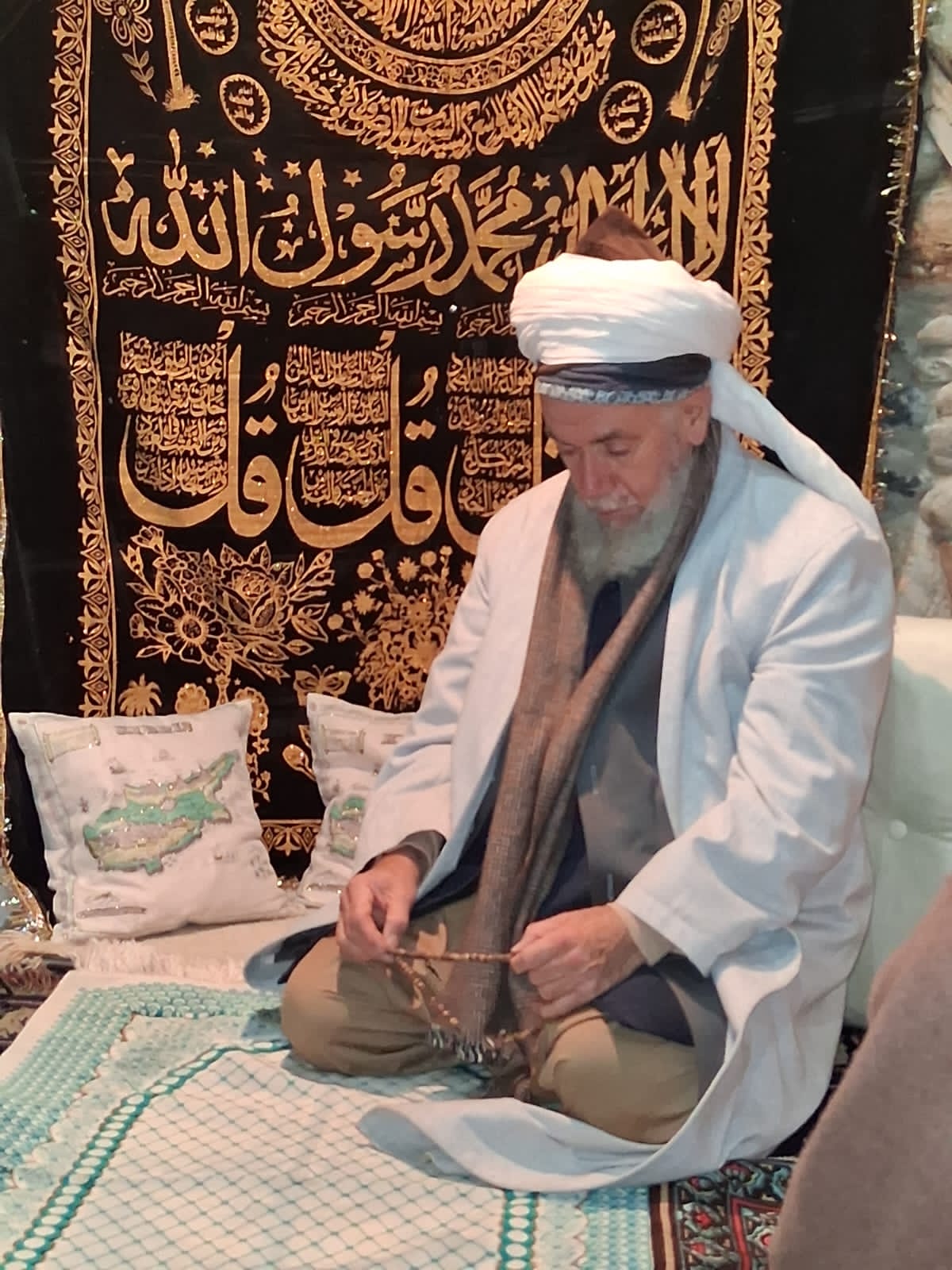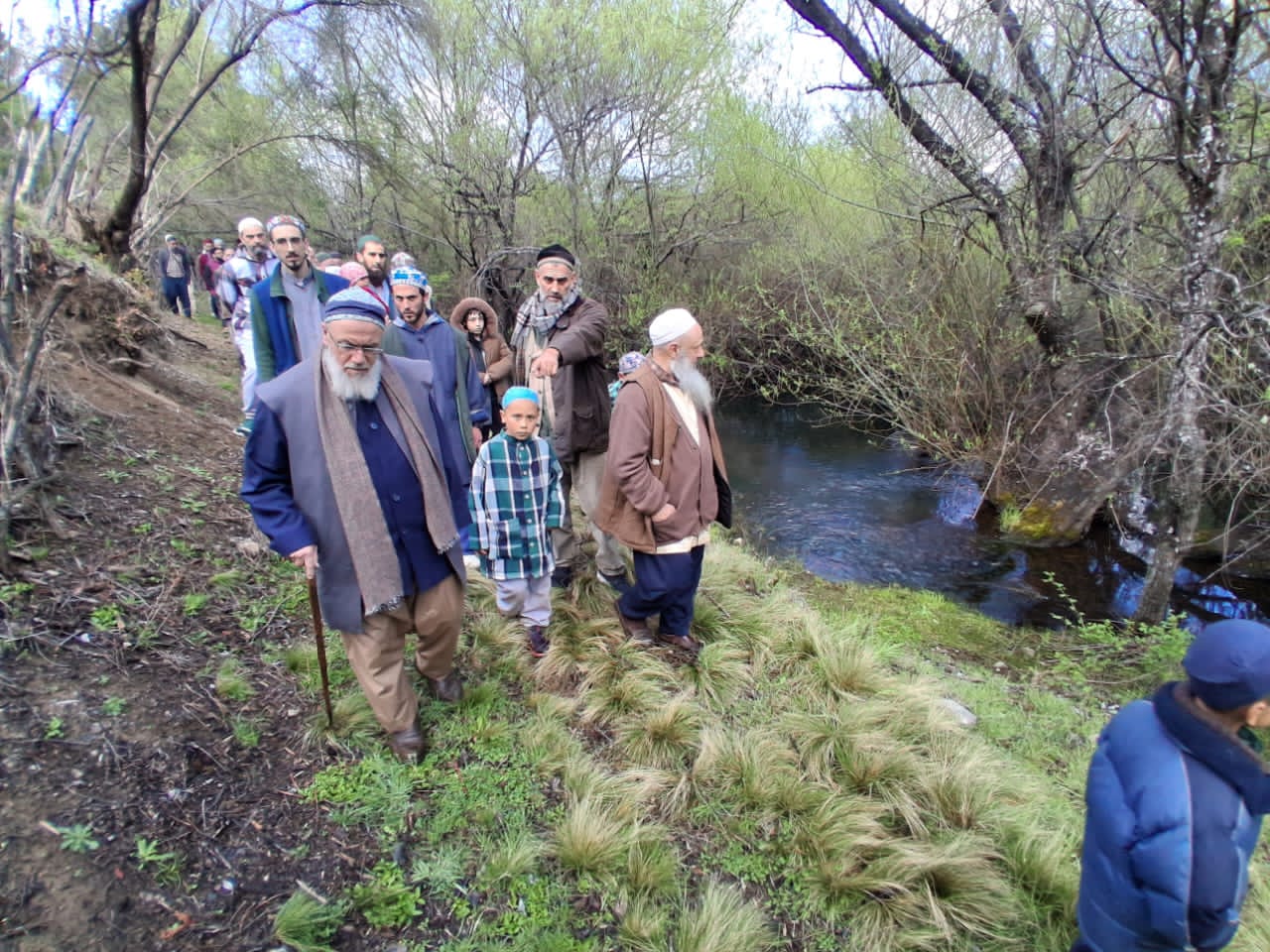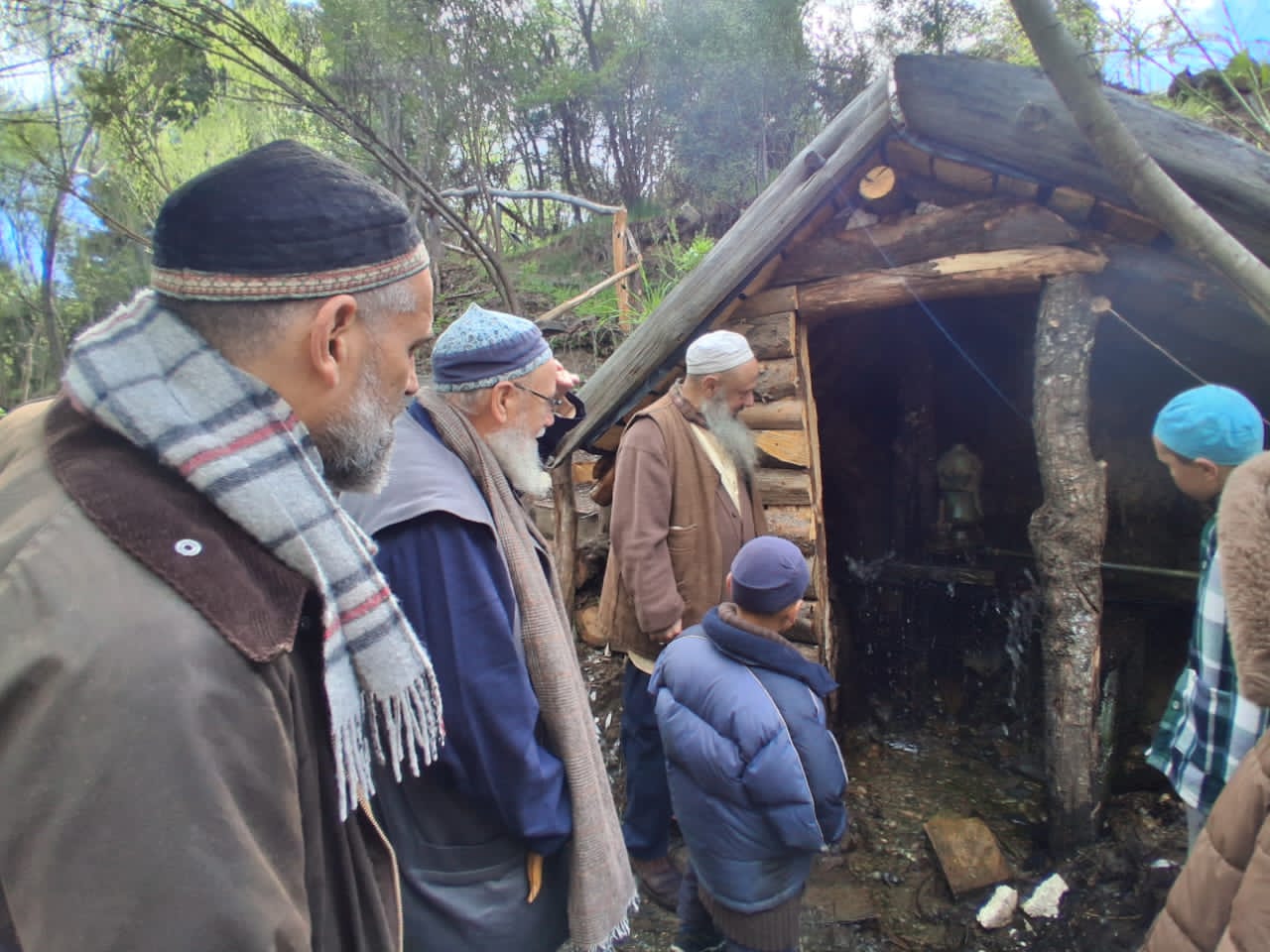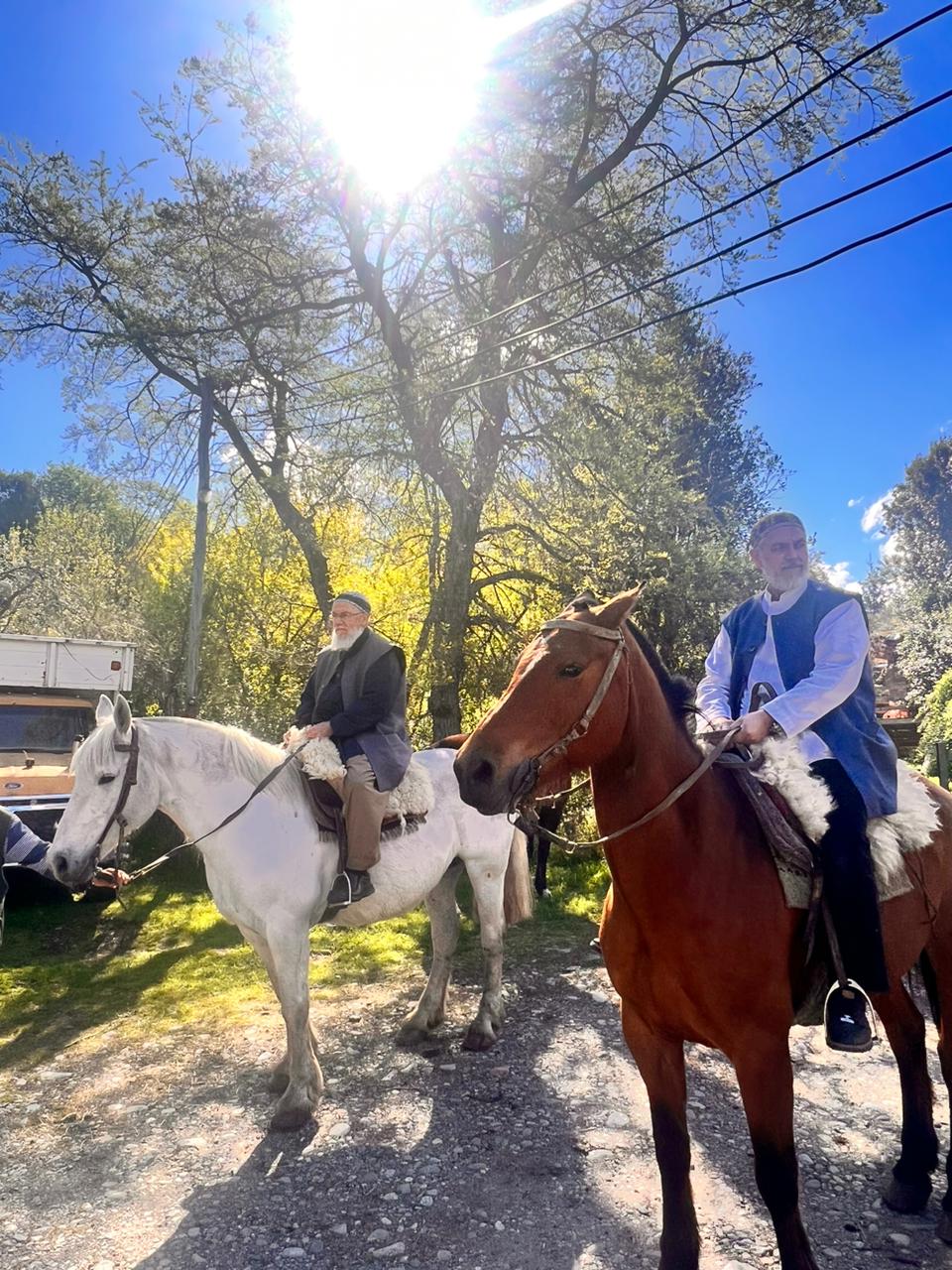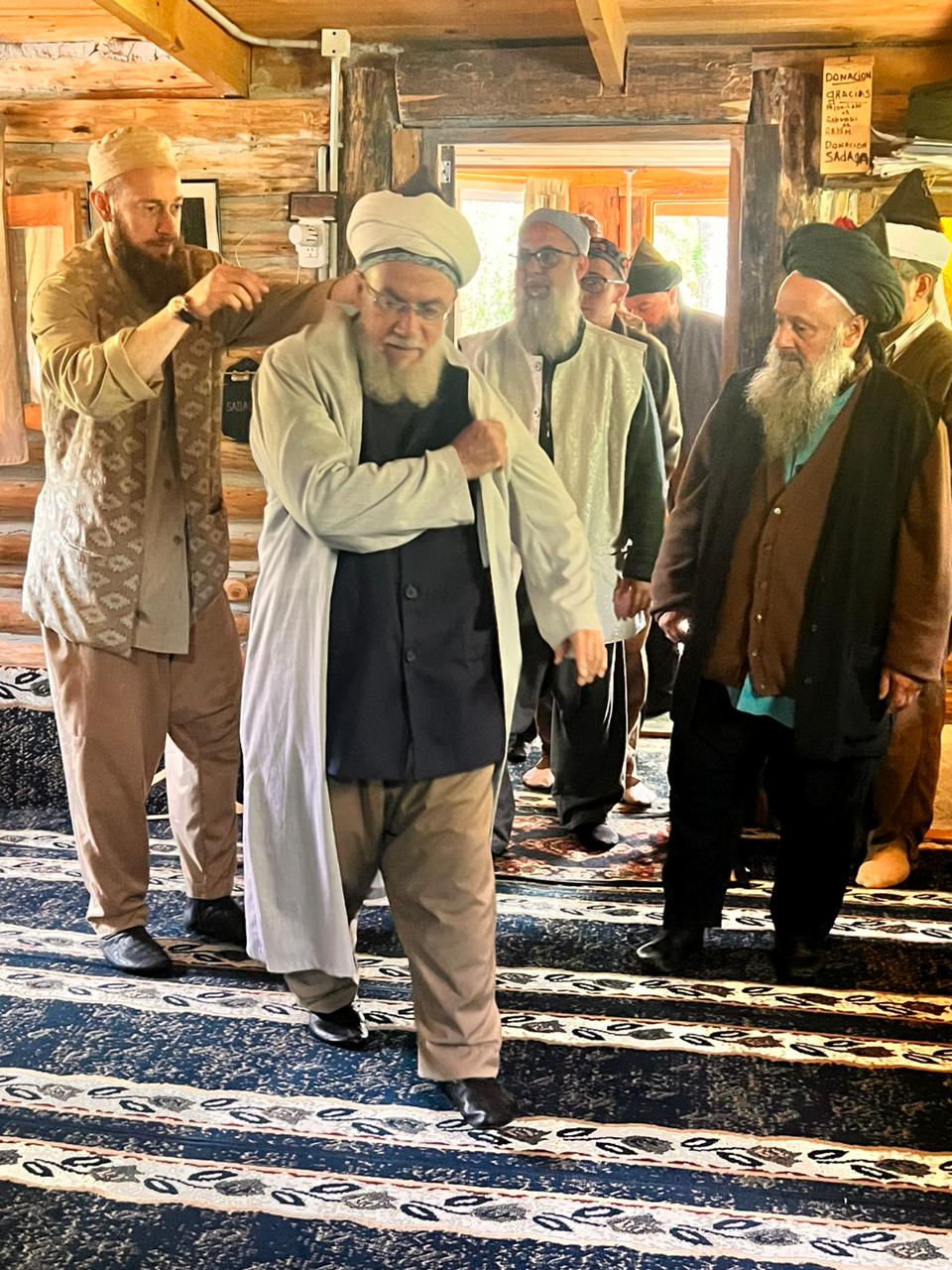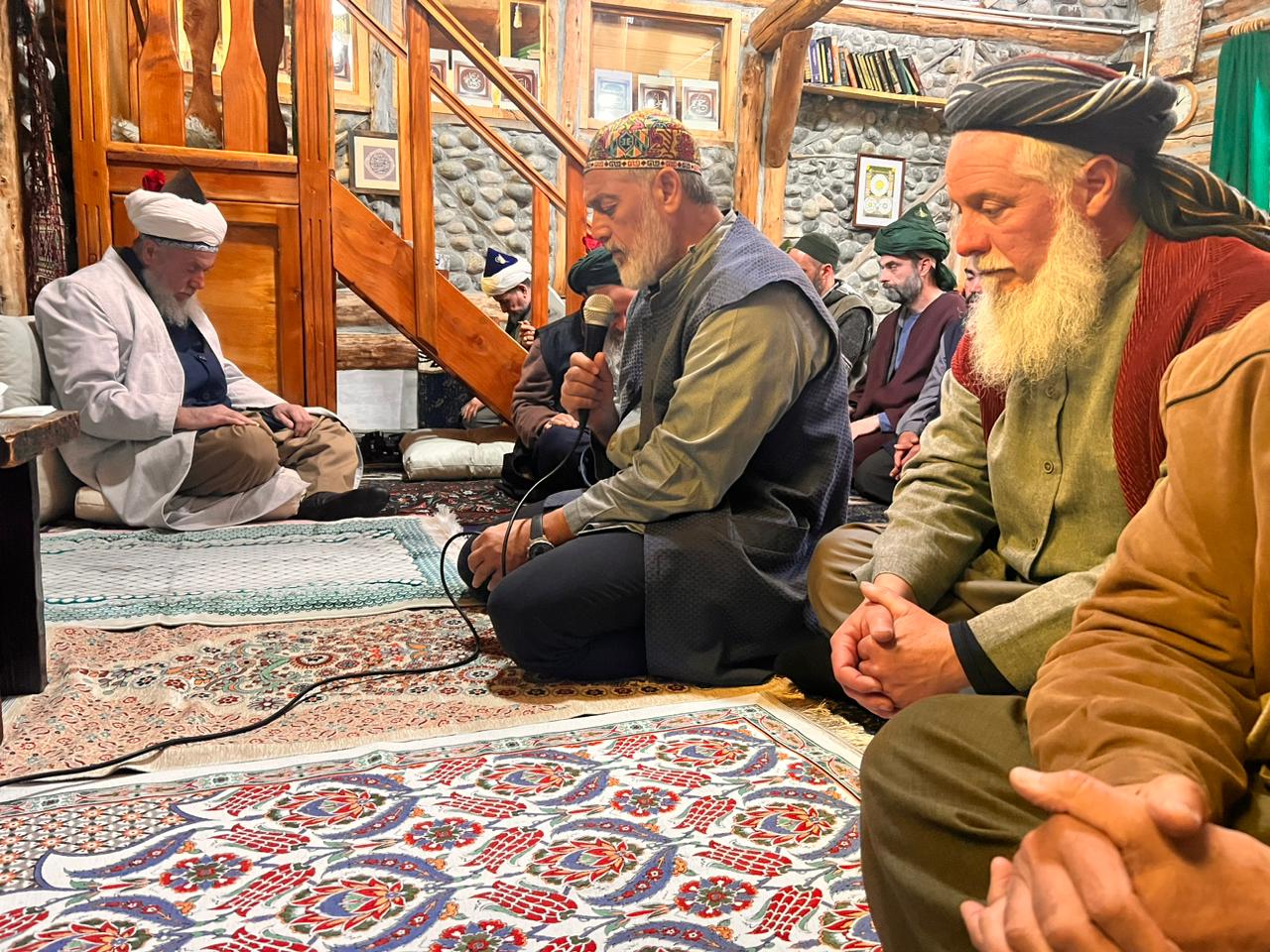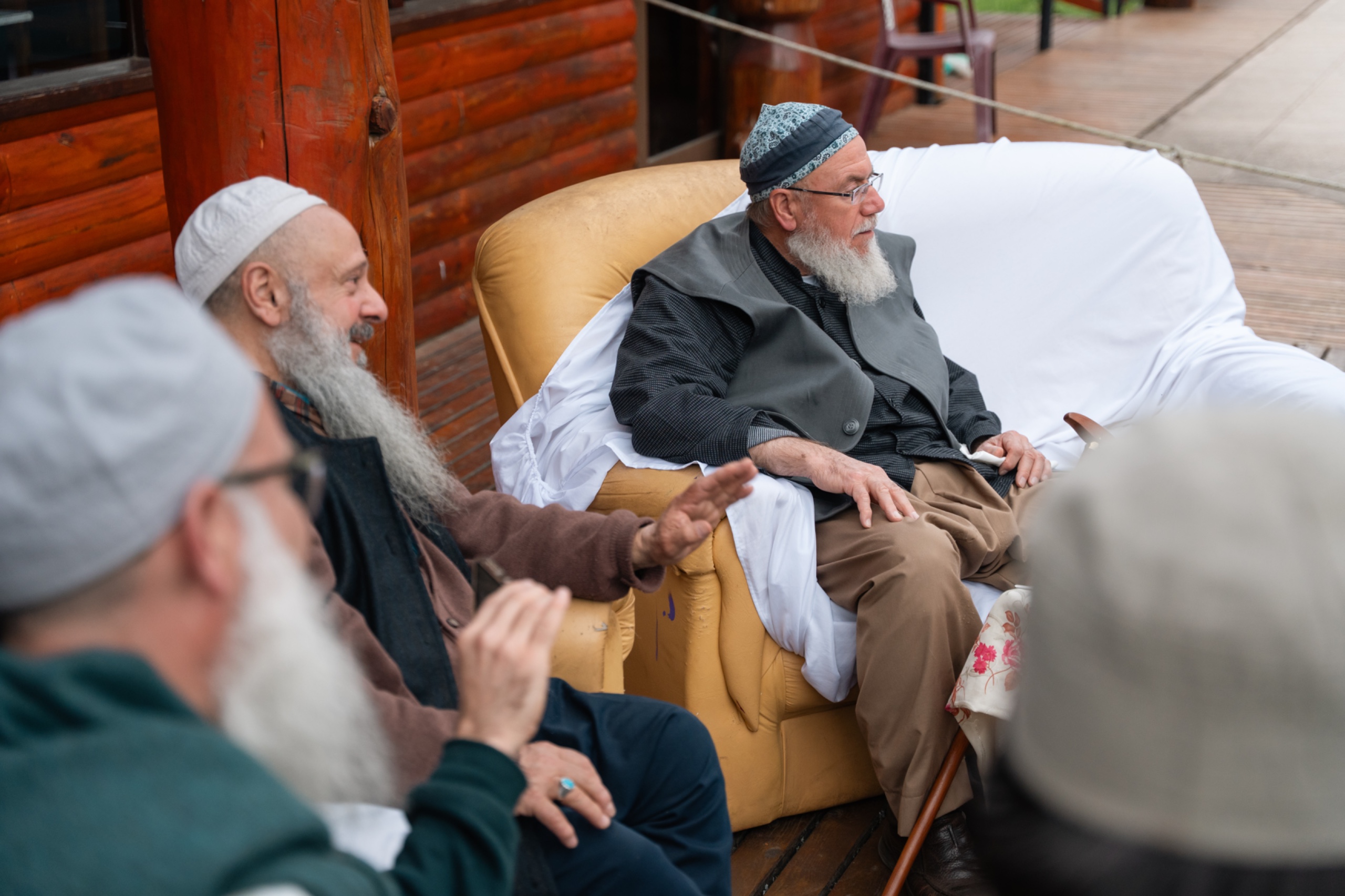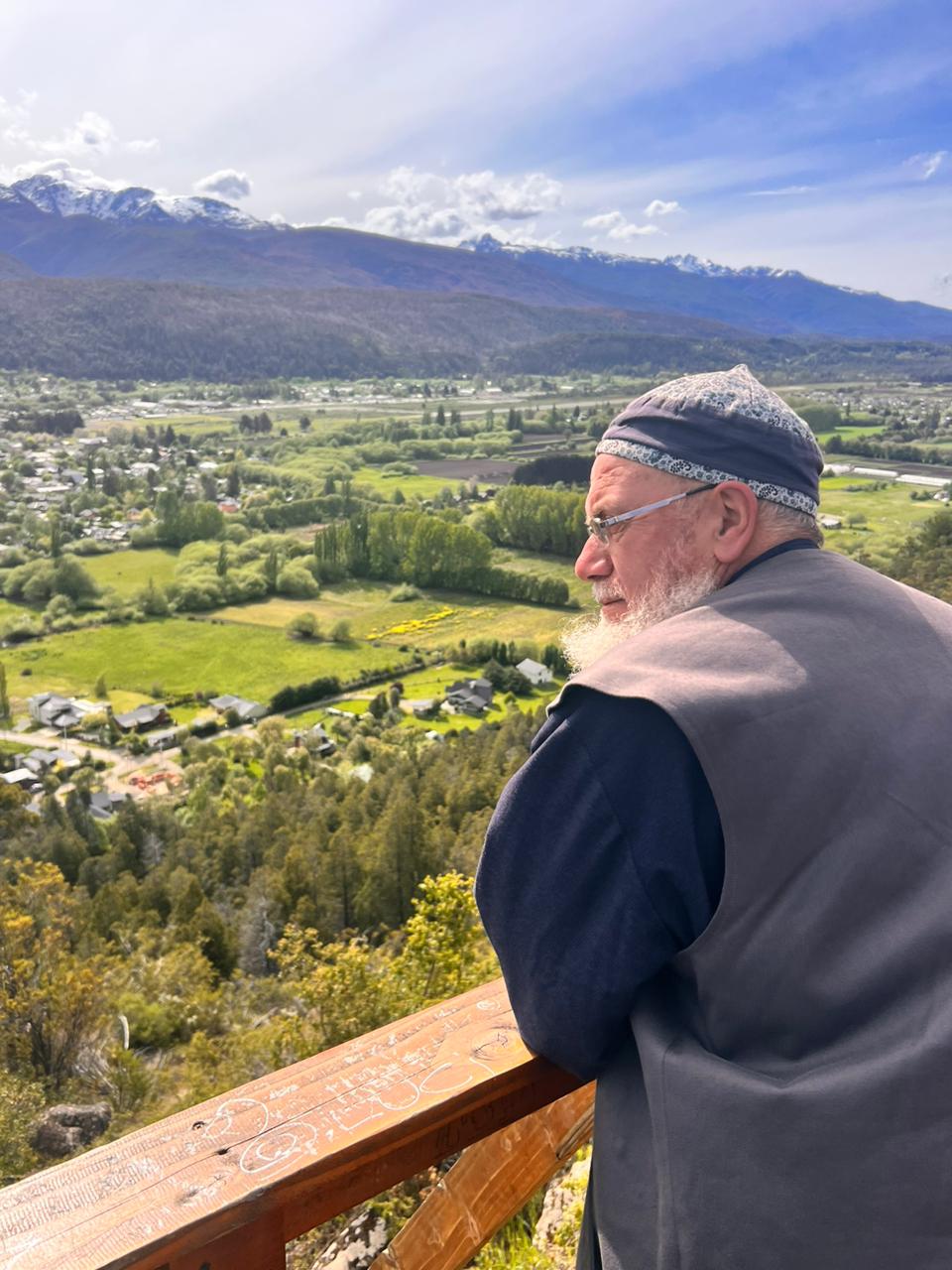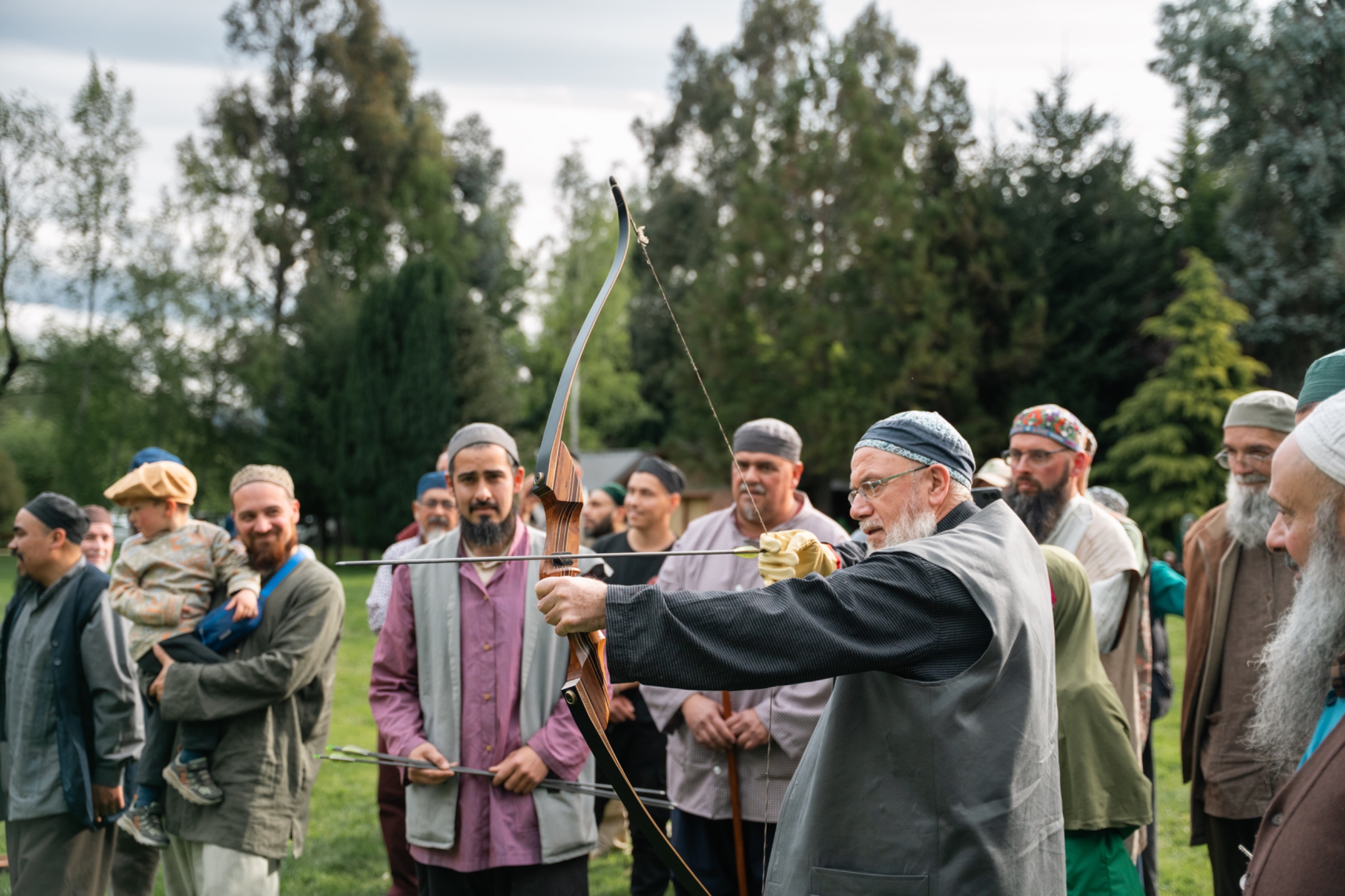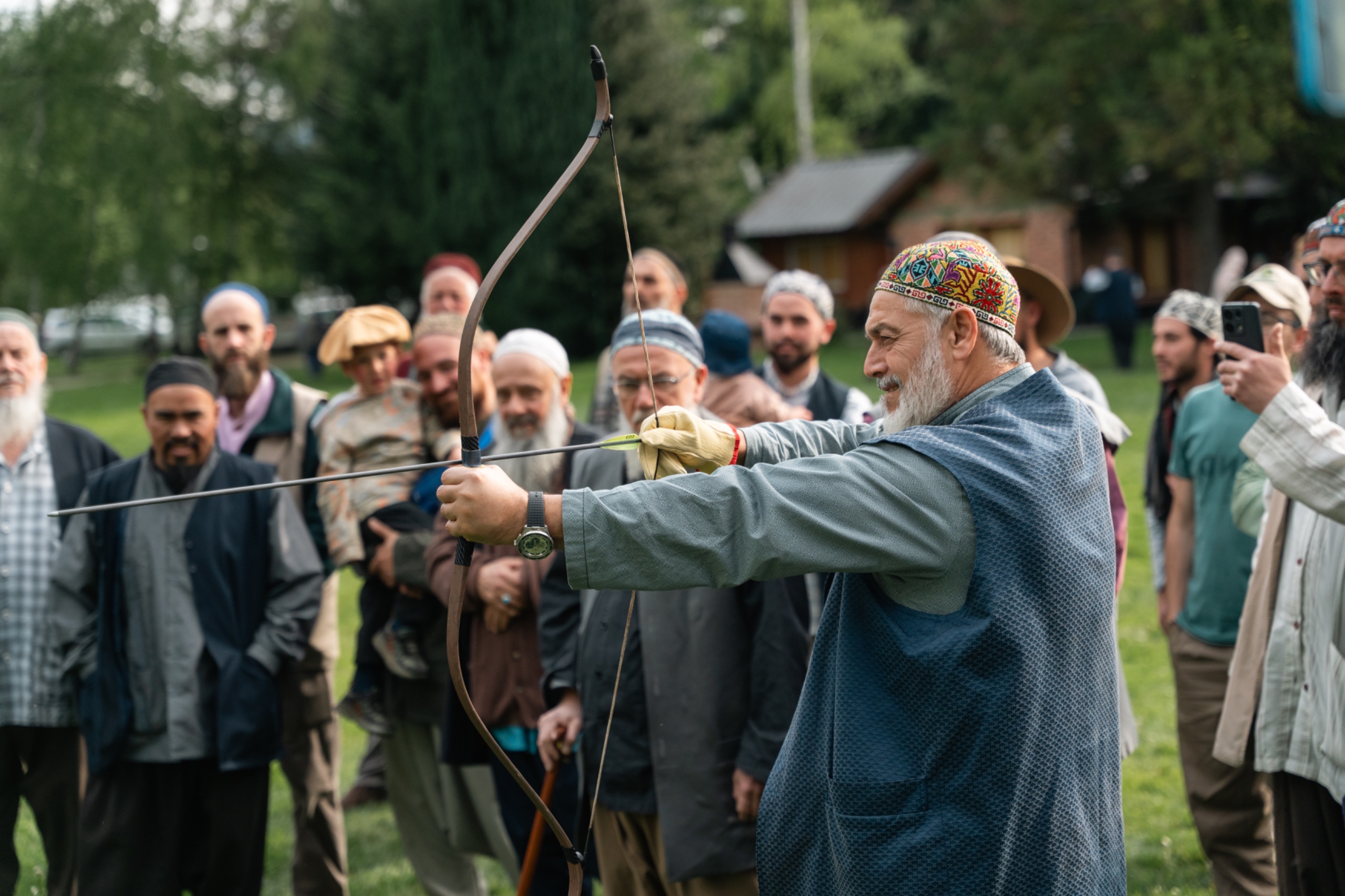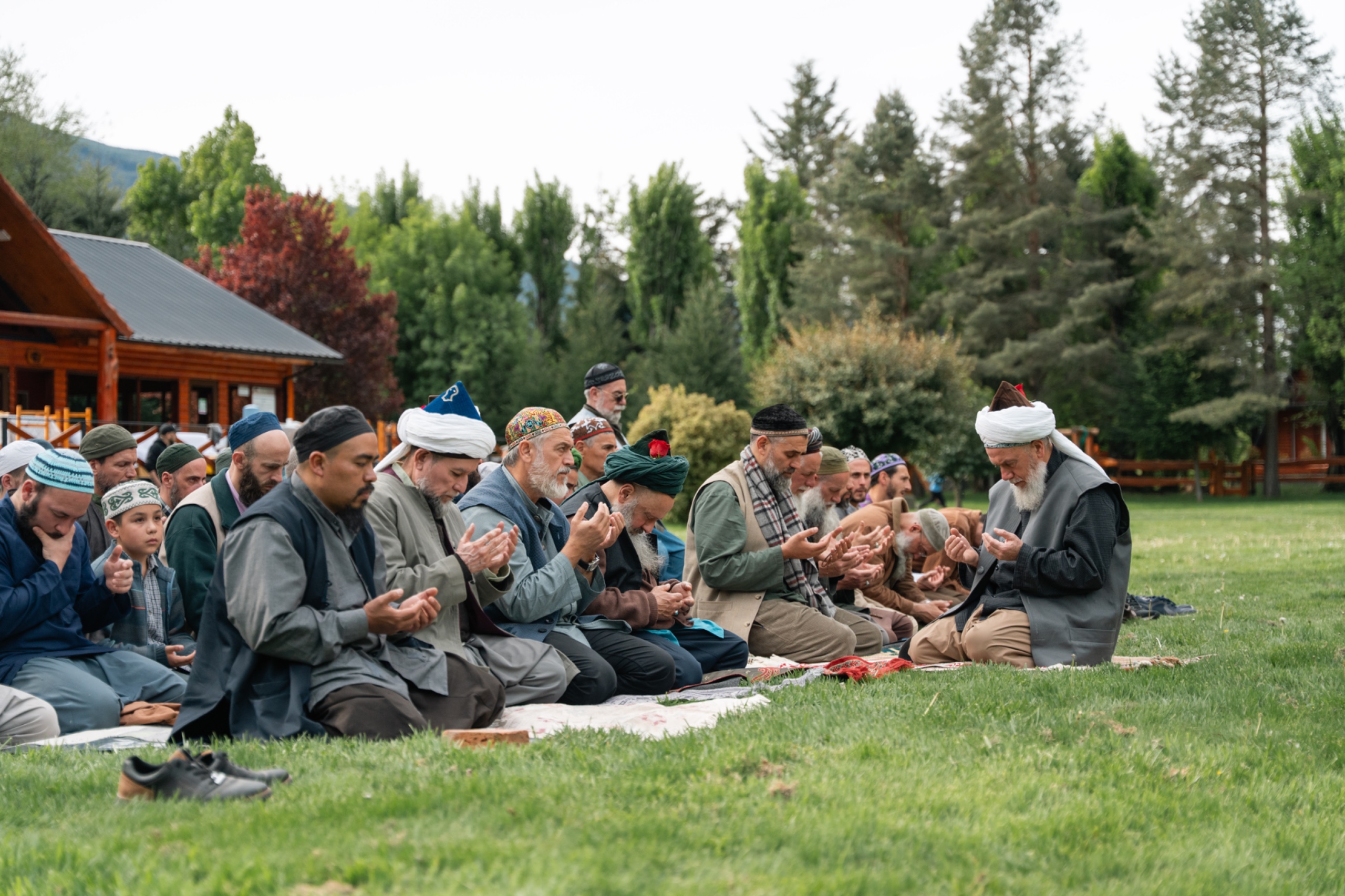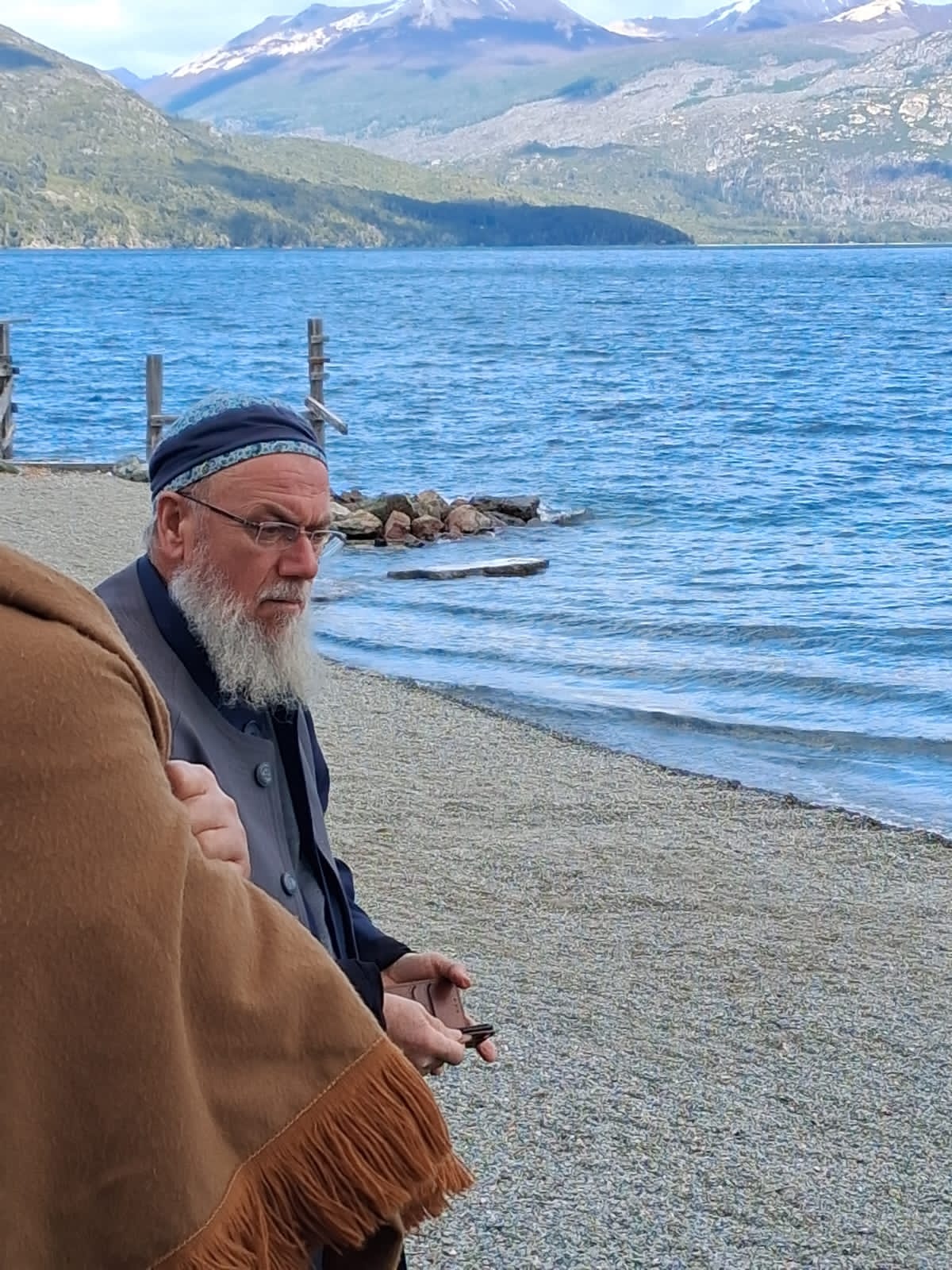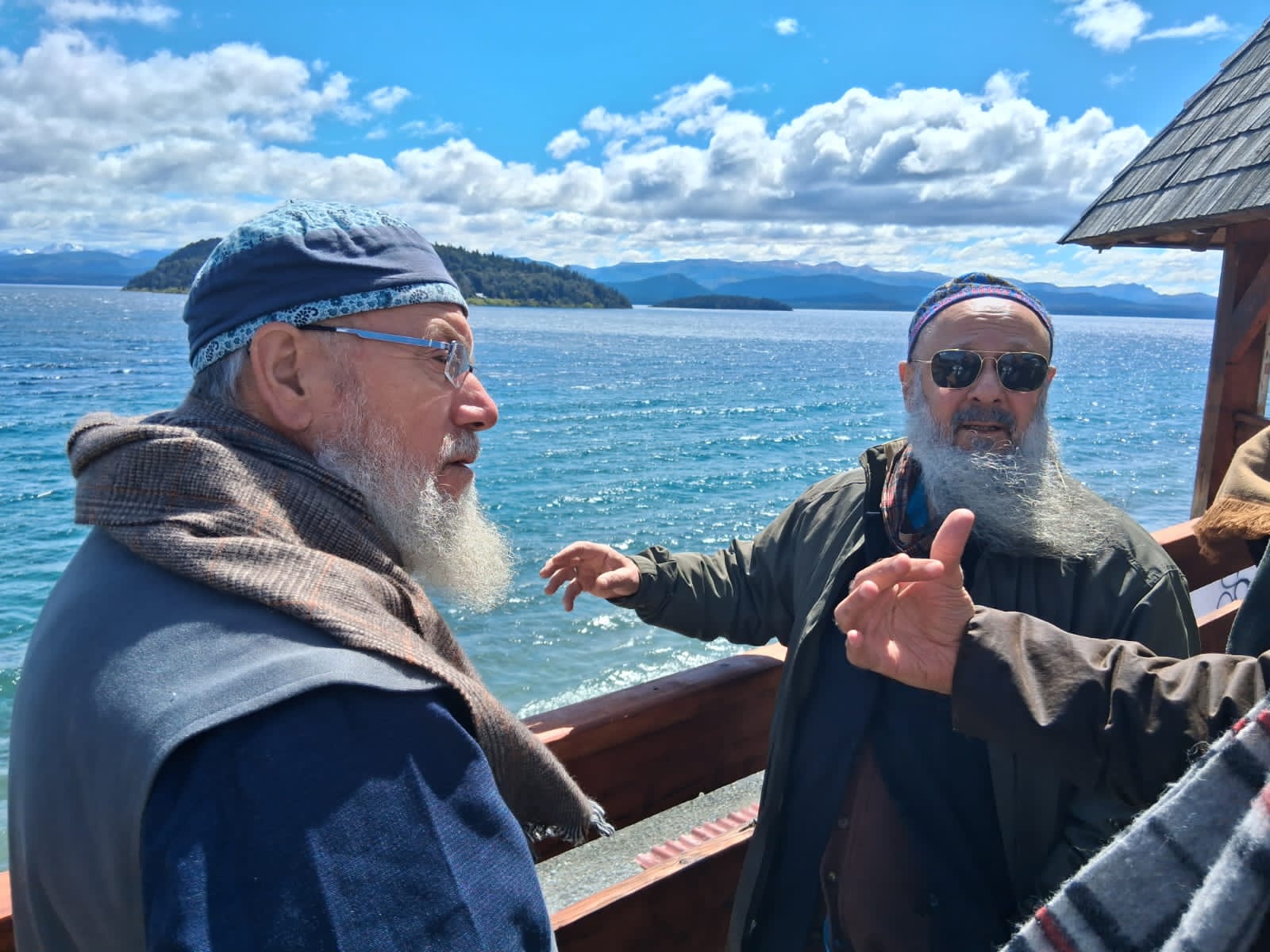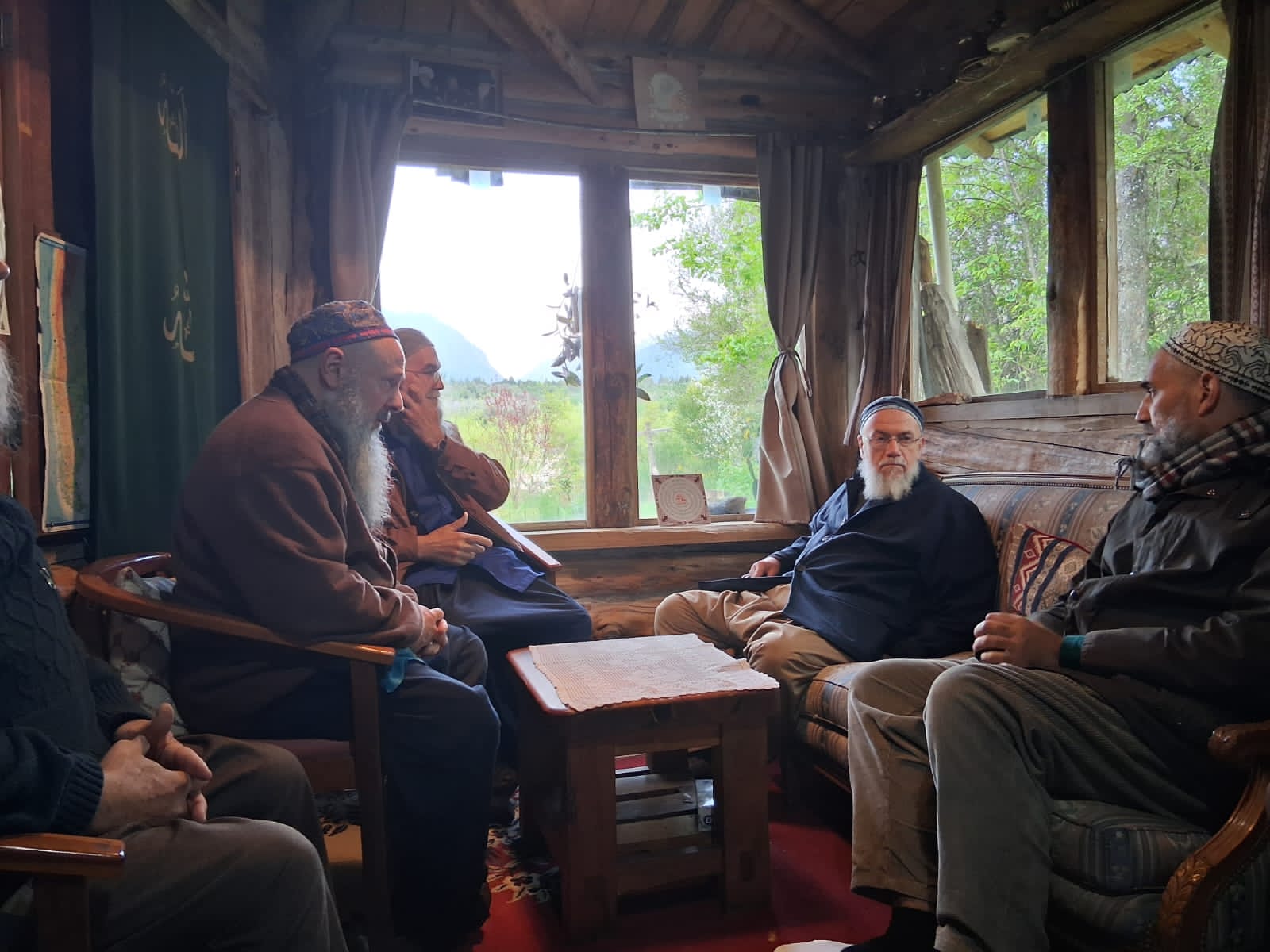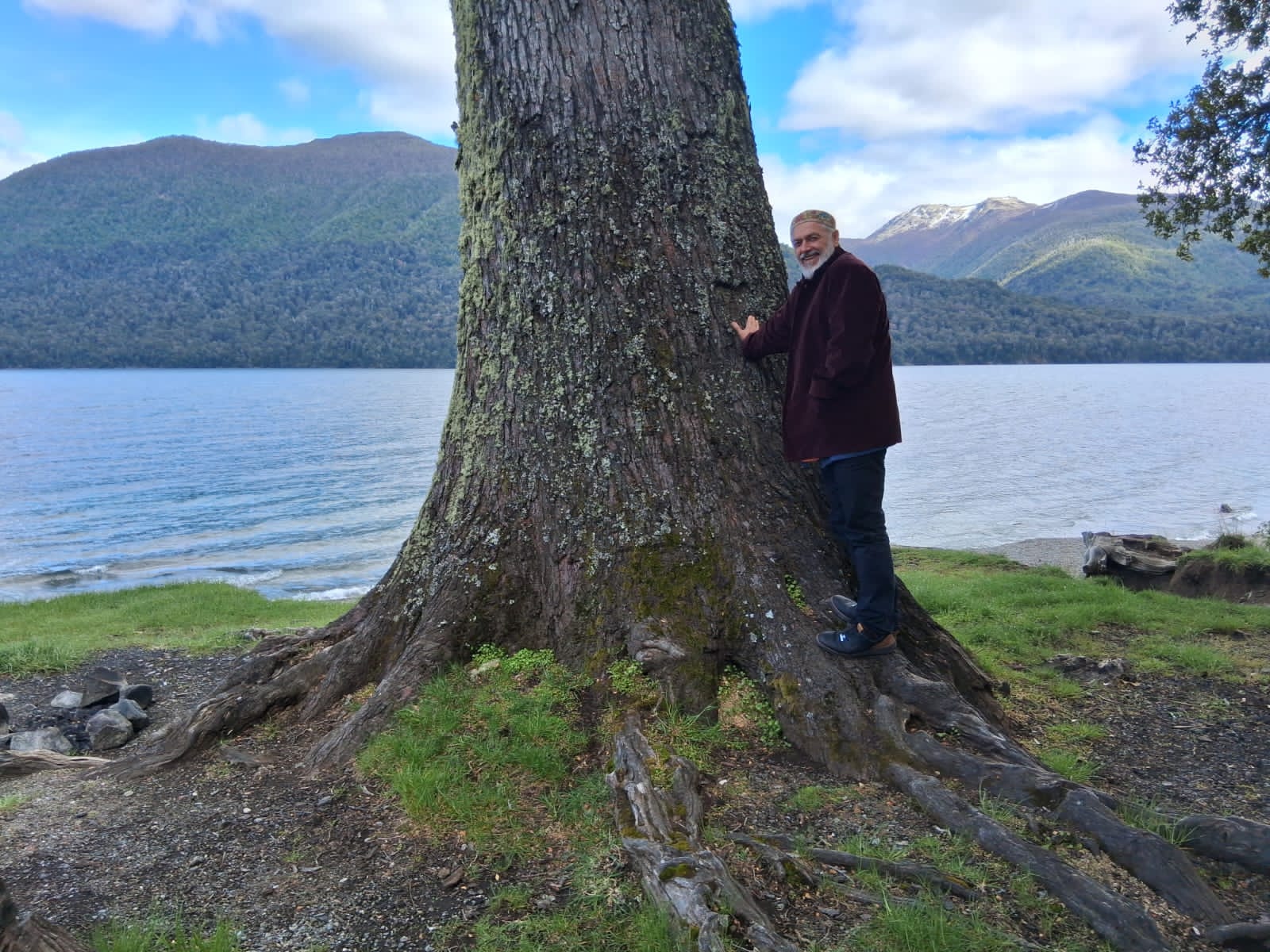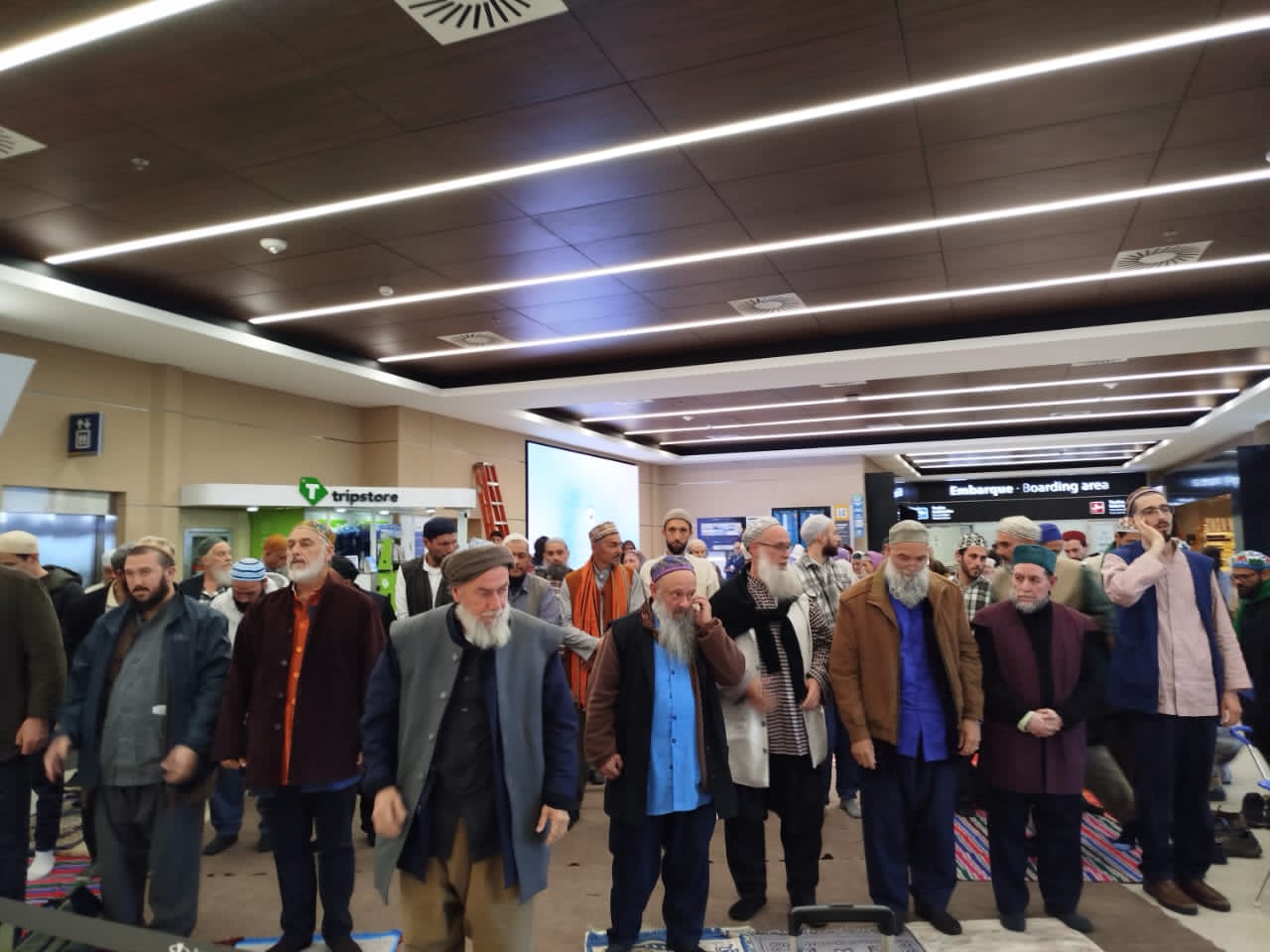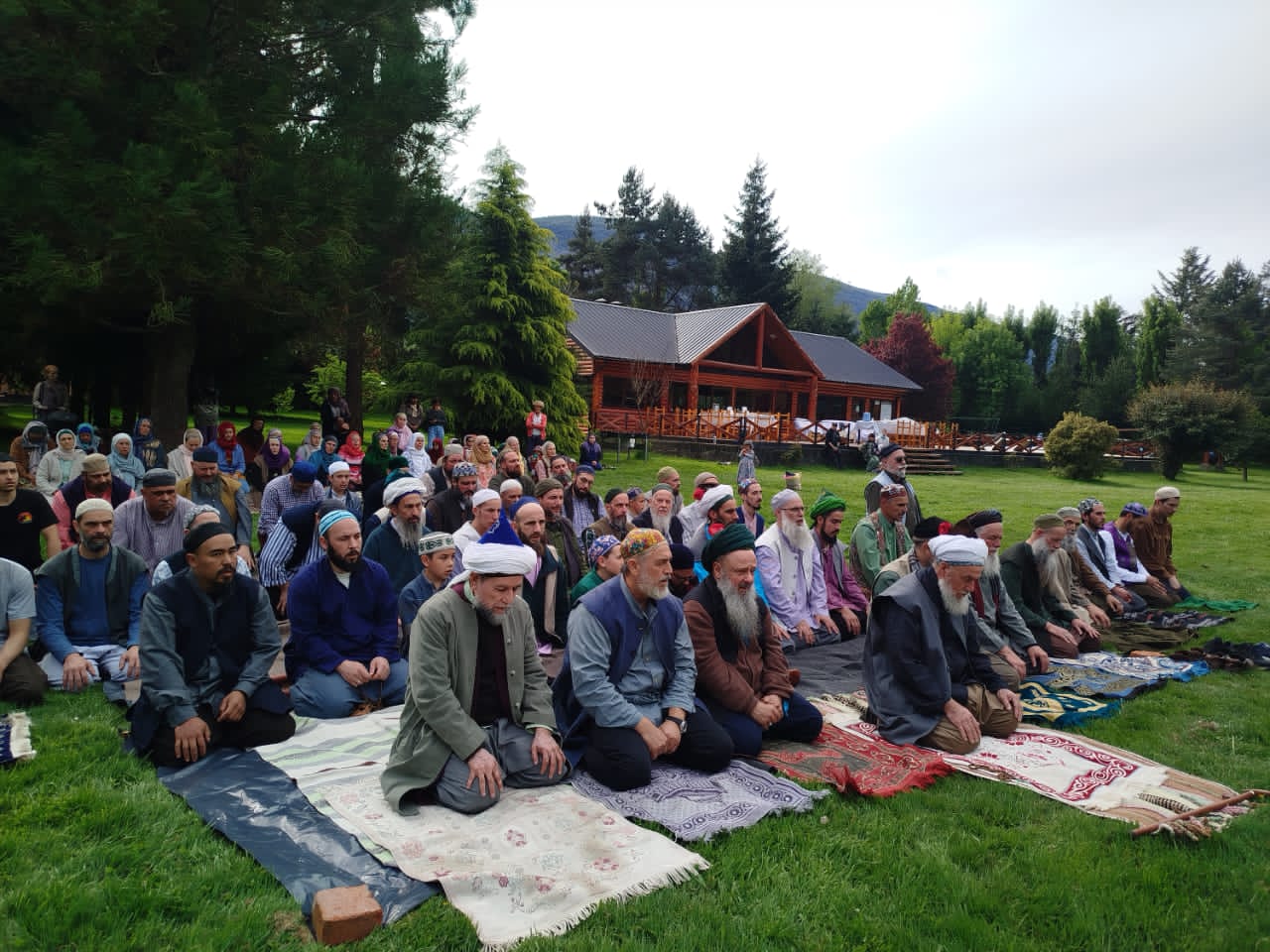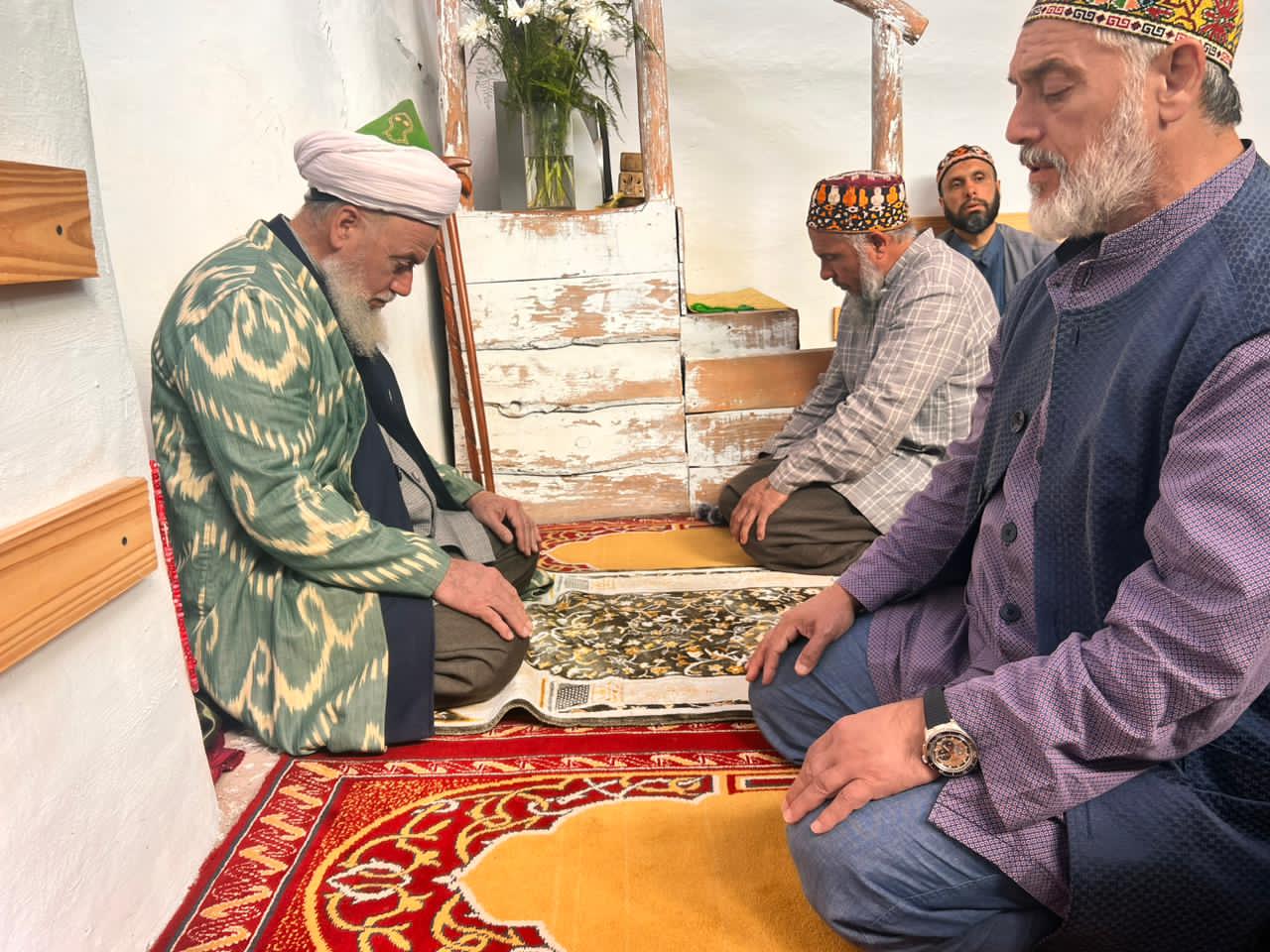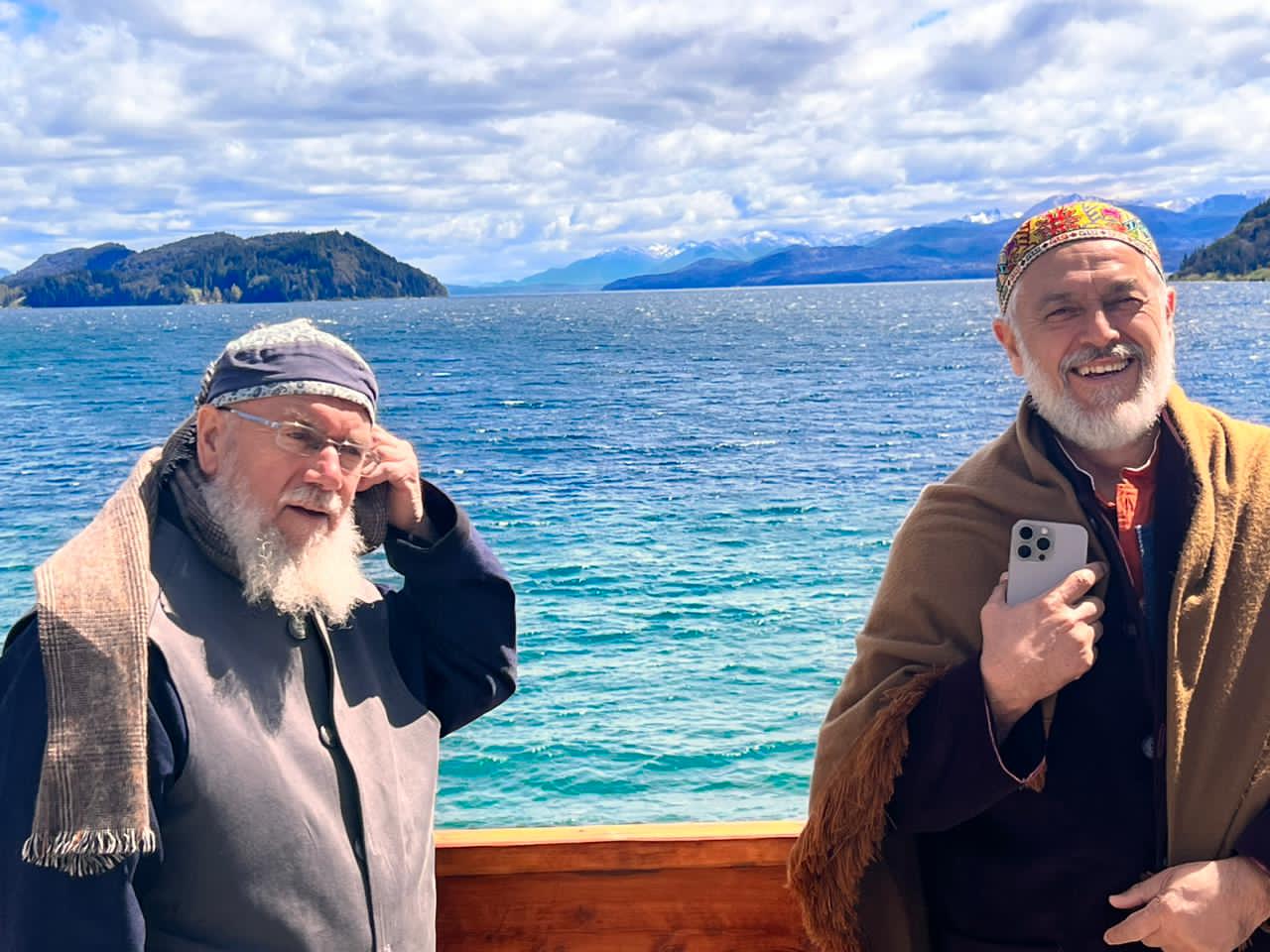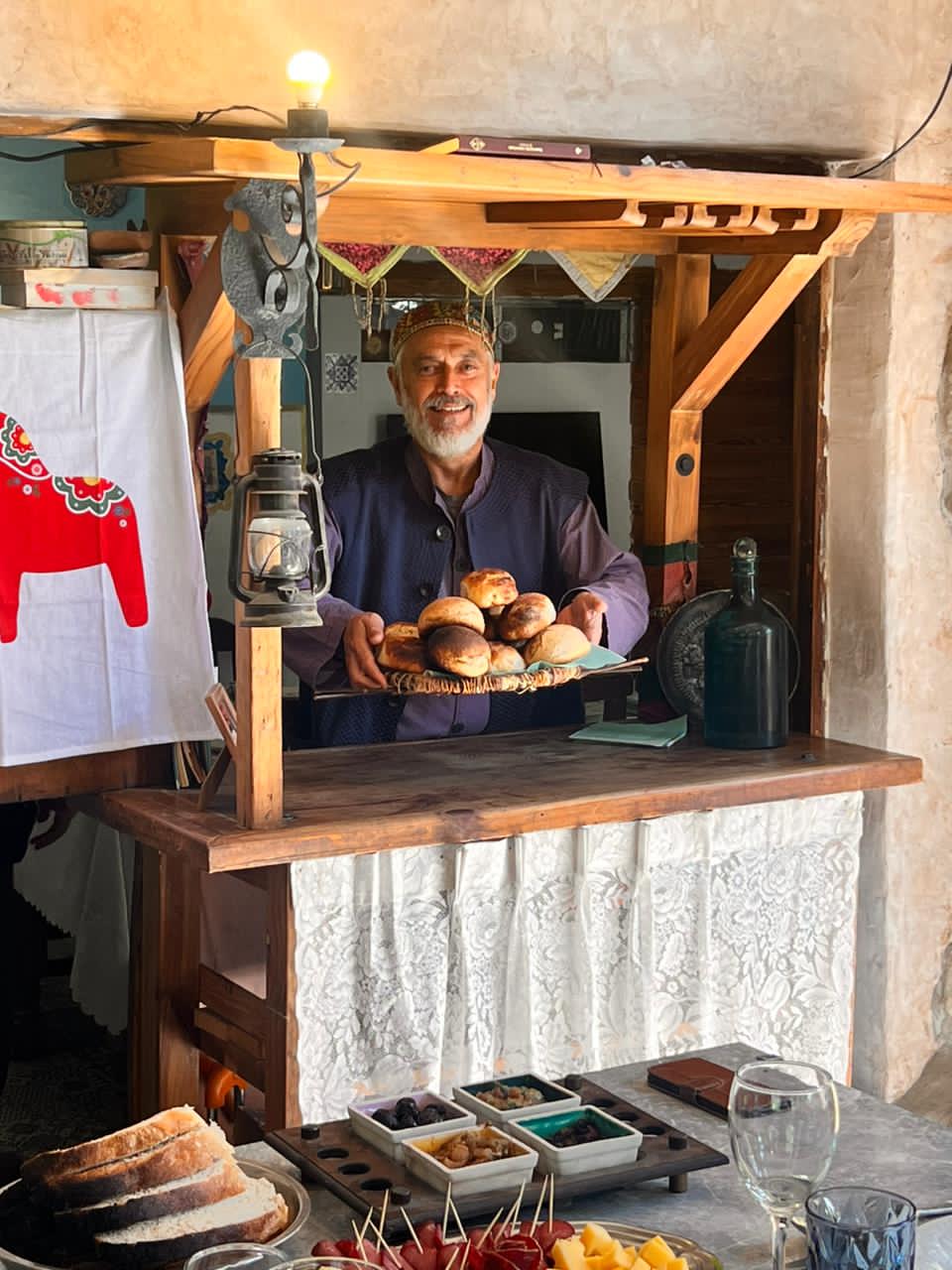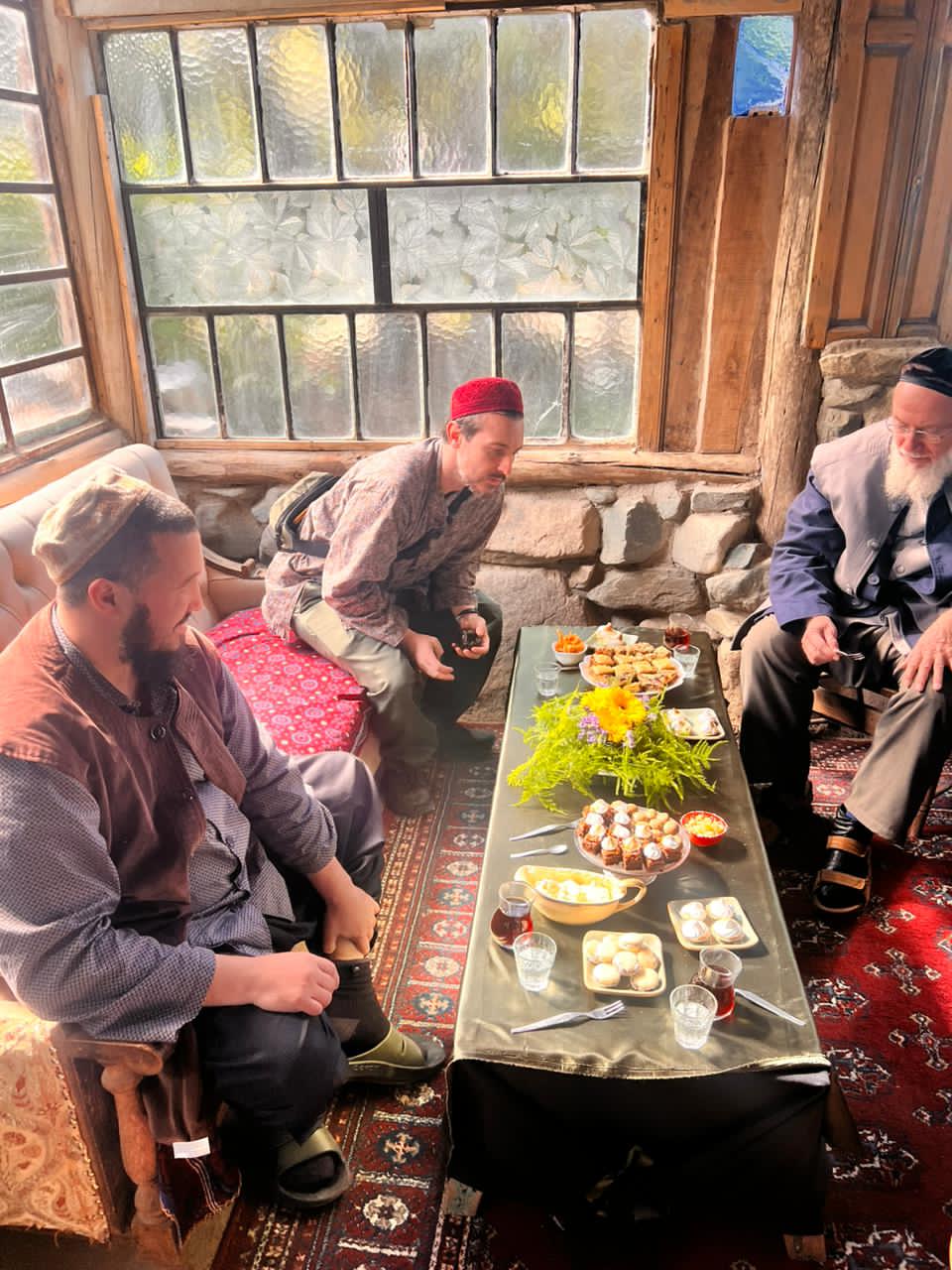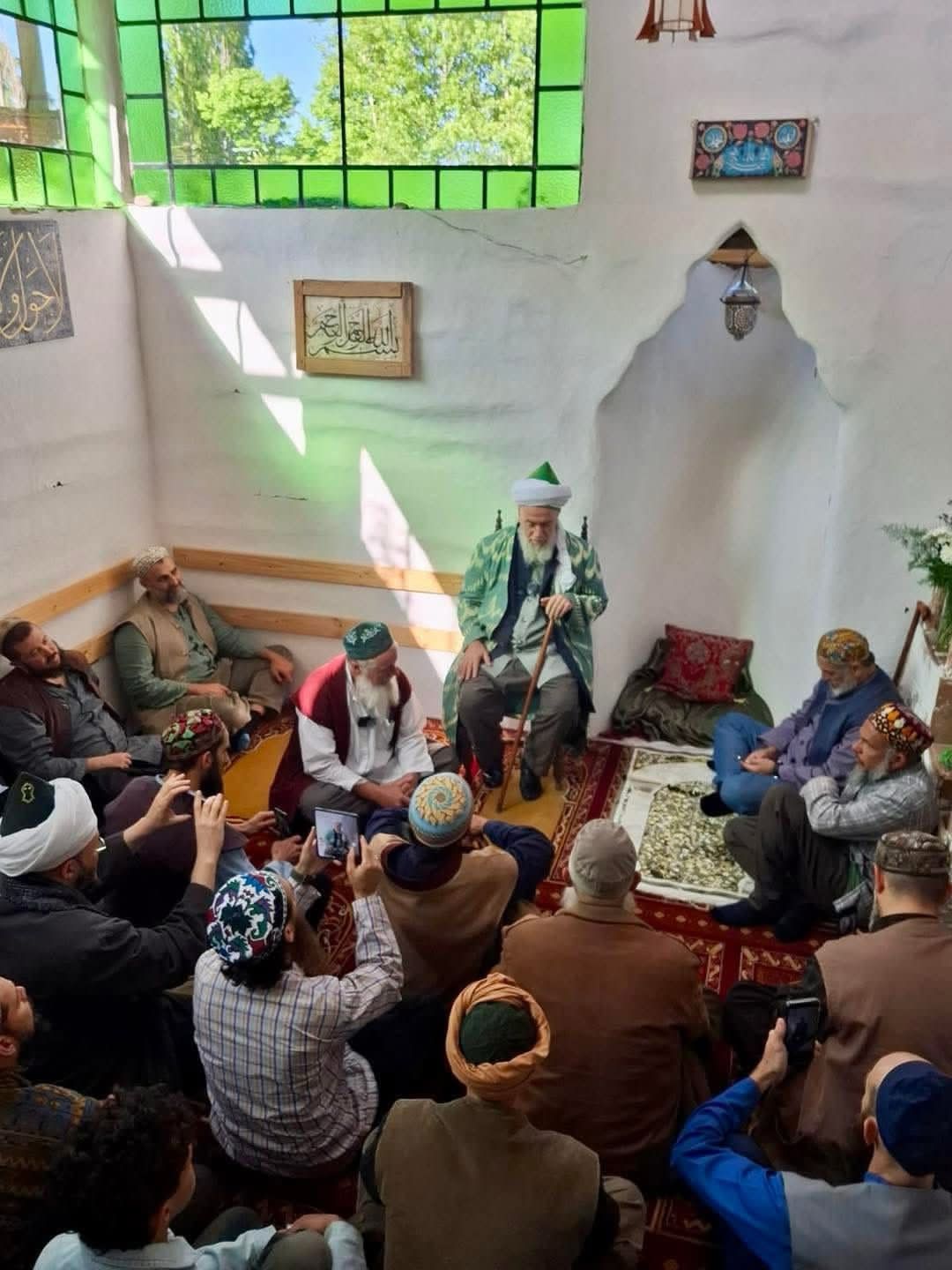
Dear Camp Family, We are excited to finally announce the winter camp dates for this year! We look forward to a beautiful time spent in good companionship as we aim to strengthen our īmān and deepen our love for our beloved Prophet Muḥammad ﷺ throughout that week together. ✨
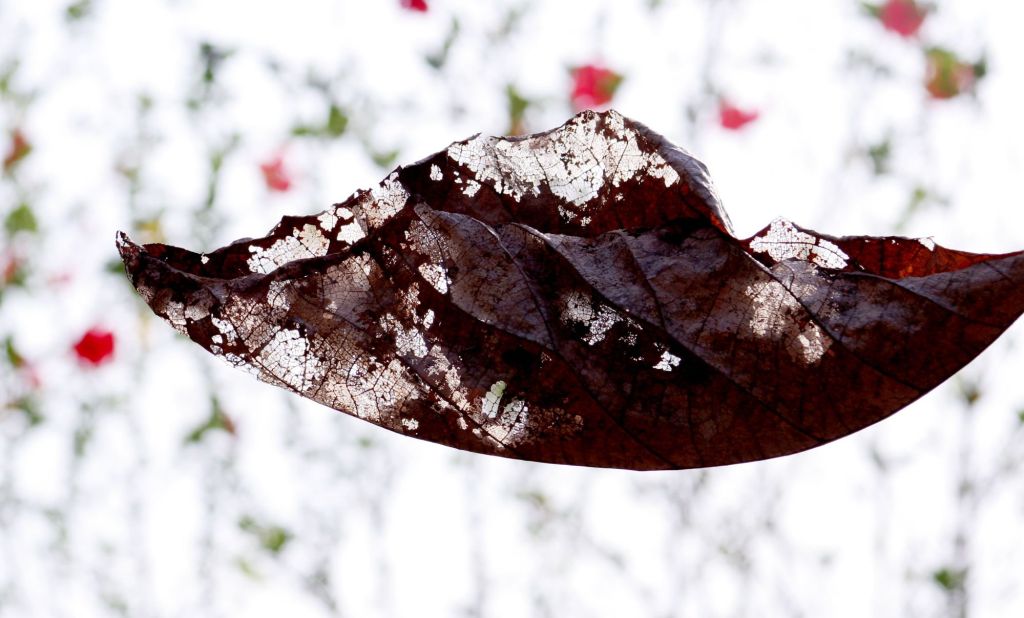
How does Sheikh Nazim use the dry leaf image in his talks
Sheikh Nazim uses the “dry leaf” image to teach complete surrender of the seeker to Allah’s will through the guidance of the Prophet and the spiritual master.
## Image of surrender
He describes the ideal murid as “a dry leaf in the wind,” moved entirely by the “wind” of divine inspiration coming through the guide, with no inner resistance or objection. Even if that leaf is blown into fire, it does not complain, symbolizing a heart that accepts every divine decree while saying inwardly, “My Lord is right, I am wrong.”
## Inner and outer obedience
In his talks he explains that this surrender must be both inward and outward: not only outward obedience in actions, but also the absence of hidden complaints, spiritual objections, or ego-based criticism toward Allah, the Prophet, or the shaykh. He presents this state as the peak of good manners on the path and as a condition for rapid spiritual progress, contrasting it with the scattered state of those who still follow their ego.
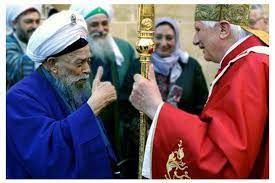
“Then whoever wills, let him believe, and whoever wills, let him disbelieve.” (18:29) Allah, the Mighty and Exalted, says: “Whoever wishes, let him believe, and whoever wishes, let him remain in disbelief.” This is a matter of the heart. One cannot force anyone to become a Muslim. Even during the conquests, no one was forced to change their religion; no coercion was applied. Whoever wanted to become a Muslim did so. Whoever did not, remained in their faith, paid the tax, and was treated like a citizen. Why do we mention this? These days, the Pope, the head of the Catholic world, is here on a visit. The background of his visit is connected to the alteration of the religion by the priests who gathered in Nicaea 1700 years ago. For the pagan Romans called the followers of Jesus “Nasrani”. They persecuted and killed them, giving them no peace anywhere. Finally, they mixed paganism with Christianity as they saw fit. 1700 years ago, that is, 325 years after Jesus, they said, “We are now Christians too,” and came to an agreement. But they falsified the religion—Allah forbid—by claiming: “There cannot be only a single God; He must have a family, He must have a child.” When the true followers of the Scripture who followed Jesus rejected this, they were all rounded up to be silenced. At the gathering in Nicaea, it was stated: “These are the true Christians; we do not accept others.” They tolerated no one outside of their doctrine and eliminated them. Whoever could flee, fled; whoever remained either had to accept the new religion or was killed. That is the crux of the matter. That is the event that took place 1700 years ago. There were many groups that stood outside the state religion they proclaimed. One of them was the group called the “Nestorians.” Salman al-Farisi also followed this path before Islam. The monks passed on the true religion; when one died, he referred [the follower] to the next. Finally, they sent him to Medina with the words: “The Prophet (peace be upon him) will appear there.” And so he found our Prophet (peace and blessings be upon him) in Medina. He came from this group, from this chain. That means most of them professed the Oneness of Allah and worshipped Him. Then, when this Roman group appeared, they composed fake Gospels and forced the entire Christian world off the right path into polytheism through coercion and killings. This is exactly what happened. But insha’Allah, this meeting will be an occasion for people to recognize the true path. Our people are afraid and ask: “Is black magic being practiced? Will something happen?” No, there is no reason to worry. This is the home of the saints, the martyrs, and the Companions of the Prophet. Therefore, no one, no matter who comes, can achieve anything; nothing will happen. One must show hospitality to the guest. Let us treat them well. Perhaps Allah will place the light of faith in their hearts so that they recognize the truth, insha’Allah. The penultimate Pope suddenly met with Sheikh Baba and resigned from the papacy shortly thereafter. This is something that has never happened before in history. We asked Sheikh Efendi: “Why did he do that?” Sheikh Baba said: “He saw the truth.” When he saw the truth, he stopped. They gave the people a pretext; they said: “He does not want to continue for health reasons.” Actually, no Pope is replaced before he dies. There was no one who had resigned before. Even if he was ill, he remained in office until death. If Allah wills, this visit will be an occasion for the guidance of the people. And even if not: Many priests and monks in his circle have recognized the truth and have secretly become Muslims, even if they continue their duties. There are thousands, hundreds of thousands of them, and there always have been. Therefore, there is no reason for fear or worry. “And say, ‘The truth has come, and falsehood has vanished.'” (17:81) “The truth has come, the false has passed away.” When the truth comes, the false no longer has value or standing. Therefore, our people need not be afraid: “What will happen? What is going on?” Do not be afraid. Allah is with us; the truth is Allah, the Mighty and Exalted. The truth will reveal itself. Even if not now: Just as the Pope has come, Jesus will also come. With Allah’s permission, he will eliminate all this falsehood. May Allah turn it to good. Insha’Allah, may it be an occasion for guidance. We have many brothers who have returned from the wrong path to the true religion; thanks be to Allah, they are the majority. Insha’Allah, may Allah grant the Muslims vigilance through this occasion, so that they hold fast to the truth.
AlhamduliLlah we are thanking Allāh جل جلاله for meeting these people who live very far from our country. Our way is the way of light, way of Prophet ṣallá Llāhu ‘alayhi wa- sallam. All prophets were traveling to go through people telling them about reality, to take them to heaven. Our meeting is only for the sake of Allāh جل جلاله. Allāh ‘Azza wa-Jalla likes these meetings and blesses them.
There are many ḥadīths of Prophet ṣallá Llāhu ‘alayhi wa-sallam, and many sayings of Allāh ‘Azza wa-Jalla about such a gathering, such a meeting with the intention being only for the pleasure of Allāh جل جلاله.
Our Prophet صلى الله عليه وسلم says in ḥadīth, Allāh جل جلاله will order His جل جلاله angels to put their wings under the feet of these people gathering for Him جل جلاله. He جل جلاله sends them His جل جلاله mercy. And Prophet ṣallá Llāhu ‘alayhi wa-sallam was saying, when two Muslim brothers come to meet each other for the sake of Allāh جل جلاله, Allāh جل جلاله rewards them. For each step, Allāh جل جلاله forgives them, rewards them and raises them one level higher.
AlhamduliLlah we are also coming from a far place, in shā’a Llāh this will be a reward for all of us. This is a real win. We are real winners. Because this will be saved in the Divine Presence of Allāh ‘Azza wa-Jalla, and we will find this in the next life. Like when they win [money] and put it in the bank; in many places, in our country and other countries. They save their money in banks. And many times, the banks don’t give them back. But in the Divine Presence of Allāh جل جلاله, it is saved for you; not only for a short time but forever. This is from His جل جلاله generosity for human beings.
Allāh جل جلاله is the Creator. Everything is in His جل جلاله Hand. Everything is for Him جل جلاله. The universe and all is for Him جل جلاله He جل جلاله is not in need of our worshipping or what we are doing. He جل جلا is happy for you if you do this. He جل جلاله is happy you will win. People don’t like others to win. Even if they have millions, they are not happy to give anything. Even if their wealth is enough for them for a thousand years, they are also not giving. But Allāh ‘Azza wa-Jalla is giving with out counting, بِغَيْرِ حِسَابٍ “Bighayri Ĥisāb” “Will be given their reward without account.”(Qur’ān 39:10).
If you do some good deed, Allāh جل جلاله rewards you ten times for it until seven hundred times; after this, only He جل جلاله knows how He جل جلاله rewards you. This is for the lucky people. Many people know the reality, know this good way and are not following it. For this, Allāh جل جلاله is happy with people like you who are gathering for His جل جلاله love, for the sake of Allāh جل جلاله
People have been living in this continent, this area for thousands of years, of course. They are saying it’s a new continent. No, all this has been since ‘Adam ‘alayhi s-salām. ‘Adam ‘alayhi s-salām is the father of humankind. Allāh ‘Azza wa-Jalla made all mankind to come through ‘Adam ‘alayhi s-salām. And by His جل جلاله wisdom, Allāh جل جلاله has written down what everyone will eat, when they will eat, where they will eat, where they will die. Allāh جل جلاله has already determined this for everybody. So these people are not unknown for Allāh جل جلاله. Allāh جل جلاله created them. Five thousand years, ten thousand years, Allāh جل جلاله knows when these people reached this place on earth.
So, AlhamduliLlah we visited many places in this continent. In the end, we know, َAllāhَ ‘Azza wa-Jalla mentioned in the Qur’ān, Bismi Llāhi r-Raḥmāni r-Raḥīm وَلِكُلِّ قَوْمٍ هَادٍ (Quran 13:07 ) “Wa li-Kulli Qawmin Haad” “And for every people is a guide.” For each nation, there’s one who will guide them to the truth. So in every place people gathered, Allāh جل جلاله sent a prophet. Here also, there was a prophet in this area. Everywhere, there was a prophet. But of course, people were quickly changing. Maybe after being five years with them, they changed.
Changing slowly, slowly. After that, they thought there was no prophet in this area. In every place in this world, there was a prophet. Of course, these prophets were before ‘Isa ‘alayhi s-salām. Thousands of years passed and people changed. But they are still a little bit respectful. Or there’s something they must follow so they go on worshipping something that’s not useful for them. After this, they were living like this for many years. I don’t know what they were doing. But in the end, they said they found a new place. So they came and settled here. So that Allāh جل جلاله completes the time of human beings, He جل جلاله slowly, slowly made them go around the whole world.
As we said before, Allāh جل جلاله made them come here. They made goodness – of course, not too good; they made bad and worse more than good. But they came here because their rizq was here so they must eat it in this country. But unfortunately, these people were oppressors not letting anybody think about Allāh ‘Azza wa-Jalla or religion or anything else. And of course, they changed the religion into another religion which normally must be good but with their ideas they only used it to oppress people. For this, Allāh ‘Azza wa-Jalla – SubhanAllah who came to this continent were trying to live as Muslims, as Allāh جل جلاله ordered, but they didn’t give a chance to these people. Allāh ‘Azza wa-Jalla gave them everything. All these countries masha’Allah, thousands of miles, we went by plane, by car, by walking. It was amazing; very rich. Allāh جل جلاله gave them everything.
SubhanAllah every time we hear that there are problems here. People are not happy. People are making problems not like other countries; that it’s not safe. There is a wisdom here. What’s the wisdom? Because there was oppression and many bad things done to human beings. For this, this is coming as inheritance to people. What the ancestors had done is coming through centuries until now. For this, you can find millions coming from Muslim countries to this continent but not any sign of Islām; maybe only since 24 or 30 years ago.
What is the solution for this? The solution is to repent and ask forgiveness from Allāh جل جلالهand to come to Islām.“أسِلمتَ ْسلَم” “Aslim Taslam.”Be Muslim and you will see be safe. Surrender and you will be safe. Islām is the religion of peace. It doesn’t accept any oppression. The first thing is justice. It is very important in Islām. All these people say “Democracy” and other things; every time they bring something new but they have no justice. Not any country in this world has justice. Whoever says “There is justice in this country or that country” are liars. It looks like justice but they are hypocrites. There is a saying, “العَ ْد ُل أسا ُس ال ُم ْلك” Justice is the base of ruling, of a good life. And those who look at the history since Prophet ṣallá Llāhu ‘alayhi wa-sallam until the last Ottoman Sultān, you can’t find any injustice. In these countries, there were not only Muslims but Jewish, Christians, Buddhists, Hindus living there. There were 70 different religions.
But of course, who’s the first enemy of human beings? Shayṭān. Shayṭān doesn’t like giving good things to human beings. They destroyed the last Islamic Rule, the Ottomans. The shayṭān destroyed it. And after this began the worst century, the 20th century. A hundred years now, all the world is suffering. They promised them, “We will give you this, we will give you that,” but what have they done? They didn’t give but they took everything.
In history [as we see], nobody rules forever. Allāh جل جلاله promised us, He جل جلاله will send one from the lineage of Prophet ṣallá Llāhu ‘alayhi wa-sallam, one of his صلى الله عليه وسلم grandsons who will save, in shā’a Llāh. In shā’a Llāh, we are waiting for him because the world is everyday becoming worse and worse.
In shā’a Llāh when Sayyidina Al-Mahdi ‘alayhi s- salām comes, all of this that they’re making now from bad situations for each and every thing and having no solution, all these problems will be finished. There will be justice. It will be barakah for the whole world. Nobody will oppress anybody. There are many secrets and many things that people don’t know.
You see what happened before “What is this? What is that?” People are wondering. So, everything will be clear. What happened since Sayyidina Adam ‘alayhi s-salām until now. Who was living on this earth, who was living there, this mountain, this sea: all what was unknown will appear. What we know about the history of human beings is maybe not even five percent. That time, everything will be known and who reach that time – in shā’a Llāh it’s near – it is easy for him to understand and know what happened.
That time is a very blessed time. After all these bad things, it will be a very good time. But of course, this is only for forty years. After forty years, that time Sayyidina Al- Mahdi is coming and Sayyidina ‘Isa ‘alayhi s-salām will be with him. Sayyidina Al-Mahdi will rule for seven years and Sayyidina Isa will rule for forty years.
Many people are cheated about Sayyidina ‘Isa. Sayyidina ‘Isa is a miracle of Allāh جل جلاله. He is a miracle. Allāh جل جلاله made Sayyidatina Mariam ‘alayha s-salām pregnant without marriage, without being touched by a man. What they said “He is the son of god” is ridiculous. How can that be? Ḥāshā (far from it), it is an example – but it is as if they are saying an ant married an elephant. How can this be! How can you say Allāh ‘Azza wa-Jalla has a son! Nobody can imagine how Allāh ‘Azza wa-Jalla is, where He جل جلاله is, what He جل جلاله is! This is impossible for our mind to know about.
Sayyidina ‘Isa will come in that time. He is now in the second heaven. They couldn’t kill him. Allāh جل جلاله saved him and he is waiting for the time to come again. That time, he will be, in shā’a Llāh, with Sayyidina Al-Mahdi and he will rule. He will break the cross. He will not accept giving people pork to eat. He will rule upon the Sharī’ah of Prophet ṣallá Llāhu ‘alayhi wa-sallam. And after forty years, he will pass away. His place is near Prophet ṣallá Llāhu ‘alayhi wa-sallam, in Madina.
It is known that Prophet ṣallá Llāhu ‘alayhi wa-sallam says about the prophets brothers, and he صلى الله عليه وسلم said, “My صلى الله عليه وسلم brother ‘Isa ‘alayhi s-salām.” So after forty years, when ‘Isa ‘alayhi s-salām passes away, it is the big sign of Qiyāmah. So Qiyāmah becomes near and people again leave religion, leave goodness and again follow their egos. This is the nature of people, because they have shayṭān, they have ego. When they find something, they quickly follow it. That time it’s finished.
So, there must be something like this. Allāh جل جلاله sends a smoke. And when believers smell this smoke, they pass away and only non-believers will be there. Then, Allāh جل جلاله will send to finish all these people and this will be the end of life. So nobody will be alive that time. All will be waiting for Qiyāmah. Qiyāmah will, in shā’a Llāh, come later and everybody will take what he had done in this life. And what we were telling in the beginning of the Sohbah: what you get from rewards and what Allāh جل جلاله gave you, that time it will be for you.
In shā’a Llāh, also with the barakah of sincere people, Allāh جل جلاله makes people come to the way of Allāh جل جلاله, way of mercy.
*THOSE STRIVING TO BE A MEANS FOR GUIDANCE* Mawlana Sheikh Muhammad Adil ar-Rabbani 07 November 2025/ 16 Jumada al-Awwal 1447 Fajr Prayer – Akbaba Dergah, Istanbul
Shukr to Allāh ﷻ, we went and returned safely. It was a long journey, but Allāh ﷻ helped us. in shā’a Llāh, it happened for the sake of Allāh ﷻ; may Allāh ﷻ accept it.
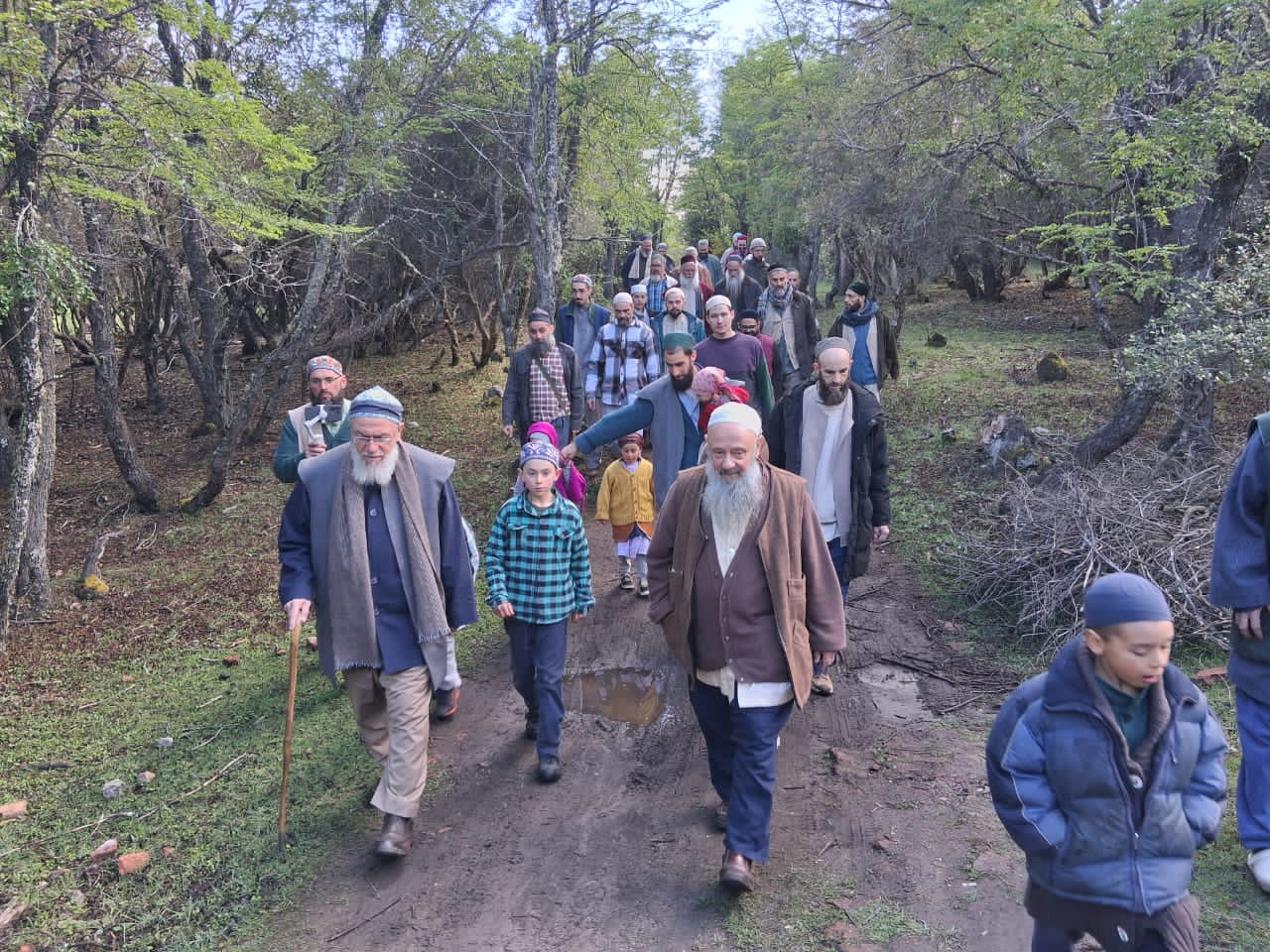
Of course, because it was a long journey—we had made this journey before—we wondered if it would happen a second time, and Allāh ﷻ made it happen. We went. Masha’Allah, when Allāh ﷻ guides the people there, they are granted it. And with the barakah and himmah (support) of Mawlānā Shaykh Nāẓim, thousands of people there have embraced Islām, joined ṭarīqah, and are striving with their own capabilities to spread this religion, to spread Islām, and to benefit the people there. May Allāh ﷻ be pleased with them; they treated us with hospitality and respect.
They also reached out with their whomever relatives they have to meet us so that they too could embrace Islām. They helped them, and asked for du’ā’ so that they could be the means for their guidance. When a believer, Muslim experiences something good, he wishes the same for others. What they wish for is – “الأَقْرَبونَ أَوْلى بالمَعْروفِ” “The closest are worthier of goodness,” says our Prophet ṣallá Llāhu ‘alayhi wa-sallam. If you are going to do something good, you should do it to your relatives first. Therefore, they also constantly called upon their relatives, friends, and so on, to convey the message to them and show them. And many of them came, shukr to Allāh ﷻ. In shā’a Llāh, it will be a means for guidance.
Because it’s such a far place, many Muslims have gone there before, in the past. But of course, their biggest challenge was that they went there as Muslims but there were no Jamā’ah (community), no ṭarīqah, nothing. Unfortunately, they were lost. But in shā’a Llāh, now there is ṭarīqah—that’s why ṭarīqah is what shayṭān dislikes most: ṭarīqah, haqīqah. Shayṭān detests them. He doesn’t like sharī’ah either. He doesn’t like sharī’ah or madhhabs. He doesn’t like the mashāyikh. He doesn’t like the Ahlu l-Bayt. When people don’t love them too, they’ll have no branch to cling to; they wither away.
With Allāh’s ﷻ permission, many people will reach guidance through them, in shā’a Llāh. Because with ṭarīqah: Ṭarīqah means īmān. Islām: everyone is Muslim; there are many Muslims. As we said, many Muslims went there and became lost. Their grandfathers were Muslim, their sons were Muslim, they prayed, but their grandchildren are now people who have no relation to Islām. They either have no knowledge of religion or have become like Christians.
In shā’a Llāh, this time – Mahdi ‘alayhi s-salām will come anyways. But until then, may Allāh ﷻ guide them and make them happy. May those people, their friends, and their relatives embrace Islām. In shā’a Llāh, may they join ṭarīqah. At first, those there were unaware of the ṭarīqah, of Islām. They joined ṭarīqah, as Sufism. Then, they attained guidance and recited the Shahada. They perform the five daily prayers and all other acts of worship, setting an example for those there.
May Allāh ﷻ be pleased with them; they have honored us. We have been together for twenty-five days. May Allāh ﷻ honor them. May Allāh ﷻ make them happy, and us too, in shā’a Llāh.
Wa min Allah at-Tawfiq. Al-Fatiha.
There are recited Quran Khatm, ayāt, surahs, Yasin, Salawat, tahlilat, and also recited Dala’il al-Khayrat, takbirs, tahlilats.
May Allāh ﷻ accept all the good deeds and charity done. First of all, for the holy soul of our Prophet ṣallá Llāhu ‘alayhi wa-sallam, his family and companions, all the prophets, awliya, asfiya, Mashāyikh, for the souls of all our ancestors.
Especially for the soul of our Shaykh, Mawlānā Shaykh Nāẓim. For the souls of our mothers, fathers, relatives, Muslims, and believers. For goodness to come and evil to be warded off.
May the good wishes of those who read it come true. For happiness here and hereafter.
We are thanking Allāh ﷻ again, every minute, every second for His ﷻ favor to be with believers, mu’min, mu’mināt, in shā’a Llāh. We are in this day of Jum’ah, a special day for Prophet ṣallá Llāhu ‘alayhi wa-sallam and his ﷺ nation. Because Allāh ‘Azza wa-Jalla gave the best thing for Prophet ﷺ, so the best day of the week, Friday. Everything happened on this day: ‘Adam alayhi s-salām was created on this day and also Qiyamah will be on this day. There is also one hour in this day, if you ask for du’ā’ and pray, if it coincides with this hour, Allāh ﷻ accepts it and gives you what ask. There are many favors of this day. Making salawāt, prayers and gives charity on this day is more acceptable and more rewarded.
And, of course, Allāh ‘Azza wa-Jalla has appointed a time for Jum’ah prayer. Jum’ah prayer must be, of course, with Jama’ah (congregation). The believer, mu’min, Muslim must perform this prayer. Of course, there is some condition for Shafi’i: they must be 40 people. For Hanafi: 3 people with one imām. Three jama’ah and one imām will be enough. Whoever can find this, he must pray it. If he cannot, there is an excuse for him. He prays Fard of Dhuhr. So if he has this condition, if he couldn’t find the Jama’ah to pray Jumu’ah, he must pray Dhuhr. In this country, it is difficult. But in Muslim country, he must go. If he has an excuse of illness or can’t go physically it happens. But if he is there and not going, it will be not good for him. In Jum’ah also, there is praying Jum’ah, Khutbah (sermon) and two rak’āt with imām. This becomes like praying Dhuhr. And during Khutbah people must be listening to the imām, not to speaking to each other also. Allāh ﷻ will be happy with you. And when Allāh ﷻ is happy with you, everything becomes easy.
Everything you do from worshipping, from charity, from good things is for you. This only is what you will take with you. There were people asking one big ‘awliyā’, a famous ‘awliyā’ in India, Mu’in al-Din Chishti, raḥmatu Llāhi ʿalayh (Allāh ﷻ have mercy upon him), ‘a’la Allāhu darajātuh (Allāh ﷻ raise his rank). He brought millions of people to Islām. So, a person asked him, “What is success?” He answered, “Success is to win the akhirah, the next life.” Not to be president, doctor, lawyer, a millionaire, an actress; that everybody knows you, everybody wishes to be like you. If you do not win your next life, it is not success. Success in these material things is only for this life, not forever. Even in life, even not going on for the end of life. Many people lose their success. And very few of them may succeed for the end of their lives.
For this, we, ṭarīqah and Awliyā’u Llāh are encouraging people to get as much as they can reward from Allāh ﷻ, the happiness of Allāh ﷻ. For this, we were saying about Jum’ah prayer and we explained how important it is. Why it is important for people to pray Jumu’ah. In Muslim countries also, they are not giving importance to Jum’ah. Many of them are not going. Many people think in Muslim countries they are a hundred percent going to Jum’ah or praying or doing this worship. Very, very few are those who go; maybe five percent or ten percent. So it is not given importance in Muslim countries. In other countries also, if Allāh ﷻ opens for you His ﷻ way to succeed in ākhirah, it will be for you, in shā’a Llāh.
And we must pray for this. In this Khutbah of Jum’ah, we read this ayah, ‘‘ادْعُونِي أَسْتَجِبْ لَكُمْ”
“Id’ūnī ‘Astajib lakum’’
“Call upon Me; I will respond to you.”(Qur’ān 40:60). Which means, pray for Me, I will accept it for you. We must pray all the time to stay on this way. Because life – they think life is long but it is not long, it is short. But even if short, people can ask, and pray for Allāh ﷻ to keep us strong on the right way, for you, for your children, for all people. You can pray. Allāh ﷻ is saying, “I will accept”, in shā’a Llāh. And Prophet ṣallá Llāhu ‘alayhi wa-sallam says in ḥadīth, we also read it in khuṭbah; Prophet ṣallá Llāhu ‘alayhi wa-sallam says, “سِلاحُ المُؤْمِنُ الدُّعَاء”
“The weapon of the believer is du’ā.”
Praying is the weapon for mu’min, for the believer. This is our weapon. We don’t have gun, we don’t have pistol. Our weapon is more effective: Du’ā’. It is du’ā’, praying. And Allāh ‘Azza wa-Jalla with this, our Prophet ﷺ said, opens for you, gives you rizq, health and everything. Giving you protection, giving you a good life and happiness; happiness and satisfaction which is very important these days. Because people don’t have happiness or satisfaction. They are looking for something. They can easily get this, but they are not seeing what is in front of their eyes. Looking at it. It is a huge thing in front of their eyes, but they are still searching where it is; looking for happiness, for satisfaction. Shayṭān is making people blind, not seeing. And still, your happiness is in front of your eyes, accept this, open your eyes, you will be happy. In shā’a Llāh.
May Allāh ﷻ accept our du’ā’. We are praying for you, for your country, for Allāh ﷻ to give hidāyah for all of them, to be happy with Islām, īmān, justice, in shā’a Llāh. May Allāh ﷻ send us Sayyidinā Al-Mahdī alayhi s-salām. He will make the whole world to be Muslim, in shā’a Llāh.
Wa min Allāhi t-tawfīq, al-Fātiḥah.
18 oktobre
*QUR’ĀN IS THE PROOF*
Mawlana Sheikh Muhammad Adil ar-Rabbani
18 October 2025/ 26 Rabih Al-Akhir 1447 Glew Dergah – Buenos Aires, Argentina
Our ṭarīqah is to be together, to give good advice and listen to advice. The Naqshbandi ṭarīqah is one of forty one ṭarīqah, way, which is coming from Prophet ṣallá Llāhu ʿalayhi wa sallam. One from Sayyidinā Abū Bakr as-Siddiq and the other from Sayyidinā ʿAlī. The ṣaḥābah of Prophet ṣallá Llāhu ‘alayhi wa-sallam are the highest people among the ummah. The highest ones are the companions of Prophet ṣallá Llāhu ‘alayhi wa-sallam, the ṣaḥābah.
Among human beings, the highest are Prophets. There are 124,000 prophets. And the highest one, who completed the religion, has the highest rank is our Prophet ṣallá Llāhu ‘alayhi wa-sallam, Sayyidinā Muḥammad ṣallá Llāhu ‘alayhi wa-sallam. Because his ﷺ name is mentioned with the name of Allāh ﷻ –
So he ﷺ is the highest and we are lucky to be in his ﷺ nation. All Prophets are on the same way; no difference. You cannot differentiate, “This is one brought a different order from Allāh ﷻ.” No, maybe the order came, but still it didn’t finish; it was finished with Prophet ṣallá Llāhu ‘alayhi wa-sallam.
For this, all people following believers, following Islām, of course. And in Christianity or Judaism they are not saying that after Prophet ṣallá Llāhu ‘alayhi wa-sallam came any Prophet. Every Prophet that came was saying “After me is coming a Prophet” And the last Prophet before Prophet ṣallá Llāhu ‘alayhi wa-sallam was Sayyidinā Īsá alayhi s-salām. He, of course, was believing in ṭurāh and was saying, “Allāh ﷻ will send after me the last Prophet and his name Ahmad.” So, it is clear. People must know that the religion is one and must believe in this. Each prophet came accepted what Allāh ﷻ was giving and taught people the order of religion. Allāh ‘Azza wa-Jalla was giving them one by one [order], until Prophet ṣallá Llāhu ‘alayhi wa-sallam. In the last year of his ﷺ life, he ﷺ said in ḥajj, “Today I completed your religion.”
And many things our Prophet ﷺ said in the prophecy have happened. And now there are still many prophecies that did not happen. They will happen, in shā’a Llāh. Especially about Sayyidinā Īsá, alayhi s-salām. Allāh Azza wa Jalla mentioned in the Qur’ān his miracle.
The Qur’ān which is the real word of Allāh Azza wa Jalla. The only one left in religions. They have in other religions but they have changed them. Only the Qur’an Azimu sh-Sha’n is preserved as it is from Allāh ‘Azza wa-Jalla. And it is some likeness, like you give an example about something but the example is very far from it; just according to what we can say. Just as some crime happens and people look at it. Many times, you see in movie or so, a crime happens but people don’t know what happened or who did this, what exactly happened. So maybe many times, innocent people are put in jail or given death penalty. After that, nobody knows what happened. But Allāh Azza wa Jalla, no. He ﷻ said, “Everything Allāh ﷻ says is true.” And in the Qur’ān He ﷻ told us many things about this.
One of these things – before we continue – is in the time of Sayyidinā Mūsá alayhi s-salām. They killed one man and threw him in some place. He was suspecting that maybe these people killed him. They came asking Sayyidinā Mūsá alayhi s-salām, “Who killed this man? We must take revenge.” Because in Judaism, there is kisās, like revenge. If you kill one, you must kill one. If you cut his head or hand, you must cut the same. If you cut his ear, they must cut an ear. Teeth by teeth, they say. So, they came to him and Musa ‘alayhi s-salām spoke with Allāh ﷻ – he is Kalimu Llāh – they said, “Ask Allāh ‘Azza wa-Jalla what shall we do to know who killed this man.” Sayyidinā Musa asked and an order came, “Kill one cow and hit this man with something from the cow.” They asked, “O Musa alayhi s-salam, which cow?” He said, “A cow that mustn’t be so old.” After that, they were asking again, “Yes, we know, but which color must it be?” He said, “Its color must be yellow, a very nice yellow color.” Still asking, still asking. “It is mixed up for us how this cow must be.” And after that, the answer was coming, “It must be young. It must have a very nice, yellow color. It mustn’t have worked at all. It must be like this, like that.” And then they said, “Ok, ok, we understand. We will do this.” They went looking for this cow all around the whole country, only to find one. They asked for the price to kill it. Its owner was one poor, good man, a believer. Allāh ﷻ gave him an inspiration, “You must fill this cow’s leather with gold.” Of course, they have too much money, but they are stingy. But still, they paid it in full; maybe one ton or more than one ton of gold. They cut the cow, took its tongue and hit that man who was killed with its tongue. He woke up and said, “It is my nephew. He killed me for my money.”
Allāh ﷻ is saying, “Allāh ﷻ gives examples in the Qur’ān for people to believe.”And about Sayyidina Isa – Allāh ‘Azza wa-Jalla is saying [in the Qur’an], Sayyidatina Maryam was all the time worshipping, praying. Allāh ﷻ sent her an angel and she became pregnant without marriage, without anyone touching her. Allāh ﷻ is the one who creates everything. He ﷻ gave an example for the creation of Sayyidinā Īsá. He is like Sayyidinā Ādam ʿalayhi s-salām. He ﷻ created him from earth, mud, and said “Be” and he was. After this, what happened? The end of the story of Sayyidina Īsá, some traitor – everybody knows the traitor – Allāh ﷻ says in the Qur’ān, we made this one in the appearance of Sayyidinā Isa. They caught him and killed him putting him on this cross to death. In the Qur’an, Allāh ‘Azza wa-Jalla tells us,
“Wa Mā Qatalūhu Wa Mā Şalabūhu Wa Lakin Shubbiha Lahum”
“But they killed him not, nor crucified him, but the resemblance of ‘Isa (Jesus) was put over another man (and they killed that man)”. (Qur’ān 04:157).
They didn’t kill him; they didn’t crucify him or put him on a cross. It only looked like that. They thought they’ve done this. And Allāh ﷻ said
“بَل رَّفَعَهُ اللَّهُ إِلَيْهِ”
“Bal Rafa`ahu Allāhu ‘Ilayhi’’
“But Allāh raised him [Isa (Jesus)] up (with his body and soul) unto Himself (and he is in the heavens)”. (Qur’ān 04:158).
Allāh ﷻ took him, raised him from dunyā to Heaven, the second Heaven. There are 7 Heavens. He is in the second heaven and he will come back to show all human beings who were cheated by these people and to let them know that he is the real Isa ‘alayhi s-salām. Not as they said: son of god. He who has very little bit of thinking cannot believe in this. Allāh Azza wa Jalla doesn’t have shape. He ﷻ doesn’t have place. All this place, universe, light, sound, day, centuries, history, all of this is created by Allāh Azza wa Jalla.
So, you cannot say somebody is His ﷻ son; it is impossible for anyone who has good thinking to believe in this. And everybody in every religion – because most of them are destroyed by those who claim are religious people. They are destroyed by these people for money, for benefit. And they make millions and billions of people to be out of the way of Allāh ﷻ.
For this, Allāh ‘Azza wa-Jalla will – Maybe somebody is saying, “How can a priest or rabbi or other do this!” There are many examples for this. You know this one rabbi, he was in time of Sayyidina Yusha ‘alayhi s-salām. He knows Ismu Llāh al-A’ẓam, the Great Name of Allāh ﷻ. And if this one who knows it spells it, he can do anything. Even this one was cheated, “We will give you a beautiful woman to marry.” And he betrayed Sayyidina Yusha ‘alayhi s-salām. So no, they are not innocent. They are with shayṭān. They changed many things, maybe 95 or 99 percent of the holy books.
Al-ḥamdu liLlāh, the biggest miracle of Prophet ṣallá Llāhu ‘alayhi wa-sallam is Qur’ān Aẓīmu sh-Shā’n. It is in our hand, coming from heaven; not changing at all. Every good thing, every knowledge is inside it. For this, when Sayyidina Isa comes – in shā’a Llāh we are waiting. Everybody is waiting for the one to come; believers, non-believers, everybody. So, it is from Allāh ‘Azza wa-Jalla to put in the hearts of people that somebody will come and give happiness, justice for this world after all this corruption or after all this oppression. In shā’a Llāh, we are waiting. The Time is not so far, I think. In shā’a Llāh, Sayyidinā Mahdī alayhi s-salām will come. Then Sayyidinā Īsá ‘alayhi ṣ-ṣalām will come from heaven, and clean and take all this dirt from the world, in shā’a Llāh.
May Allāh ﷻ make him come soon and we will be with him, in shā’a Llāh. In shā’a Llāh, he will follow the religion of Prophet ṣallá Llāhu ‘alayhi wa-sallam. His wish is to be one of the ummah of Sayyidinā Muḥammad ﷺ. It is a very big honor. We are, al-ḥamdu liLlāh, from his ﷺ ummah. We must be thankful for Allāh ﷻ for this.
‘’Innamā Ya`muru Masājida Allāhi Man ‘Āmana Billāhi Wa Al-Yawmi Al-‘Ākhiri”
“The mosques of Allah are only to be maintained by those who believe in Allah and the Last Day.”(Qur’ān 09:18). Ṣadaqa Llāhu l-‘Aẓīm.
Allāh ‘Azza wa-Jalla says in the Qur’an, those who believe in Allāh ﷻ and the last day, the next life, make this house for Allāh ﷻ, it means Baytu Llah. The Jami, Masjid is the house of Allāh ﷻ. What does it mean? It means everybody can come, enter, do ‘ibadah and take reward, in shā’a Llāh. AlhamduliLlah we are traveling from place to place. Masha’Allah, they make nice places for Masjid and Dergah.
In shā’a Llāh, all of you will be surprised on the Day of Resurrection, how Allāh ‘Azza wa-Jalla is giving you reward for what you had done in this life. Some people make big things; some people make small things. Even if they do good things without knowing it, Allāh ‘Azza wa-Jalla knows. Allāh ‘Azza wa-Jalla says in the Qur’an,
“Wa Man Ya’mal Mithqāla Dharratin Sharrāan Yarah “
(8)
“So whoever does an atom’s weight of good will see it (7)”
“And whoever does an atom’s weight of evil will see it.”(8).(Qur’ān 99:07-08).
Which means who does a very small good thing, as small as dust, Allāh ﷻ will reward him for that. And who does a bad thing, Allāh ﷻ will forgive him if he asks for forgiveness. There is a good thing in this also. Who does a bad thing, if he repents and asks for forgiveness, Allāh ﷻ forgives him. And He ﷻ turns this sin into reward for him.
For this, some people will be surprised, “We didn’t know of all these good things. From where is this reward coming? Like a mountain coming to us. From where is this? We weren’t good people all the time. We were doing bad things, from where is this coming!” You were doing bad things, but when you asked for forgiveness, Allāh ﷻ changed it to reward. Allāh ﷻ is Generous. He ﷻ is not afraid for it finish. Creatures don’t give too much. Some are generous but they can also be afraid that maybe they will finish. But Allāh’s ﷻ treasures are endless; no limit. He ﷻ is always giving people. One cannot imagine how much He ﷻ will give on that day.
What must you do with this? You must believe in Allāh ‘Azza wa-Jalla and His ﷻ generosity. We are poor people and we are doing as much as we can but we ask Allāh ﷻ to help us in the life here and the other life also. So we must be grateful to Allāh ‘Azza wa-Jalla. He ﷻ likes people who thank Him ﷻ not those who complain. Now people of this time are all the time complaining about everything. Not happy with anything. It is difficult to make them happy. Who made this? Shayṭān. He made people unhappy and not satisfied. But Allāh ‘Azza wa-Jalla says, “If you are thankful, I will multiply what you have.” If you thank Allāh ﷻ, Allāh ﷻ will make all what you have from goodness to continue. If you have a good village, if you have a good land, anything; you must be thankful for it. And He ﷻ will make it continue for you. If not, if you are not thankful only complaining, it will be cut.
This is our advice for people who want happiness in both lives; here and hereafter. Here it is important. But the most important is the next life. The other one is forever but what’s important is to prepare here for that life. Some people, people of old times, thought they are clever. The ancient people in Egypt or other places knew there was another life and they prepared for it. But they weren’t so clever because they didn’t prepare good deeds for ākhirah. They just put gold or instruments in their graves thinking, “When we go to the next life we can use it.” And this in the other life is like garbage; it’s nothing. Life in paradise: there are houses from gold, from jewels. For this, you can only take this with good deeds not by taking with you money and gold, putting it in the grave.
May Allāh ﷻ give people good understanding. Those who understand this will be happy and not worried about anything. And people will be very happy with them, in shā’a Llāh.
May Allāh ﷻ give good understanding to this country, other countries, and everywhere. They are harming people for something that will be a punishment for them in the next life. Everybody must know that Allāh ‘Azza wa-Jalla will ask about our deeds. Allāh ﷻ is happy with people who help each other, not harm each other.
May Allāh ﷻ make us from those who help each other.
In shā’a Llāh, may Allāh ﷻ give us to be all the time in good gatherings like this, in shā’a Llāh. Prophet ṣallá Llāhu ‘alayhi wa-sallam says, the best thing for the mu’min is to be helpful to other people. In everything; helpful in teaching people, or in any kind of help.
This is a ḥadīth, the best one is who is best for his family, his country and human beings. Of course, most people think if they do this, they will lose something from their benefit. If you help one and he becomes better than you, you think you will lose. This is the thought of people, but not the thought of believers. The believer is not like this. The believer helps everyone. Also who has good thinking must know this. If you are in a good position, your neighbor is in a good position, the other one is good and other is also good, all people will be happy and there won’t be a problem.
But shayṭān is envious. He is teaching people to be envious. He doesn’t help them to be helpful to each other; no. He wants nobody to help the other, nobody to be happy.
This is AlhamduliLlah what Prophet ṣallá Llāhu ‘alayhi wa-sallam is teaching human beings. This teaching was Prophet ṣallá Llāhu ‘alayhi wa-sallam’s teaching. When Prophet ṣallá Llāhu ‘alayhi wa-sallam was teaching and telling people about Islām, the people of his ﷺ tribe and those around him ﷺ when he ﷺ was living in Makkah Mukarramah, were envious, not accepting. Because they don’t want.
They have proudness and they don’t want anybody to be like them. They wanted everyone to be below them. And many of them know and Prophet ṣallá Llāhu ‘alayhi wa-sallam showed them miracles. He ﷺ told them what’s important.
They even knew Prophet ṣallá Llāhu ‘alayhi wa-sallam before he ﷺ became a Prophet. They know he ﷺ is honest, not lying, not doing any bad thing. But the biggest thing that destroyed them is envy and proudness. As it is mentioned in Qur’ān also,
“Why is not this Qur’ān sent down to some great man of the two towns (Makkah and Tā’if)?”(Qur’ān 43:31).
They say, why is it coming to Sayyidina Muhammad ﷺ – they call him ﷺ “Muhammad” only – and not coming to this one. They have one wise man who was living in Arabia. He was a wise man and everybody knew his position is higher than theirs. From their proudness, they were saying some things that the mind doesn’t accept.
Allāh ‘Azza wa-Jalla chose Prophet ṣallá Llāhu ‘alayhi wa-sallam and is not asking for peoples’ opinion, “Whom shall I choose? Do you want to make elections?” Even this man who they said is wise became Muslim later. And they were calling him saying, “Prophecy must be yours. You must be the Prophet.” He told them, “No. Now, I accepted Islām and he ﷺ is the Prophet. The highest one is Sayyidina Muhammad ṣallá Llāhu ‘alayhi wa-sallam.” Even with this, they didn’t accept. This is a very bad character to be proud and envious. This is the character of shayṭān.
Al-ḥamdu liLlāh, if you see somebody, al-ḥamdu liLlāh who has a good business, has enough to live, has a good family, is teaching good adab, good manners, we are happy with them the most. This is the happiness for us and for believers; all believers also. Who are not believers are not happy. Everything they see, even if not for Muslims or for believers, they get envious from anybody. For this, they are fighting the whole time and not happy.
Ṭarīqah people, alhamduliLlah, have good adab, good teaching. It’s been like this the whole time, since the time of Prophet ṣallá Llāhu ‘alayhi wa-sallam until now. Who are in the way of Prophet ﷺ, way meaning ṭarīqah, are helpful for each other and for other people also. If they see somebody who’s in need for help, they help him as much as they can. And of course, after the Ottoman time ended, many things changed in the world; especially in Muslim countries. And when Muslim countries lost good manners, other people also, the whole world lost it.
Slowly, slowly this good manner became less and less. And it nearly finished. If you find some people helping or are trying to help, people misunderstand them or don’t believe them.
In the time of Ottomans, there was like ṭarīqah, all ṭarīqah people – there were teachers for the traders and for each occupation. For each what he wants to become. What will this boy be? Maybe he wants to become a butcher. They put him in a butchery to learn how to become butcher with an owner or master. The other wants to become a carpenter. Also the same, they put him in a place with a master of carpentry.
Any profession he must learn like goldsmith or blacksmith or other, they were going through this process. And when they were beginning it, they were beginning with du’ā’, taking him to the shop and beginning with Bismi Llāhi r-Raḥmāni r-Raḥīm, praying for him.
There are of course many professions, not one, maybe a hundred, two hundred, as much there is. Each must be with the master of the profession he is happy with until many years. And when he finishes – of course there are many degrees. Each degree is called a different name: after 2 years like this, after 4 years, after 6 years. And when he finishes, they test him, ask him some things and give him a certificate.
And of course, during all this time they are teaching him adab, good behavior, respect for the old and young and everyone. After that, they also make a ceremony, du’ā’ and give him this certificate.
These people were helping each other. If there is a customer coming to him, if he sold something and his neighbor near him didn’t sell anything yet, he sends him this customer. He says, “Today I made enough. So the other one must also be happy.” What happens then? This is happy, the other is happy, the other is happy, the whole country becomes happy.
If he said, “No, every customer must be for me. I must take them all,” he also will not be happy because he will think, “O look, these people are looking at me that I have too much business yet they don’t have. They are envying me. I am doing all this, but they cannot do anything.” Also the country becomes an unhappy country. And it was like this for hundreds of years, until these shayṭān people came and taught them to be envious and to kill each other, to be not happy with anyone.
Because in the Ottoman time, they were living with 70 different people, ethnicities. And what we were saying applied to all. It’s not that if he was Muslim, he will not send his customer to the Christian or Jewish or other people. No, if he had a customer, he will send him to the others also. To make everybody happy.
But these shayṭān people make fitnah and make people be against each other. And when this happened, happiness went and fitnah came. And after this, what happened? Maybe millions of them left the country. And they came this place. From that good country, they came to a place for dunyā. But when coming for dunya, there is no benefit for most of them. Yes, from envy they destroyed everything and made people miserable.
Allāh ﷻ gives provision, rizq for everybody. And you must believe in this. Don’t be envious, in shā’a Llāh.
As we said, millions of people came here. In shā’a Llāh, maybe half of them were Muslim. But when they came here, they lost this also. In shā’a Llāh, may Allāh ﷻ give hidayah for others also, in shā’a Llāh. Because we cannot say this for children or grand grandchildren – ok also for this – but Allāh ﷻ is able to give hidayah for new people also; no problem. A place like this is, in shā’a Llāh, throwing light in the hearts of people, in shā’a Llāh. Just like the butterflies come to light, may He ﷻ make these people come to Islām through places like this.
May Allāh ﷻ give us good understanding, in shā’a Llāh, and keep us safe from every badness, in shā’a Llāh.
Wa min Allah at-tawfiq, Al Fatiha.
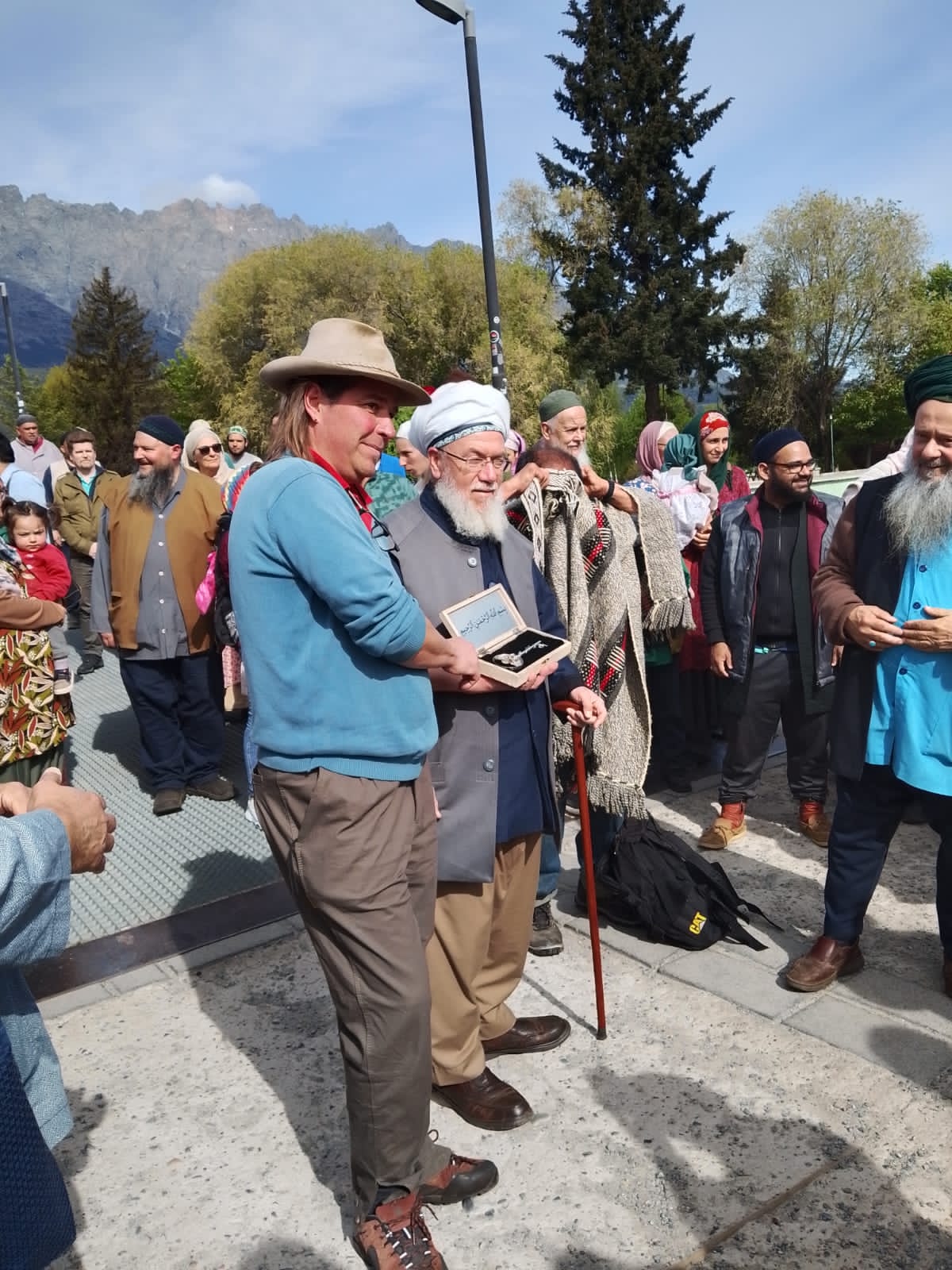
The mayor of El Bolson gave our Sultan the keys to the city; he is considered a citizen of our city.
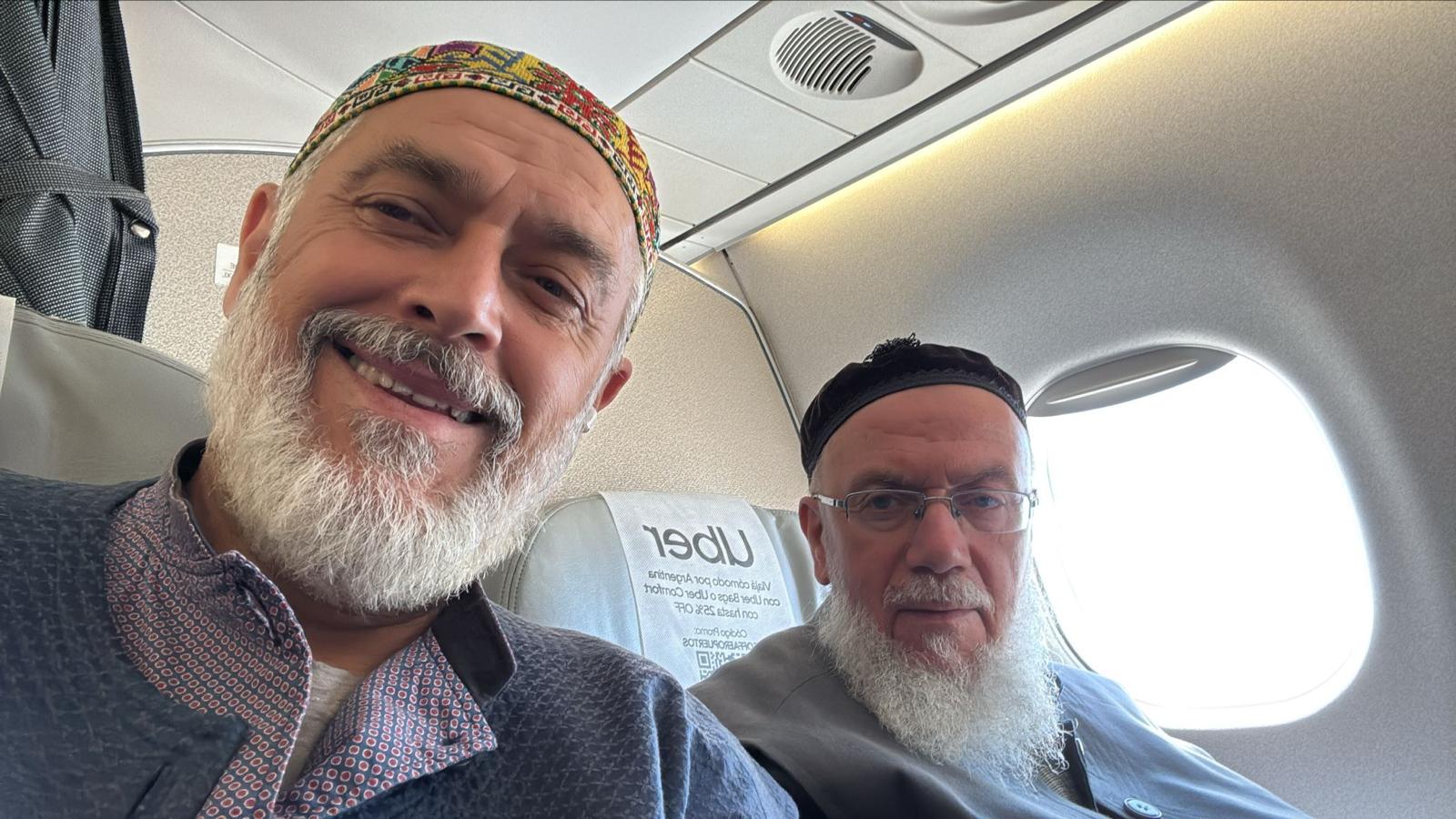
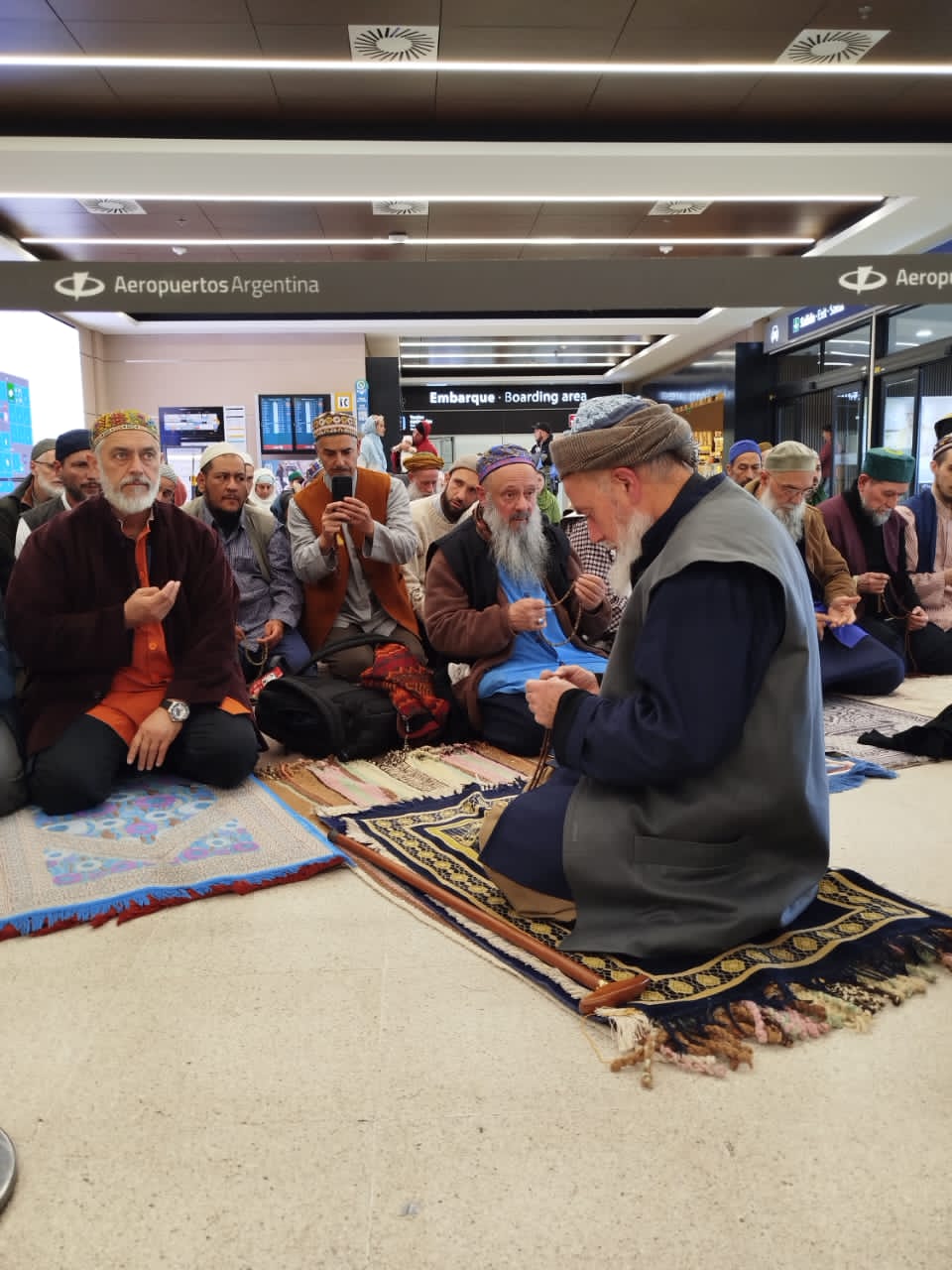
Mawlana Sheikh Mehmet has safely arrived in Mendoza, accompanied by Sheikh Bahauddin and Sheikh Mehmet Nazim
[…] We read the ḥadīth of Prophet ṣallá Llāhu ‘alayhi wa-sallam [in Khutbah],
“لا يزال أربعون رجلا من أمتي قلوبهم على قلب إبراهيم يدفع الله بهم عن أهل الأرض ، يقال لهم الأبدال”
“There will always be forty men from my nation whose hearts are like the heart of Ibrāhim, Allāh ﷻ removes affliction from the people of earth through them. They are called al-Abdal.”
Forty people, sincere people, their hearts incline to Allāh ‘Azza wa-Jalla, their hearts are like the heart of Sayyidina Ibrāhīm ‘alayhi s-salām. Sayyidina Ibrāhīm ‘alayhi s-salām is one of the great prophets. There are seven prophets who are Uli l-‘Azm, the mighty prophets.
Many things happened to him, many things since he was a youngster. And Allāh ﷻ showed him. Without any guidance, Allāh ﷻ guided him to be a prophet. He grew up in a place where there was Nimrod. Nimrod was a tyrant. He was controlling all this area, the area of the Mediterranean, the middle east; a very big area. He was controlling this area and making people worship him. He ordered people to make a statue of him. So to have a statue or something like this is not good. He had one. Not the father of Sayyidina Ibrāhīm but his stepfather, Azar, was building his statue and getting benefit from this one, Nimrod.
But when Ibrāhīm ‘alayhi s-salām was a boy, he was wondering why were they doing this. And after that, he saw that people were worshipping this statue, and not taking anything from them. When he became older than a teenager, he was thinking, “These people are worshipping this; this is not my god. It cannot be god, they have no benefit for them. Only some people benefit from this thing but the others are paying them.” And Allāh ﷻ gave him an inspiration to look for God. It is also mentioned in Qur’ān, at night-time he saw one star, he was happy with it. He said, “This is my god. It is very high, very shiny; it’s nice. This must be god.” This star was maybe a planet or something. After a little bit it disappeared. He said, “I don’t like god to disappear. Once coming, once not coming. This is not for me.” After that, he saw a moon. He said, “This moon is shining more than this planet, this star. It must be god.” But after a little bit, also the moon disappeared. He said, “Oh, this is also not god. I don’t like that. Maybe I will be lost. I must look for another thing.”
After that was coming the daytime, the sun was shining. Every thing appeared and it was big, so he said, “This is bigger. It must be god.” After this, of course, the sun also set. He is said, “It’s also not.” He said, “I cannot accept this. I am not from those who put [associate] something with God. I only have one God.” Allāh ﷻ opened for him and he started telling people, “What are you doing! This is not good. Don’t do this.”
Some people were happy but some of them not. There were some complaining. But nothing happened until one day came that was specially for celebrating something. And in this day, they were all out of the city so he went into the temple where they were worshipping these idols. He took an axe and broke them all. Then, he put the axe in the hand of the biggest one.
When these people came back, they were looking at this temple; they were surprised at what happened there. Nimrod also heard about this. He said, “Who did this?!” They said, “We heard that one boy was saying, “What you’re doing is not good. There is no benefit from this.” Maybe he did this. We are sure he did this.” They brought Sayyidina Ibrāhīm and asked him, “Who did this?” He said, “You see the axe is in his hand [the biggest idol], he did this.” Nimrod said, “Are you crazy! How can he do this? He can’t do anything. He just stands there. He is from stone.” That time, he gave a proof that this is not a god, only a stone; nothing else. All people agreed with him.
And because all people won’t be worshipping this Nimrod idol anymore, Nimrod became very angry. So he caught him and made a big fire. Maybe for 40 days, or maybe for months, he collected wood that it became like a mountain of wood. He burnt this wood causing a huge fire. But they couldn’t go near the fire because it was burning everything maybe from a kilometer far away. They wondered how they can reach there. So they made a catapult.
In old times they used to throw stones using a catapult. So they made Sayyidina Ibrāhīm sit there and threw him into the fire. Allāh ‘Azza wa-Jalla says, everything is in the Hand of Allāh ﷻ. He ﷻ said to the fire, “O fire,” ‘يَا نَارُ كُونِي بَرْدًا وَسَلَامًا عَلَىٰ إِبْرَاهِيمَ’,
‘Yā Nāru Kūnī Bardāan Wa Salāmāan `Alá ‘Ibrāhīm”
“O fire, be coolness and safety upon Ibrahim.” (Qur’ān 21:69).
“Be cool, and let there be greenery and water for Ibrāhīm ‘alayhi s-salām.”
Because it was a very strong fire, they couldn’t make anything to Sayyidina Ibrāhīm. Allāh ﷻ made this a miracle for people to follow Sayyidina Ibrāhīm ‘alayhi s-salām.
Still, because of Nimrod’s proudness he didn’t accept what happened. He didn’t accept to follow Ibrāhīm ‘alayhi s-salām. He was preparing a big army to go against Sayyidina Ibrāhīm ‘alayhi s-salām.
Allāh ﷻ also made a miracle with a very small, very weak insect. He sent them a mosquito. The mosquitoes were coming like clouds upon them. There was an army, an army wearing iron. This mosquito entered through them. Allāh ﷻ gave these mosquitoes a power different from the ones in our time. They attacked them leaving skeletons. They ate everything. Some of them were running away. And Nimrod also ran away and locked himself up in his castle. But Allāh ﷻ sent him the weakest of mosquitoes. It was even disabled. It entered from his nose reaching his brain, and began to eat. Every time it ate, he was aching so much that he was hitting his head and it stopped for a little bit. Slowly slowing this mosquito – this was also a miracle of Allāh ‘Azza wa-Jalla – it was becoming bigger and bigger. So they must hit his head even stronger. This is that Allāh ‘Azza wa-Jalla wants to torture him in dunyā before ākhirah, for him to accept but he didn’t. This is the characteristic of human beings.
Some people when they have something, they don’t [accept] – the worst attribute of human beings is proudness. To see some people lower than them. For this, he was seeing everyone lower than him. So, he didn’t accept at all. They were still doing this for a long time. In the end, he was shouting from ache. They heard him and hit his head very strongly, it broke. He died because his head opened but this mosquito was still alive and became as the size of a bird; that big.
Of course, there are many miracles of prophet Sayyidina Ibrāhīm ‘alayhi s-salām. He is also the father of prophets, many, hundreds of prophets. His lineage was divided into two, one descending from Sayyidina Is’hāk and one from Sayyidina Ismail. From Sayyidina Is’hāk was coming Sayyidina Musa and others, banī Isrāil. All these were descendants of Sayyidina Is’hāk ‘alayhi s-salām. And Prophet ṣallá Llāhu ‘alayhi wa-sallam descended from Sayyidina Ismail. So he is the grand father of Prophet ṣallá Llāhu ‘alayhi wa-sallam.
For this, he ﷺ was also saying in ḥadīth, his heart was full of belief, īmān. For this, every time in salah, prayer, we say, “wa ‘ala āli Sayyidina Ibrāhīm.” We mention Sayyidina Ibrāhīm also in every prayer.
Of course, Sayyidina Ibrāhīm ‘alayhi s-salām had also done many things. One of them, the biggest one – one of the pillars of Islām; which we must perform: Ḥajj. He built the Ka’bah. He and Sayyidina Ismail built the Ka’bah. And it is of course big, maybe 10 to 12 meters long. They were taking and building. And this is also one miracle and it’s still there. It’s a miracle how he’s built the Ka’bah. In front of the Ka’bah is maqām Ibrāhīm. Some people destroyed Ka’bah many times but they couldn’t destroy this. Because this was as [ladder] to build Ka’bah. He was standing on this stone and the stone was going up, coming down, like this. When he wanted to put a one up, he would stand on this stone and fly. Because it was only he and his son Ismail ‘alayhi s-salām. There wasn’t anybody to help them.
AlhamduliLlah when he finished, Allāh ‘Azza wa-Jalla told him, “Call people to come to ḥajj to make pilgrimage.” But there was nobody around this area; only both of them. But he didn’t say anything. He was just calling people to come for pilgrimage; like the adhan. But there wasn’t anybody there. Prophet ṣallá Llāhu ‘alayhi wa-sallam says, this adhan means that anyone who’s been or will be to ḥajj has heard this adhan.
So millions and billions of people had heard this, and after centuries, after thousands of years, they came to this invitation. This is the invitation of Allāh ﷻ through Sayyidina Ibrāhīm ‘alayhi s-salām.
May Allāh ﷻ make our heart like his, as Prophet ṣallá Llāhu ‘alayhi wa-sallam said. “الصَّابِرِينَ وَالصَّادِقِينَ وَالْقَانِتِينَ وَالْمُنفِقِينَ وَالْمُسْتَغْفِرِينَ بِالْأَسْحَارِ”
“Aş-Şābirīna Wa Aş-Şādiqīna WaAl-Qānitīna Wa Al-Munfiqīna WaAl-Mustaghfirīna Bil-‘Asĥāri”
“The patient, the truthful, the obedient, those who spend [in the way of Allah ], and those who seek forgiveness before dawn.” (Qur’ān 03:17), says Prophet ṣallá Llāhu ‘alayhi wa-sallam. To be asking for forgiveness, to pray in night and day and to ask for forgiveness from Allāh ﷻ.
May Allāh ﷻ bless you all, in shā’a Llāh, in this way, to have like the heart of Sayyidina Ibrāhīm ‘alayhi s-salām.
There are countless mosques located on the territory of Istanbul, Turkey. Some of them were built hundreds of years ago, while others appeared only recently. We would like to tell you about one modern construction, the Marmara University Faculty of Theology Mosque. Despite the young age of the building, sure it will be of interest to all connoisseurs of unusual architecture.
The iconic structure was built on the site of an earlier mosque that had been present here for thirty years. The reason for the radical rebuilding of the previous building was its non-compliance with seismic resistance requirements.
Construction of the modern mosque was carried out from 2012-2015, and the complex was inaugurated by President of Turkey Recep Tayyip Erdoğan. The architect behind the mosque project was Hilmi Şenalp, who had worked on other religious buildings before.
Despite its modest size, the building can accommodate 4300 people. The complex includes not only the visible parts above ground, but also lecture halls, exhibition rooms, a library, and a cafe located beneath the mosque. Drawings of the building can be found online, revealing that the underground section dwarfs the size of the main prayer hall.
The mosque minarets soar over 50 meters high, and the dome rises above the ground by nearly 35 meters. The structure is made of steel, with approximately 500 tons of alloy used in the construction phase.
The building looks modern and remarkable from both the outside and inside. The walls of the main prayer hall are composed of glass archways with intricate lattice work. This design allows natural light to illuminate the building even on cloudy days. Sunrays penetrate the structure through the apex of the dome, which is itself a work of art and looks simply fantastic.
The Hassa Architects designed this mosque with a sense of tradition and used a lot of fractured geometry which is crucial to Islamic art. Modern construction techniques let us build the most intricate designs with ease. The motifs that are inspired by natural forms were transferred to steel, glass and glass fiber reinforced concrete in 3D.
The mosque is on the university’s Bağlarbaşı campus on the Asian side of İstanbul and sits on 30.000 square meters of area. It can house 5.000 people. It was planned as a social attraction center with classrooms, conference rooms, exhibition areas, theatre rooms and cafes.
This mosque is the first steel mosque in the country. Its steel structure sits on a decahedral cement base.
“The motifs that are inspired by natural forms were transferred to steel, glass and glassfiber reinforced concrete in 3D.”
One of the most attractive elements is the 1000 year old traditional wooden bridge wing which was constructed with steel, glass and GRC / GFRC this time. The central dome has a diameter of 35 meters and this 35 meter high central dome rests on twelve steel carriers.
There were also used for the Turkish triangle forms that tied the columns to the dome. The stepped helix structure was placed on the steel ridge ribs sat on the main steel beam. Each one of the materials used to dress the helix formed dome was prepared with specially constructed moulds. The geometry that was constructed by 22 different planes that were placed on top of each other comprises panels the sizes of which are between 7.84 and 3.81 meters.
The side windows of the mosque are reminiscent of Anatolian Seljuk architecture and the sunlight screens brought the inner and outer spaces together. The sunlight screens were carried over a special system of 7.39×7.57 meters of distance and were connected to the main steel construction. The same system was repeated at the mosque porticos. The carrier steel frames were hidden behind the sunlight screen panels and created the impression that the structure was hanging in the air.
Buna River spring in the town of Blagaj near Blagaj Tekija house . Location: Blagaj, Mostar basin, Herzegovina-Neretva Canton, Bosnia and Herzegovina, EuropeBlagaj Tekke, Bosnia And Herzegovina
This extraordinary book contains a full translation of the Tao Te Ching from Chinese, along with an extensive Sufi mystical commentary on each verse by the renowned scholar, Professor Seyyed Hossein Nasr, who includes along with his own commentary, passages from the Diwan of Hafiz, Rumi’s Mathnawi, Sa’adi, Nizami, Farid Al-Din Attar, Shabastari, and Bayazid Bastami.
The Prophet, upon him be peace, said, “Seek knowledge, even unto China.”
In 1974, the oldest extant copy of Lao Tzu’s Tao Te Ching (6-4th century BCE) was unearthed at Xi’an along with the ceramic warriors guarding the tomb of the first Chinese Emperor Qin Shi Huang. In the 1970s, Professor Toshihiko Izutsu—the Japanese Islamicist, philosopher and linguist—collaborated in Tehran with Dr. Seyyed Hossein Nasr to translate this treasure into English. Dr. Nasr went on to put it into Persian adding a Sufi commentary which was recently published in Iran. This has now been translated into English with annotations by Mohammad H. Faghfoory.
The scholar recognized as the “Father of World Religions”, Huston Smith, refers to the Tao Te Ching as a “Testament to humanity’s at-home-ness in the universe, [which] can be read in half an hour or a lifetime….”
Imagine having a foundational world scripture like the Tao Te Ching explained by such a renowned Sufi scholar and internationally recognized spiritual authority as Dr. Seyyed Hossein Nasr. Passages whose subtleties are normally inaccessible to the Western mind become clear. Through Dr. Nasr’s insightful use of verses from such Persian luminaries as Rumi, Hafiz, and Attar, the reader is introduced to the “world” behind this world.
This book contains the first Sufi commentary, by Dr. Seyyed Hossein Nasr, on a key non-Abrahamic sacred text (the foundational scripture of Taoism) that will be highly relevant to anyone interested in the spiritual universality shared by the world’s religions.
Dr. Nasr’s ability to present complex religious and spiritual concepts and terms in a simple and readable language makes this book an ideal textbook for any course on religions of the world, comparative religious studies, Sufism, or Taoism. In the recent years leading up to this publication, Dr. Nasr has been teaching this work at George Washington University in Washington, DC.
Scholars in the fields of Islamic and Chinese studies, comparative religions, and Sufism will find that this volume expands their horizons. Lay readers will see it as enlightening; seekers of the truth will find it spiritually uplifting.
The way of which one can speak as “way” is not the eternal Way (Tao) The Name that can be named is not the eternal Name. The Nameless is the beginning of Heaven and Earth; While the named is the mother of the Ten Thousand Things. In the state of eternal Non-Being we see the invisible depth of the Tao; While in the state of Being, we see the determinations of the Tao. These two are originally the same; But they are called differently as they reveal themselves. In that particular dimension in which the two are the same, they are called mystery, the mystery of all mysteries, the gateway of all subtle things.
In the first verse of this discourse, the transcendence of the Tao is emphasized, and it is established that anything that can be spoken of is not the eternal Tao. This is because by speaking of the Tao one has placed a delimitation (qayd) on that which is transcendent, infinite and beyond definition and description. Therefore, any name that we assign to It is not the eternal Name, because by giving a name to that Absolute Reality we in fact delimit It. In its supreme meaning, the Tao is the Divine Reality, which has no name nor description.
About the contributors:
Lao Tzu
Lao Tzu was a semi-legendary Chinese philosopher and author of the Tao Te Ching, one of the foundational texts of Taoism, on which this new translation/commentary is based. Traditional accounts say he was born in the 6th-century BC state of Chu during China’s Spring and Autumn period (c. 770 – c. 481 BC). The Chinese text used for this translation was unearthed in Xi’an along with the famed ceramic warrior in 1974.
Seyyed Hossein Nasr
Dr. Seyyed Hossein Nasr, University Professor of Islamic Studies at the George Washington University, is an international authority on Islamic philosophy, mysticism, art, and science as well as comparative religion and religion and ecology. He is the author of dozens of books and hundreds of articles and the subject of a number of books, edited collections, and articles. A small sample of his recent publications include The Garden of Truth: The vision and Promise of Sufism (2007), Islam’s Mystical Tradition (2007), Islam in the Modern World (2010), In Search of the Sacred (2010), and Metaphysical Penetrations (a translation of Mulla Sadra’s Kitab al-Masha’ir. (2014).
“The greatest honor the academic world grants to a living philosopher is the dedication of a volume of The Library of Living Philosophers to his work and thought; and the most prestigious recognition a thinker can receive in the field of natural theology is an invitation to deliver the annual Gifford Lectures at the University of Edinburgh. In the years 2000, the twenty-eighth volume of The Library of Living Philosophers was devoted to the philosophy of Dr. Seyyed Hossein Nasr, placing him in the company of Einstein, Sartre, Russell, Whitehead, and other luminaries of twentieth-century intellectual life. Fourteen years previously, Dr. Nasr had delivered the Gifford Lectures, and the text of these lectures became his magnum opus, “Knowledge and the Sacred.”
Toshihiko Izutsu (Translator from the Chinese to English)
Toshihiko Izutsu (1914 –1993) was a Japanese scholar who specialized in Islamic studies and comparative religion. He took an interest in linguistics at a young age, and came to know more than thirty languages, including Arabic, Hebrew, Turkish, Persian, Sanskrit, Pali, Hindustani, Russian, Greek, and Chinese. He is widely known for his translation of the Qurʾān into Japanese.
Mohammad H. Faghfoory (Translator from Persian to English)
Mohammad H. Faghfoory is professor of Islamic Studies at the George Washington University and the director of the MA Program in Islamic Studies. In addition to advising graduate students’ research and theses, he teaches courses on Qur’an and Hadith, Islamic Political Thought, Sufism, Islamic Philosophy and Theology, Shi‘ite Islam, Islamic Art and Spirituality, Islam, and other related courses.
He received his Master’s degrees in history and Middle East studies from the University of Illinois, and a Master’s degree and a PhD in political science and Middle East studies from the University of Wisconsin-Madison. He has taught at the University of Tehran and has been a visiting scholar at the University of California-Los Angeles, Islamic Manuscripts Specialist at Princeton University, and at the Library of Congress, and adjunct professor of Middle East History at Mary-Washington University in Fredericksburg, Virginia. Dr. Faghfoory has written, translated, and edited twelve books, numerous book chapters, articles, and book reviews (see Publications section for details). He has lectured extensively in the United States, Europe, and the Middle East, and participated in interfaith dialogue organized by American media.
The Universal Message
As Dr. Nasr beautifully demonstrates, the meeting of these two great wisdom traditions reveals that the mystic’s path is universal, transcending cultural and religious boundaries while honouring the unique beauty of each tradition. In our troubled times, this synthesis offers profound healing, reminding us that all authentic spiritual paths ultimately lead to the One Reality that is both the source and destination of our seeking.
“The Tao that can be spoken is not the eternal Tao” echoes the Islamic teaching that Allah is beyond all human comprehension, yet paradoxically, both traditions affirm that this Ultimate Reality can be known through direct spiritual experience and the purification of the heart.
On the Nature of the Tao
Dr. Nasr illuminates the profound depth of this central concept:
“The title of this book, which is the most foundational source of the Taoist tradition and one of the best-known sacred texts of the religions of the world, has several meanings. Even though its title is usually translated as The Book of the Way and Its Virtues, it includes the word ‘Tao,’ which has no synonym in any other language. The Tao is not just the way to reach the Truth, it is also the Absolute Truth Itself, termed al-Ḥaqq in the Islamic tradition, meaning ‘the Real’ or ‘the Divine Truth.’ At the same time, It is also the Way to attain perfection and to reach the Absolute Truth. Moreover, the Tao is the Principle of all things in the hierarchy of being, and that which determines the nature of all beings and the principles of their existence. The Tao is also the source of virtue and salvation. It has both ontological and ethical dimensions, and is both individual and social, human and cosmic, practical, theoretical and existential. For these reasons the term ‘Tao’ is used in the Persian text and is not translated. The Tao is the guide that leads human beings to the highest plane of the Truth, which is nothing but the Tao Itself. Thus, the Tao is the fundamental key for understanding reality in all degrees of Its manifestation.”
This profound understanding reveals why our exploration of these parallel wisdom streams offers such rich nourishment for the soul’s journey toward Ultimate Reality.
Sufi Light on Tao Te Ching ~ The Book of the Ineffable Reality and Virtue by Pir (Lao Tsu) Li Er
1. Tao Te Ching is a Spiritual Classic. Tao or Dao means Way, Ineffable Reality, Te or De means Virtue and Ching means Great Book or Classic. Thus ‘Tao Te Ching’ can be called: The Great Book of Reality and Virtue, or The Book of Ineffable Reality and True Virtue. Here simply translating ‘Te’ as virtue will not do justice, its healing virtue which brings man back to his original nature.
It is believed that the classic was inspired to be written down around 4th or 6th Century BC, so we are talking about a very old Spiritual Classic and something that ancient to have successfully been transmitted to us without being lost is not a light matter. This itself can be viewed as a proof of authenticity and energy of this timeless classic.
It is written by a Sage by the name Li Er Boiang, also known as Li Dan. Because he was Pir of his time, his honorary title was Lao Tsu which means ‘Old Master,’ the same meaning is conveyed in the word Pir in Sufism.
Tao Te Ching has 81 chapters, all brief, yet they carry profound message about the Reality. The Book introduce concepts about the Ultimate Reality in a language suitable for his time as well as statements concerning practical spirituality and wisdom for traveling the Spiritual Path which enable one to live in harmony and in a state of tranquility
Metaphysically Tao refers to Reality as It is. Psychologically it refers the way how human nature is constitute, the original nature of man, a deep dynamic structure of our being. Ethically its means the way human being must conduct with others to be at peace and harmony. Spiritually it refers tot the guidance that is offered to us, the method of searching for the truth that is handed down by the great sages, seers, divinely inspired communicators of the path, the way of inner work. All of these meanings of Dao / Tao is ultimately united and one.
Tao Te Ching’s appeal is broad and its meaning is deep. It speaks to each at our own level of understanding while inviting for search for level of insight and experience that are not yet within our comprehension.
It is a sacred text. To read it is not only to see ourselves as we are, but to glimpse a greatness extending far beyond our knowledge of ourselves and and the universe we live in. The Tao Te Ching deals with what is permanent in us, it speaks of a possible inner greatness and an equally possible inner failture which are both indelibly written into our very structure as human being.
Under its gaze we are not American or Chinese or European. We are that being, Man, uniquely called to occupy a precise place in the cosmic order, no matter where or in what era we live. It is a work of metaphysical psychology. (credit)
an imaginal Portrait of Wise Elder (Pir) Lao Tsu Li Er, may Allah be pleased with him
2. Timeless spiritual classics such as Tao Te Ching transmits its message continuously and depending on who is reading and receiving it and with what level of understanding, it continues to open itself up to help us see beyond into the deeper mysteries. This is a characteristic of authentic and inspired spiritual transmission.
How does the message of Tao Te Ching illume itself against the universal message of the Sufis? Can the message of the Tao Te Ching can also be found reflected in the message of the Quran, the Source that Sufis hold so dearly?
In order to find suitable translation of Tao Te Ching in English, I have used several sources to have a more holistic appreciation of its mystical nature. The citation of the Quranic verses are indicated in the number within parentheses.
CHAPTER-1 OF TAO TE CHING
This chapter speaks about Tao as an Ineffable Reality, the Ultimate Reality about which anything expressed falls short, any comparison out of the construct of the limited mind is an injustice to its ineffableness. Some translation speaks of it as Path, as Existence Itself. Here is a composite translation:
The Ineffable (Tao), about which is spoken, is not the eternal Ineffable. A name for the Unnameable, is but a name. The Unnameable is what makes everything what it is, By naming things you divide the Indivisible.
Only one who gives up all his desires can experience the Indivisible Essence, One who still cherishes desires, will experience the Manifestations. Both will see the same reality, but experience it differently.
The unity of Essence and Manifestations is said to be the mystery. Mystery of mysteries, the door to all wonders.
Here are some reflection of the above passage and parallel phrases from the Quran to provide hint that both are speaking about the Ultimate Reality with reverence to It’s mystical nature.
La ilaha – Negate all false names. Only that Ultimate Reality now bear witness that the Unnameable alone Is. Shahida-Llahu ‘AnnaHu La ilaha illa Hu. (3:18) Who is more wrong than one who invent a lie, a conjecture about the Ultimate Reality? (6:93) Thus whatever one speak about the Ultimate Reality never can do justice. Subhanahu wata’ala ‘ammayasifoon – Limitless is Hu in glory, and sublimely exalted beyond anything that men may devise by way of definition (6:100). Subhanahu wataAAala AAamma yaqooloona AAuluwwan kabeera – Exalted and Greater beyond what they say is Hu! (17:43) Huwa as-Samad, the Ultimate Reality is Eternal. al-Qayyum – the Peerless. Huwa Allahu Ahad – That One is Indivisible (112:1).
That Reality is both al-Zahir and al-Batin, The Manifest and the Essence. It is both the First and the Last, al-Awwal wa al-Akhir. (57:3) Whatever in the Heaven and Earth are in a constant state of awe from the great wonder of the Great Mystery (57:1).
CHAPTER 4 OF TAO TE CHING
Chapter 4 describe the metaphysical reality and reminds of its nature of Emptiness, the Great Void It is sometime called.
The Tao is like an empty vessel: Never emptied and never be filled. It is like the eternal void: filled with infinite possibilities.
It is hidden but always present. Not given birth by any. It is more ancient than the concept of God.
The Great Emptiness, The Ultimate Void is al-La. The Eternal Void. Hidden, al-Batin and yet az-Zahir, always Present. Lam yalid walam yoolad – The Ultimate Reality neither begets nor is born. (112:3). It is al-Qadim, the Most Ancient, more ancient that even revelations, conceptions about or of God. Al-Qadim is one of the Divine Names and Attributes of Allah which means the infinite-most antecedent to all else!
CHAPTER 6 OF TAO TE CHING
Chapter 6 again continues to shed light on the Supreme Reality.
The Supreme Spirit of the perennial spring is said to Ever-Living, the Mysterious One. The Mysterious One is typical of the source of heaven and earth. It is continually and endlessly issuing and without effort.
an alternative translation is this:
The Tao is called the Great Mother: empty yet inexhaustible, it gives birth to infinite worlds.
Subtle, barely seen but always Present. Endless flow of inexhaustible energy.
An appreciation of the Divine Feminine embedded deeply within Islamic Tradition is required here. The two most invoked Divine Name ar-Rahman and ar-Rahim both goes back to the root word R-H-M, meaning Womb. Both the Divine Qualities, ar-Rahman and ar-Rahim are Mercy, Compassionate, Universal Loving Kindness are generally manifested in the world as natural qualities of a mother. The frequently used invocation Bismillahir Rahmanir Rahim, it is invocation of the Divine Feminine Principles of the Ultimate Reality. That Reality is also al-Hayy, the Ever-Living; ar-Rauf – the Motherly Loving and Tender; as-Samad – the Inexhaustible, al-Latif, Most Subtle, al-Baqi – the Ever Present, the Ever Lasting, al-Halim – the One Who is Motherly Forbearing.
CHAPTER 12 OF TAO TE CHING
Apart from speaking of the Highest Reality, in Tao Te Ching Lao Tsu also disseminate teachings on practical spirituality, on how to live to return back to the original nature from which arises tranquility of the heart, clarity of mind, deep peace of soul. 12th Chapter speaks of the dangers from the manifestation of the apparent and transitional world and how a true human being who wish to master himself and world should conduct his, her life. Finally it also speaks of the quality of the Heart that a true human being should attain.
This is a translation by Stephen Mitchell (1988):
Colors blind the eye. Sounds deafen the ear. Flavors numb the taste. Thoughts weaken the mind. Desires wither the heart.
The Master observes the world but trusts his inner vision. He allows things to come and go. His heart is open as the sky.
Made beautiful are material and worldly things of desire, these are the pleasures of the present world’s life; but the Source of all has the excellent return with It. (3:14) True vision is not derived from ocular vision alone, but from the inner vision of the heart. Indeed it is not the eyes that grow blind, but it is the hearts, which are within the bosoms, that grow blind. (22:46) Only that person will be successful who has a sound Heart (qalbin salim). (26:89)
CHAPTER 14 OF TAO TE CHING
This again takes us back to the Highest Reality, Lao Tsu continue to help us see different facets of this Reality and dispenses his priceless wisdom.
Stephen Mitchell’s translation again:
Look, and it can’t be seen. Listen, and it can’t be heard. Reach, and it can’t be grasped.
Above, it isn’t bright. Below, it isn’t dark. Seamless, unnamable, it returns to the realm of nothing. Form that includes all forms, Image without an image, subtle, beyond all conception.
Approach it and there is no beginning; follow it and there is no end. You can’t know it, but you can be it, at ease in your own life.
Just realize where you come from: this is the essence of wisdom.
That Highest Reality about which Quran conveys the following, almost matching each phrase:
No vision can grasp Him, but Its grape is over all vision (6:103) The Highest Reality’s voice is not heard directly except through veil, revelation or human messenger as medium. (42:51) Most Subtle is It, wa huwa al-Latif (6:103). Beyond all conception – subhanahu ‘aamma yushrikoon. Only Allah knows Allah, It can not be known by other than it. Yet when one is consumed by It, It becomes the very eyes, the very hand, the very ear of the servant, of the human being. So one can be It, or rather said in more truthful way, one is granted the permission to become a more perfect Image of It, a more perfect representative (khalifa) of Hu. Then and only then it is said, you didn’t throw but Allah threw. (8:17) It is al-Badi, the Wonderful Originator, al-Mubdi, the Beginner of us and all that exists.
Hu in Arabic – pointing to the Ultimate Reality beyond conception, definition or comparison
Hu Allahu Akbar – Ever Greater, Ever Transcendent beyond any conception and construct is Hu.
May the Ineffable keep us on the tao (as-sirat al-mustaqim) that leads to the Tao May we realise and become what is possible May we be granted a heart open as the vast sky.