Transform Every Actions into Devotion

Intentions are the very essence that gives our deeds life.

Imam Ghazali teaches us that worship consists of two essential parts: the intention and the action itself. While both are necessary, intention holds a higher rank because every deed we perform—whether it’s prayer, fasting, or charity—ultimately aims to transform our hearts.

The heart must incline toward what is good, distance itself from what is harmful, and be free to reflect and remember Allah. This inner transformation leads to a deeper connection with and knowledge of Allah, the ultimate source of happiness in the afterlife.

Take, for example, the act of sujood (prostration). The purpose isn’t merely to place our foreheads on the ground; it’s to cultivate humility in our hearts.

Likewise, zakat isn’t just about giving away possessions; it’s about purifying our hearts from the stinginess that ties us to material wealth.

The heart’s intention is what gives meaning to our actions.

Actions without intention are like trying to cure a headache by rubbing Tylenol on your forehead. Ghazali also teaches us that we can maximize the benefits of a single deed by cultivating multiple positive intentions.

Consider the simple act of entering the mosque. By intending to connect with our community, remember Allah, retreat from the dunya, and earn the reward of prayer, we turn one action into a source of manifold blessings.

The more we align our hearts with virtuous intentions, the more our actions will bear fruit.

But this also serves as a caution. If our intentions are misguided, the same action can lead us astray. For instance, wearing perfume to follow the Sunnah, honor the mosque’s sanctity, or avoid offending others with unpleasant odors is a beautiful intention.

But the act becomes reprehensible if we aim to show off or be better than others.

Reward and sin often lie in the subtleties of our hearts’ intentions.

Ghazali reminds us that the pious predecessors were so attuned to their intentions that they sometimes refrained from good deeds if they felt their intentions were not pure.

Dear Beloved Son / Ayyuhal Walad   Al Ghazali      

I seek Allahs refuge from the knowledge which is of no benefit”. This disciple of Imam Ghazali (RA) kept thinking along these lines for a few days and then wrote a letter to Imam Ghazali (RA) with the view of getting an answer to his dilemma along with some other questions. Furthermore, he asked in his letter to Imam Ghazali (RA) for some advice and to teach him a supplication that he could always recite. He wrote in his letter that although Imam Ghazali (RA) has written numerous books on this issue,this weak individual is in need of something that he could always study and always act upon its injunctions. In reply to his letter, Imam Ghazali (RA) sent him the following advices. free download

Lettre au disciple – Ayyuhal Walad Al Ghazali 

La “lettre au disciple” (ayyuha al walad) de l’Imam Abu Hamid al Ghazali est l’un de ses derniers ouvrages. Il répond sous forme d’épître à un de ses élèves qui l’avait prié de lui apporter des éclaircissements sur des points de doctrine et sur certains points qui relèvent de la science du dévoilement. free download

For example, Muhammad ibn Sirin, a renowned scholar of the Tabi’un, once refrained from attending Hasan al-Basri’s funeral prayer. Since he would likely be asked to lead the prayer, he was concerned that pride might arise from being given such a prominent role.

This level of awareness shows us just how critical intention is in the eyes of those who truly understand the essence of worship.

Intention isn’t something we can create with mere words. It’s not enough to say, “I intend this for the sake of Allah,” if our hearts aren’t aligned with that purpose.

True intention requires deep-seated conviction and a clear understanding of this world’s fleeting nature and the eternal reward of the hereafter.

Without intention, our actions are hollow and lack the transformative power that connects us to Allah. But with the right intention, even the simplest acts become a means of drawing closer to our Creator.

If we eat to gain strength to worship Allah, that meal becomes an act of devotion. If we sleep to recharge our energy for prayer, that rest becomes an act of worship.

Even our social interactions, when done to maintain the bonds of brotherhood and spread goodness, are elevated to worship. As we go about our daily lives, let’s strive to renew our intentions in everything we do.

How to grow in Sincerity

How to grow in sincerity? We have the surah in the holy Quran, surah Ikhlas. Sincerity is Ikhlas in Arabic. It is saying, that you must say that Allah ﷻ is only One and He is everlasting and completely independent. Everything is dependend from Him and He is dependend from nothing…

Whether engaging in worship, spending time with family, or simply resting, let’s ensure our hearts are aligned with the ultimate purpose of drawing closer to Allah.

May Allah grant us the clarity and sincerity of intention in all our deeds, and may He guide our hearts to that which brings us nearer to Him.

The Self-Disclosure of God

  • The Self-Disclosure of God: Principles of Ibn al-‘Arabi’s Cosmology

by William C. Chittick ( a philosopher, writer, translator and interpreter of classical Islamic philosophical and mystical texts. He is best known for his work on Rumi and Ibn ‘Arabi, and has written extensively on the school of Ibn ‘Arabi, Islamic philosophy, and Islamic cosmology.)

We will show them Our signs on the horizons and in themselves until it becomes clear to them that this is the Truth. Qurʾan 41:53

The Self-Disclosure of God offers the most detailed presentation to date in any Western language of the basic teachings of Islam’s greatest mystical philosopher and theologian. It represents a major step forward in making available to the Western reading public the enormous riches of Islamic teachings in the fields of cosmology, mystical philosophy, theology, and spirituality.

The Self-Disclosure of God continues the author’s investigations of the world view of Ibn al-Arabi, the greatest theoretician of Sufism and the seal of the Muhammadan saints. The book is divided into three parts, dealing with the relation between God and the cosmos, the structure of the cosmos, and the nature of the human soul. A long introduction orients the reader and discusses a few of the difficulties faced by Ibn al-Arabi’s interpreters.

Like Chittick’s earlier work, The Sufi Path of Knowledge, this book is based primarily on Ibn al-Arabi’s monumental work, al-Futuhat al-makkiyya The Meccan Openings. More than one hundred complete chapters and subsections are translated, not to mention shorter passages that help put the longer discussions in context. There are detailed indices of sources, Koranic verses and hadiths. The book’s index of technical terminology will be an indispensable reference for all those wishing to delve more deeply into the use of language in Islamic thought in general and Sufism in particular.

Ibn al-‘Arabi is still known as “the Great Sheik” among the surviving Sufi orders. Born in Muslim Spain, he has become famous in the West as the greatest mystical thinker of Islamic civilization. He was a great philosopher, theologian, and poet.

William Chittick takes a major step toward exposing the breadth and depth of Ibn al-‘Arabi’s vision. The book offers his view of spiritual perfection and explains his theology, ontology, epistemology, hermeneutics, and soteriology. The clear language, unencumbered by methodological jargon, makes it accessible to those familiar with other spiritual traditions, while its scholarly precision will appeal to specialists.

Beginning with a survey of Ibn al-‘Arabi’s major teachings, the book gradually introduces the most important facets of his thought, devoting attention to definitions of his basic terminology. His teachings are illustrated with many translated passages introducing readers to fascinating byways of spiritual life that would not ordinarily be encountered in an account of a thinker’s ideas. Ibn al-‘Arabi is allowed to describe in detail the visionary world from which his knowledge derives and to express his teachings in his own words.

More than 600 passages from his major work, al-Futuhat al-Makkivva, are translated here, practically for the first time. These alone provide twice the text of the Fusus al-hikam. The exhaustive indexes make the work an invaluable reference tool for research in Sufism and Islamic thought in general.

Read here:The Self-Disclosure of God: Principles of Ibn Al-Arabi’s Cosmology. By WILLIAM C. CHITTICK.

Sheikh Hassan in Helsinki – Retreat 8-10/8 – concert 10/8 and seminar 11/8 – 2024


Registration is still open for the Countryside Sufi Retreat with Sheikh Hassan Dyck 8.-10.8. in Finland. There is 9 more spots left

“*Be with the good ones.”* -Sufi master Mawlana Sheikh Nazim’s answer to the question: “What is your number one advice?” Welcome to spend good time with the good ones and with goodness.

At the coutryside sufi retreat with Sheikh Hassan Dyck we will have a chance to share in the goodness of praying together, remembering God, meeting new brothers and sisters, sharing the food, refreshing in Finnish sauna and quieting the mind in calm nature. InshAllah we will see a glimpse of the goodness of living a moment in a different way. A more profound and believing way. The location is a beautiful wooden house in countryside at Lapinjärvi about 1,5 hours from Helsinki. There is limited space for 30 people in shared rooms and for some in tents. Children are welcome. Under school age children are considered for half the price and half a spot. The participation fee for the retreat is 70€. The fee covers the rent for the venue and the foods from Thursday afternoon until Saturday midday.

There is also a possibility stay for the whole duration of Sheikh’s visit from 8.-12.8. for 100€. Your place and participation will confirmed with an email response if we are able to accommodate you. We will do our best to accommodate everyone interested. However, we had to restrict the places unexpectedly due to some limited facilities and renovation of bathrooms. We beg your understanding. Local brothers and sisters with their families are prioritized as they do not have often the chance to meet with Sheikh Hassan.

Register here https://forms.gle/3uJ774bh4iyecvmw6

Peace and blessings to all. You are most warmly welcome to join us for the special sufi concert with Sheikh Hassan Dyck 11.8. in Helsinki and a seminar on the following day.

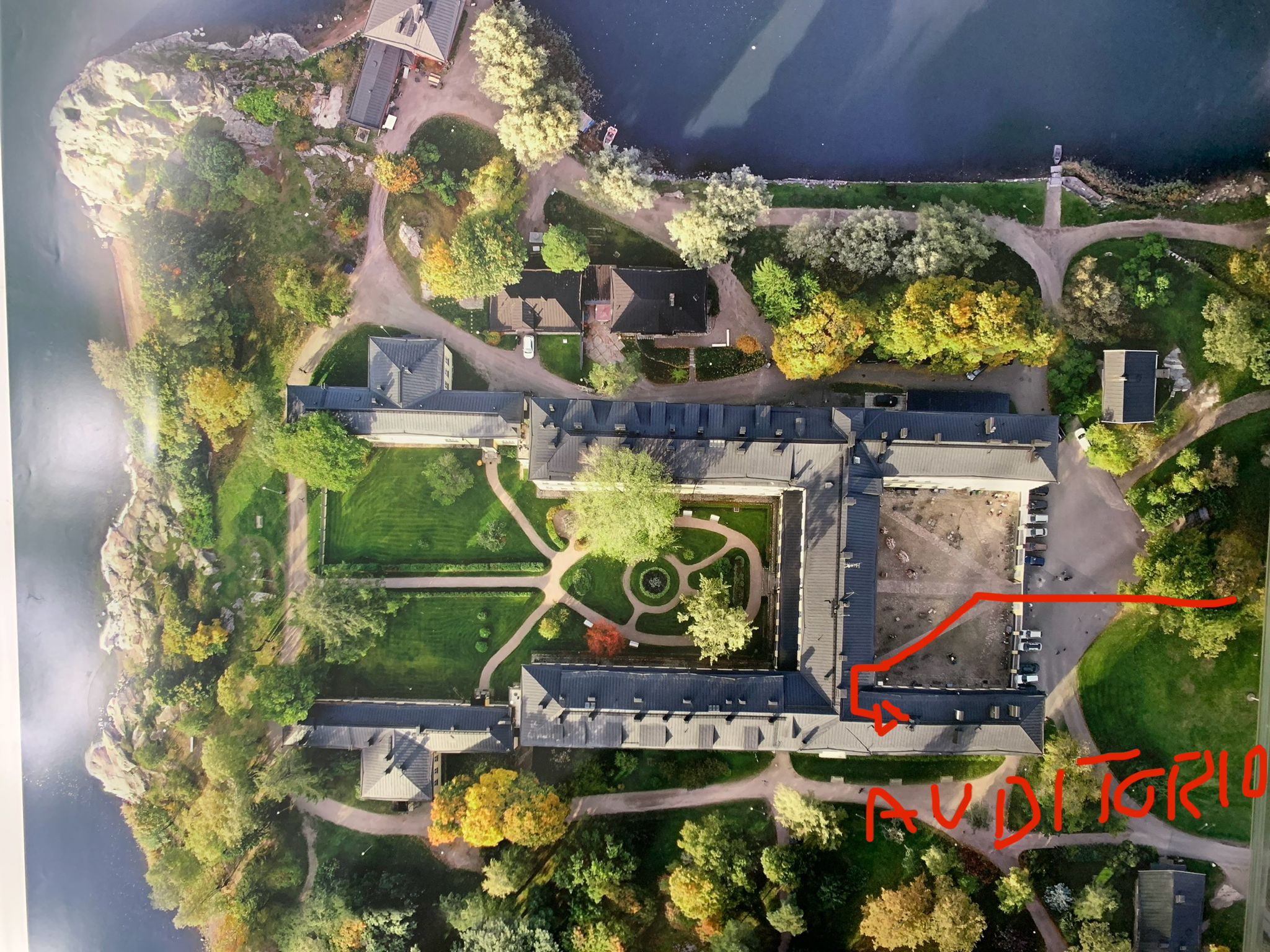
10.8. Saturday 17:00-20:00 Sufi Music and Seminar concert with Sheikh Hassan Dyck at Lapinlahden Lähde auditorium 1. floor, Lapinlahdenpolku 8, Helsinki

11.8. Sunday 12:00-18:00 Sufi Seminar and Dhikr at Hautomo, Merimiehenkatu 29, Helsinki (in through gate and courtyard).

The events are free and open to everyone. Donations are happily accepted. All events and Sheikh Hassan Dyck’s visit are organized with donations and voluntary work.

More info and sign up for the events here: https://forms.gle/C7ssKbyxCrTNoJF18

See and share also in Facebook: https://www.facebook.com/share/iqT66tZcwQBdA2Zu/?mibextid=9l3rBW

☀️ Joy to your days ☀️ Please if we could kindly ask those who are joining us this weekend to register for the concert and seminar. This way we know how many people to expect: https://forms.gle/C7ssKbyxCrTNoJF18

Retreat 8/08:

Khatm & Sohbat with Sheik Hassan in Lapinjärvi Finland:

  • Retreat 9/08:Khatm & Sohbat with Sheik Hassan in Lapinjärvi Finland
  • concert 10/08

Seminar 11/08

Summer Camp 25.07.24 – 04.08.24 – Daily updated

Learn Islam among Friends” in the Sufi Center Kassel

WhatsApp: +49 1515 22 11 562

Discover the Benefits of Islam at our Fun Gathering | The Camp

Impressions:

  • Khatm ul-Khwajagan, Dhikr & Sohbat im Sufizentrume Kassel 25/7:

– Juma at the Summer Camp 26/7:

  • Dhikr & Sohbat with Sheikh Hassan 26/7
  • Dhikr & Sohbat with Sheikh Hassan 27/7:

It is absolutely important to be together. I feel saved with my brothers and sisters, with the Ummah, with Islam, with prayers, with Nasihat of the Sheikh. We hope to be saved through this. When you’re alone it is dangerous. Because Shaytan is busy. What he is trying to do ist, that he makes you to think that you’re alone.

  • Courses 27-28/7

Wiping over Leather Socks and Tayammum.

Praying Riding and the Traveller’s Prayer.

Sexual Ethics.

 The Latecomer’s Prayer.

  • Dhikr & Sohbat with Sheikh Hassan 28/7

You must make intention. Rasulullah ﷺ was saying, if you make intention to leave your bad characteristices, Allah ﷻ will help you to take it from you, like greed and anger. May be it’s gone suddenly, He ﷻ is taking it away from you, because you have intention //

  • Dhikr & Sohbat with Sheikh Hassan 29/7
  • Courses 30/31-07

Sexual Ethics [contraception]

Divorce.

  • Dhikr & Sohbat with Sheikh Hassan 30/07

Allah ﷻ guides some people to Islam, he guides them to his way by any means. Even through marriage, maybe. Because the lady she loves someone, and he’s Christian maybe because he was brought up like that, but she can only marry a Muslim, because that is the divinely law. Before love comes respect. He loves her, so he’s respecting that lady, her parents, her situation, her profession, her friends, and also her religion. So he may say Shahada. /

  • Sohbat with Sheikh Hassan and hadra 31/07

 Dhikr & Sohbat in the Sufi Center Kassel in Wolfhagen, Germany. 01/08

 Juma at the Summer Camp -02/08

  • SUFISOUL: 3-4 /08 /2024
  • Dhikr & Sohbat with Sheikh Hassan 03/04