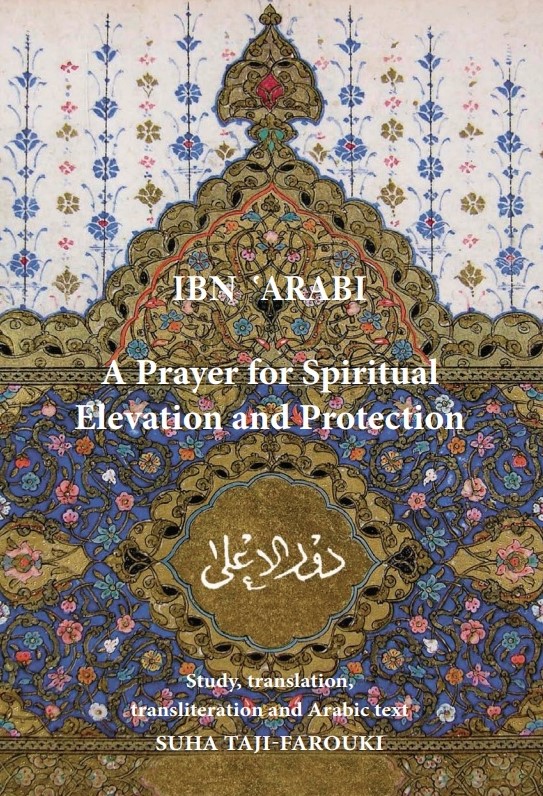
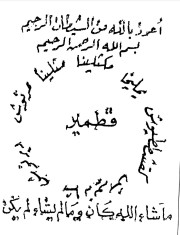
Widely used for centuries in Sufi circles, the prayer known as “The Most Elevated Cycle” (al-Dawr al-a’la) or “The Prayer of Protection” (Hizb al-wiqaya), written by the great Sufi master Muhyiddin Ibn ‘Arabi, has never before been available in English. This book provides a lucid English translation and an edited Arabic text of this beautiful and powerful prayer. It includes a transliteration for those unable to read Arabic, who wish to recite the prayer in the original language. Showing the importance of Ibn ‘Arabi’s devotional teaching, the book explores the prayer’s contemporary life, properties and historical transmission. It gives full details of generations of well-known scholars and Sufi masters who have transmitted the prayer, providing an intimate and fascinating insight into Islamic history.
In the time of the Prophet ﷺ, there lived a notorious highway robber, Awli Abbas. He frequented the streets after midnight and if he found someone walking alone he caught him, robbed him, sometimes beat him or killed him, and then returned home. No one was able to catch that highwayman. The Prophet ﷺ said, ‘That is an evil person. I will never pray for him and I will not bury him in the graveyard of the Muslims.’
After many years, the highwayman passed away and the children dragged his body through the streets of Madinah and threw it into a dry well. As soon as they had thrown him into the well, Allah spoke to the Prophet ﷺ and said, ‘O my beloved Prophet, today one of my saints has passed away. You must go and wash him, clean him, cover him, pray for him and bury him.’ The Prophet ﷺ was astonished. Now that he had passed away, Allah told him he was a saint! How could he be a saint?
But no one can interfere with Allah’s knowledge, not even the Prophet ﷺ. If Allah wants to make a thief a saint, no one can ask, ‘Why?’ We must accept. That is why according to Sufi teachings and the teachings of the Naqshbandi Order, you have to look at everyone as being better than you. You do not know if Allah is going to raise that person’s level higher than your level, who knows? No one can know; therefore, no one can interfere. Do not look down at people as if you were superior to them. You do not know in Allah’s eyes whether that person is a saint or not.
Who knows? Always regard people as being at a higher level than yourself. Show them respect and be humble towards them. Do not show ego and pride. Allah’s Mercy is so great that you are forbidden to look at what people are doing on the outside. You must not call them crazy or criticize their bad manners, leave them alone. They have a Lord to judge them. Look at yourself, make yourself behave well. Do not interfere with anyone else. It is not your job to correct anyone else, your job is only to correct yourself. Correct yourself and leave everyone else to their Lord. This is the true understanding and teaching of Sufism: leave everyone to their Lord and change yourself!
If you teach your ego not to interfere with anyone, then you are going to find yourself living in happiness, because when you look at people, you will only see servants of the same Lord as yours and, therefore, Allah will sometimes forgive them what they are doing. Do not say, ‘You are committing wrong by drinking, womanizing, doing this and doing that.’ Leave everyone to his or her Lord. Teach people in general, do not focus on someone and be specific.
Allah told the Prophet ﷺ, ‘O Messenger of Allah, take him and purify him.’ The Prophet ﷺ immediately called Abu Bakr as-Siddiq and said, ‘O Abu Bakr, we have to go and bury the highwayman who died.’ Abu Bakr as-Siddiq said, ‘O Messenger of God, you said that you did not want to bury that person in a Muslim grave for he is not Muslim!’ The Prophet said, ‘No! Let alone ordinary Muslims. Allah informed me today that person was a saint!’
What did that thief do in his life to become a saint? He killed, robbed and stole all his life. The Prophet ﷺ went into the well, took that person’s body out with his own hands and with his Companions, carried him to his house. He cleaned him, washed him, wrapped him in a shroud, prayed for him, then took him from the his mosque to the Baqi cemetery, a distance of fifteen minutes’ walk. It took the Prophet ﷺ more than two hours to move from the mosque to the cemetery.
All the Companions were astonished at the way the Prophet ﷺ was walking. He had performed ablution for the dead with his own hands on that man, washed him and prayed for him. Now that he was taking him to his grave, he was walking on tiptoes. ‘O Messenger of Allah,’ they asked, ‘Why are you walking on tiptoes?’ He said, ‘Allah ordered all saints from East to West, all angels from the Seven Heavens and all spiritual beings to be present and follow the funeral procession of that saint. There are so many of them filling the way that I cannot find a place to put my feet! Never in my life was I so surprised as I am today.’
After they buried him, the Prophet ﷺ did not speak with anyone but quickly returned to his house trembling and shivering. He sat with Abu Bakr as-Siddiq asking himself what that saint had done, a robber all his life, to merit such a high degree of respect from Allah. Abu Bakr as-Siddiq said, ‘O Messenger of God, I feel ashamed to ask about what I saw today. It was so astonishing.’ The Prophet ﷺ answered, ‘Abu Bakr as-Siddiq, I am even more surprised than you. I am waiting for Gabriel (a) to come and inform me of what has happened.’
When Gabriel (a) came, the Prophet ﷺ said, ‘O Gabriel what is the matter?’ He answered, ‘O Prophet, do not ask me. I am also astonished, yet do not be astonished as Allah can do what no one can do! He is telling you to ask that man’s daughter what he did in his life.’
The Prophet ﷺ immediately went with Abu Bakr as-Siddiq to the house of that burglar. Nowadays, ministers and secretaries of state or even a manager in a company treats everyone else as if they were beggars at their door, showing neither respect or humility. The Prophet ﷺ, disregarding his power and status as a perfect human being, as the Beloved of Allah, humbly went to that saint’s house to ask his child what her father had done in his life.
He said, ‘O my daughter, please tell me how your father lived.’ She told him, ‘O Messenger of Allah, I am very ashamed before you! What am I going to tell you? He was a killer, a thief. I never saw him do anything good. He robbed and stole day and night, except for one month during the year and when that month came, he would say, ‘This is the month of Allah,’ because he heard you say, ‘Rajab is the month of Allah, Shaban is the month of the Prophet ﷺ and Ramadan is the month of the Community.’ So he said, ‘I do not care for the month of the Prophet or the month of the Community, only for the month of my Lord. Therefore, I am going to sit in my room and close it and perform seclusion during this month.’
The Prophet ﷺ asked her, ‘What kind of seclusion did he do?’ She told him, ‘O Messenger of Allah! One day he was out in the street looking for someone to rob. He found an old man of seventy or eighty years of age and beat him until he was unconscious, then robbed him. He found a small piece of folded paper in his pocket. He opened it and found a prayer inside. He liked that prayer very much. Every year when the month of Rajab–the month of Allah–came around, my father used to sit and read that prayer day and night, weeping and reading, except when he wanted to eat or perform ablution. After the month was over he got up and say, ‘The month of Allah is finished. Now for my pleasure,’ and go back to robbing and stealing for eleven more months.’
The supplication used by that man is a very important supplication which all are advised to recite three times a day during the month of Rajab. Mawlana Shaykh Nazim said that this supplication purifies you from all your sins and leaves you as pure as a newborn child. It is a very famous supplication in Sufi orders.
When the Prophet ﷺ asked the daughter to bring him the paper, he kissed it and rubbed this paper over his body. I advise all of you not to forget about that supplication, but practice it during this coming month. Keep reciting it and Allah will give you as He Wills, according to your intention.
Allah Subhanahu wa Ta’ala told the Prophet ﷺ, ‘O My beloved Prophet, that person came and repented to me in the most precious month of the year. For that reason, because he sacrificed at least one month of the year for Me, I have forgiven him all his mistakes and I have changed all his sins into good deeds. As he had many sins, now he has many rewards. He became a great saint.
~ Shaykh Hisham Kabbani
DU’A OF THE SAINT OF RAJAB
Recite 3 times daily in this blessed month
اللهم اني استغفرك من كل ما تبت عنه اليك ثم عدت فيه، استغفرك من كل ما اردت به وجهك فخالطني فيه ما ليس فيه رضائك. واستغفرك للنعم التي تقويت بها على معصيتك، واستغفرك من الذنوب التي لا يعلمها غيرك ولا يطلع عليها احد سواك ولا تسعها الا رحمتك ولا تنجي منها الا مغفرتك وحلمك لا اله الا أنتَ سبحانك اني كنت من الظالمين
اللهم اني استغفرك من كل ظلم ظلمت به عبادك فايما عبد من عبادك أو امة من امائك ظلمت في بدنه أو عرضه أو ماله فأعطه من خزائنك التي لا تنقص وأسألك ان تكرمني برحمتك التي وسعت كل شيء ولا تهينني بعذابك وتعطيني ما أسألك فاني حقيق برحمتك يا ارحم الراحمين. وصلى الله على سيدنا محمد وآله وصحبه أجمعين، ولا حول ولا قوة الا بالله العلي العظيم
Allahumma inni astagfiruka min kulli ma tubtu anhu ilayka summa ‘udtu fih. Wa astagfiruka min kulli ma aradtu bihi wajhika wa khalatani fihi ma laysa fihi ridauk. Wa astagfiruka linni`am allati taqawwaytu biha `ala ma’siyatik. Wa astagfiruka min azzunub allati la ya`lamuhu gayruka wa la yattali`u `alayha ahadun siwak wa la yasa`uha illa rahmatuka wa la tunji minha illa magfiratuka wa hilmuk. La ilaha illa Anta Subhanaka inni kuntu minazzalimin.
Allahumma inni astagfiruka min kulli zulmin zalamtu bihi `ibadak. Fa ayyama `abdin min `ibadika aw amatin min ima’ika zalamtu fi badanihi aw `irdihi aw malihi fa atihi min khaza’inik allati la tanqus. Wa as’aluka an tukrimani birahmatik allati wasi`at kulla shay’in wa la tuhinani min ‘azabika wa tu`tiyani ma as’aluka fainni haqiqun birahmatika ya arhamur rahimin. Wa sallAllahu `ala Sayiddina Muhammadin wa `ala alihi wa sahbihi ajma`in. Wa la hawla wa la quwwata illa billahil Aliyyul Azim.
O Allah, I ask forgiveness of You for everything for which I repented to You then returned to. And I ask forgiveness of You for everything I displeased You with and all that concerns me with which You are displeased. And I ask forgiveness of You for the favors which I used for increasing my disobedience towards You. And I ask forgiveness of You for the sins which no one knows except You and no one sees except You and nothing encompasses except Your Mercy and nothing delivers from except Your forgiveness and clemency. There is no God except You alone. You are the Most High, and I was one of the [self] oppressors!
O Allah, I ask forgiveness of You for the injustice I committed against Your servants. Whatever of Your male or female servants whom I have hurt, physically or in their dignity or in their property give them of Your bounty which lacks nothing. And I ask You to honor me with Your mercy which encompasses all things. Do not humble me with Your punishment but give me what I ask of You, for I am in great need of Your mercy, O Most Merciful of the merciful. May Allah send blessings upon Muhammad and upon all his companions. There is no power and no might except in Allah the High, the Exalted.
48:10 – “Innal ladheena yubayi’oonaka innama yubayi’on Allaha yadullahi fawqa aydeehim, faman nakatha fa innama yankuthu ‘ala nafsihi, wa man awfa bima ‘ahada ‘alayhu Allaha fasayu teehi ajran ‘azheema.”
“Indeed, those who give Baya (pledge allegiance) to you, [O Muhammad] – they are actually giving Baya (pledge allegiance) to Allah. The hand of Allah is over their hands. So he who breaks his pledge/word only breaks it to the detriment/Harm of himself. And he whoever fulfills their (Bayat) that which he has promised Allah – He will grant him a great reward. “(Surat Al Fath (Victory) 48:10)
Radeetu billahi rabban, wa bil islaami deenan, wa bi Sayyidina Muhammadin sallAllahu `alayhi wa sallama Rasulan wa Nabiyan, wa bil Qurani kitaban, wa bi Mawlana Shaykh Muhammad Nazim Al Haqqani Murshidina wa Ustazena, wallahu ‘ala maa naqolu wakeel.
4. [Are you accepting our Mawlana Shaykh Nazim al Haqqani and Mawlana Shaykh Mehmet Efendi , his son as your Teacher?] – Yes
5. 3 X Recite the following; One For Allah, One to RasulAllah, One to Mawlana Shaykh
Ila sharifin Nabi (SallAllahu ‘alayhi wa Sallam) wa ila aalihi wa sahbihil kiram, wa ila arwahi ikhwanihi minal Anbiyai wal mursalin, wa khudamayi sharay’ihim, wa ila arwahil a’imatil arba’ah. Wa ila arwahi mashayikhina fit tariqatin Naqshbandiyatil ‘aaliyah, khasatan ila ruhi Imamit tariqati wa ghawthil khaliqati Khwaja Bahauddin Naqshband Muhammad al Uwaisil Bukhari, wa ila sultanul Awliya Mawlana Shaykh Abdullah al Faizid Daghestani, wa ila sultanul Awliya Mawlana Shaykh Muhammad Nazim alHaqqani, wa Mawlana Shaykh Mehmet Adil, wa ila sayiri sadatina wa Siddiqin. Al Fatiha.
Honour be to the Prophet (Muhammad (saw)), and his family, and his distinguished Companions, and to the souls of his brothers; all the Prophets and messengers. And to our honoured Shaykhs of distinguished Order of Naqshbandi, especially the leader of the Way and arch-intercessor of the created world, Khwaja Bahauddin Muhammadul Uwaisil Bukhari, and to our Master Sultanul Awliya (King of saints) Shaykh AbdAllah alFa’iz adDaghistani, and Sultanul Awliya (King of saints), Mawlana Shaykh Muhammad Nazim Adil alHaqqani, and our master Mawlana Shaykh Mehmet Adil, and to all our masters, and (those who are) the righteous. Recite al Fatiha (First Chapter of holy Quran)
(This presents the reward of the preceding recitations to Prophet Muhammad (saw) and to the Shoyokh (Spiritual Guides) of Naqshbandi Order.)
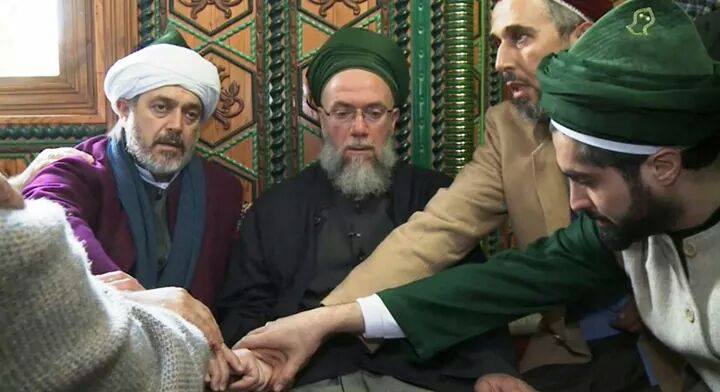
To Be A Naqshbandi Over Internet, Until you can take the Hand of a Authorized Representative of Naqshbandia Tariqa.


 Sufi Path of Love